How to Set Up a Freshwater Aquarium: Step by Step, From Empty Tank to First Fish
Last reviewed · By Manel Vadillo
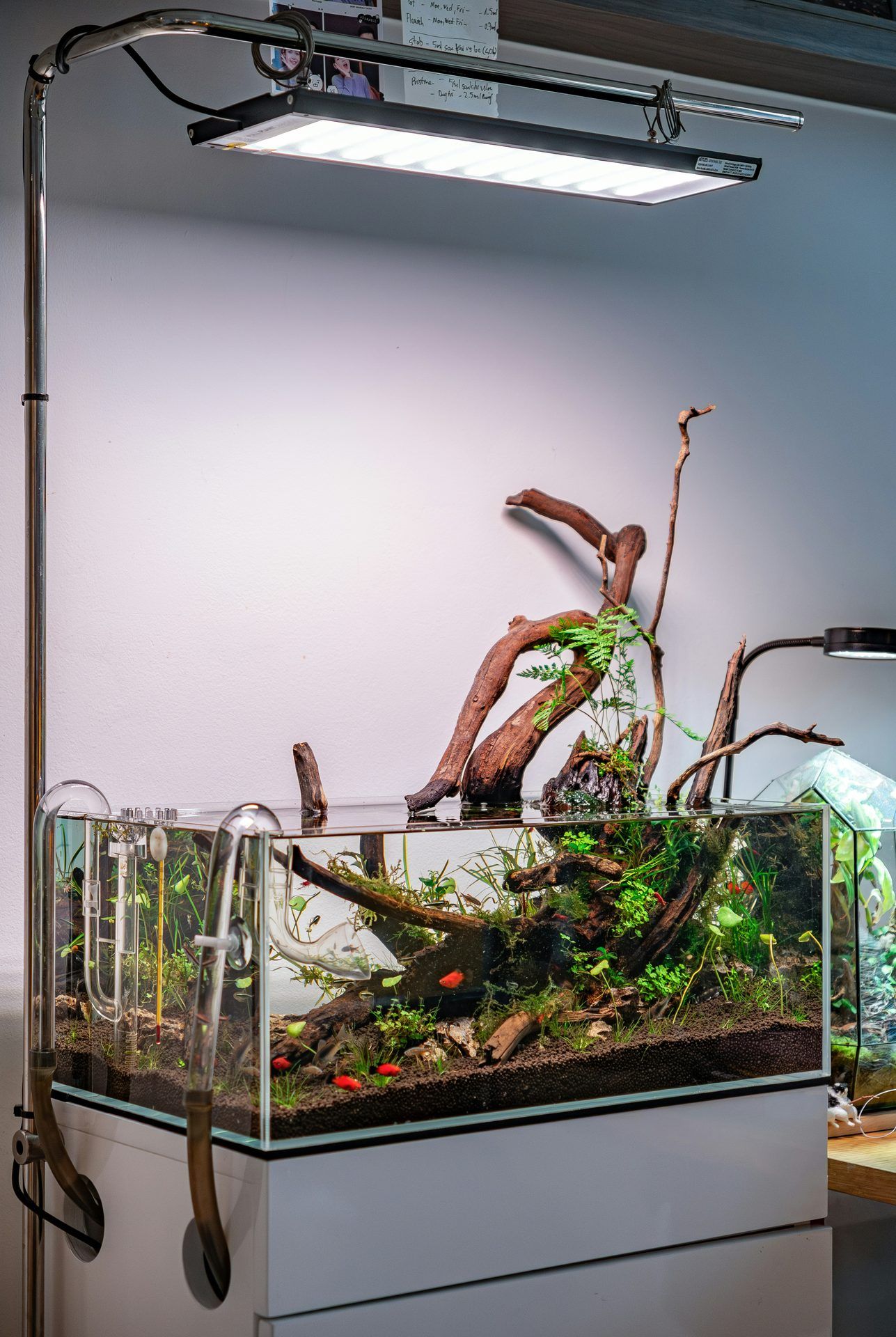
Setting up a tank takes an afternoon. Getting it ready for fish takes about a month. Most losses in the first weeks come from skipping that second part, so the order of the steps matters more than the equipment you buy.
Quick answer
Put the tank on a level, strong stand out of direct sun. Rinse the substrate, fill with treated tap water, then switch on the filter, heater and light. Let the filter bacteria grow for 4 to 6 weeks, test for ammonia and nitrite, and add fish one or two at a time. Cycling without fish is the safest way.
Before you buy anything
Pick the spot first. Merck says the tank should go where you can reach it easily for feeding and cleaning, on a floor and stand that are strong, level and stable. Water weighs 8.3 lb per gallon, so even a small tank is very heavy for its size 1. It should also be out of direct sunlight, which feeds algae and can heat the water. Warmer water holds less oxygen, and Merck says fish can suffocate if it gets too warm 1.
Plan for power as well. Merck suggests checking that enough outlets are close by, that the outlet is grounded, ideally with a ground-fault interrupter, and that you use a surge protector 1.
Here’s what the water alone weighs, using Merck’s 8.3 lb per gallon and its rule of about 1 lb of gravel per gallon 1. The tank and stand come on top.
| Tank | Water | Gravel |
|---|---|---|
| 10 gal (38 L) | 83 lb (38 kg) | 10 lb |
| 20 gal (76 L) | 166 lb (75 kg) | 20 lb |
| 29 gal (110 L) | 241 lb (109 kg) | 29 lb |
| 40 gal (150 L) | 332 lb (151 kg) | 40 lb |
That’s our multiplication. Our stocking guide helps you choose a size.
Choosing the size and the fish
Size comes first, because it sets what you can keep. Merck says very small tanks, such as goldfish bowls, may skip filtration and heating if you change more water, more often, perhaps as much as 50% a week 1. It puts betta tanks in the same sentence, but it also says a heater is necessary for tropical fish 1, and a betta is a tropical fish. Our betta guide says to use a heater and a gentle filter. So the no-heater exception really fits cold-water fish. It doesn’t make a bowl suitable for goldfish, and our goldfish guide says they shouldn’t live without a filter. Its freshwater stocking guide is a surface-area rule: 1 inch of fish for every 12 square inches of surface, reduced in cold-water tanks because the bacteria work less well when cool 1. Our stocking guide explains why we’d count by species and floor space instead of inches, with example stocklists.
If you already know what you want to keep, read its guide first, because a species can change the equipment list. Our care guides cover bettas, goldfish and axolotls, and a pregnant guppy is a common surprise from a first tank.
What you need
No brands here, only jobs to cover.
- Tank, stand and lid or cover.
- A filter. Merck describes under-gravel and hang-on filters as the common ones. The filter removes particles and gives the nitrifying bacteria a home 1. A sponge filter on an air pump is the simple option Merck uses in its quarantine setup 2.
- A heater and a separate thermometer. Merck says a heater is needed for tropical fish, and that a thermometer separate from the heater lets you check it independently 1. Our heater size chart covers wattage.
- A light on a timer. Merck says fish need a day and night cycle 1. See our guide on how long to leave the light on.
- Substrate and a few hiding places. Merck says to rinse substrate thoroughly first, since dust can clog filters and damage pumps 1. Decor also splits the tank into territories, which matters for some species 1.
- A water conditioner. Merck says most city water has chlorine or chloramine, both toxic to fish and to the filter bacteria, and that a dechlorinator should treat any new water going in 1. Our chlorine and chloramine guide has dosing.
- A test kit. Merck says to test the water before adding fish and recommends having your own kit 1. You want ammonia, nitrite, nitrate and pH at least. Our pH guide explains what to do with that last one.
- Bucket, siphon and net, kept only for the tank.
Setup day
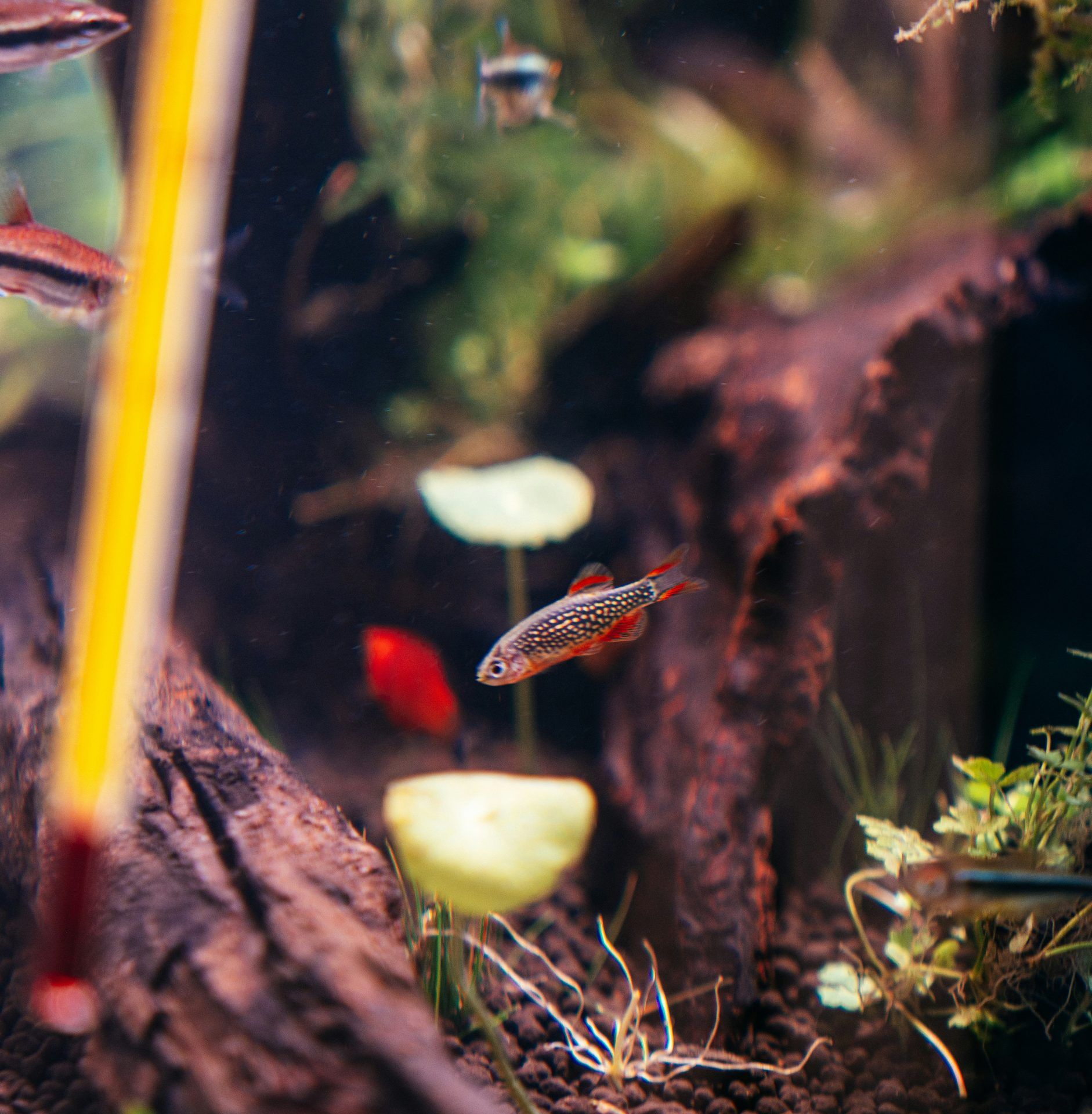
- Position, rinse, arrange. Set the tank on its stand and rinse the substrate. Merck says larger rocks and wood are easier to place before water goes in 1.
- Fill and treat. Add water and conditioner. Merck says tap water is generally fine once treated 1.
- Switch on equipment, after the tank is full. Merck says not to plug in the heater until the tank is full, because many are in a glass tube that may shatter without surrounding water. Filters and pumps also need the water to run safely 1.
- Set the heater and read the thermometer. Our heater guide covers sizing and placement.
- Put the light on a timer. Merck says fish need a day and night cycle, and that lights on 24 hours a day stress fish and make them more susceptible to disease 1. Aquarium Co-Op recommends an outlet timer, since timers are more reliable than people 4.
- Plants are optional. Aquarium Co-Op calls cycling with plants its favorite method, because plants take up ammonia and nitrate 3. Aquarium Science says plants added during a bacterial cycle can sometimes stop it, by using up the ammonia the bacteria need 5. We’d plant a little and test often.
- Day 1Place, rinse, arrangeLevel stand, out of direct sun, near an outlet. Rinse the substrate. Place rocks and wood before water goes in. [1]
- Day 1Fill and treatTreat all new water with a conditioner that handles chlorine and chloramine. [1]
- Day 1Switch onOnly now plug in the filter, heater and light. Set the heater, check a separate thermometer, put the light on a timer. [1]
- Weeks 1 to 6Cycle the filterFishless is safest. Test ammonia and nitrite. The bacteria take 4 to 6 weeks on their own, up to 8 in a tropical tank. [1, 2]
- When tests passAdd fish slowlyOne or two at a time, with weeks between groups. Quarantine new fish if you can. [1]
- Every weekTest, feed lightly, change waterOur own routine; the schedule itself is in the water change guide. [ours]
Cycle the tank before the fish
The tank looks ready on day one. It isn’t. Merck says beneficial bacteria develop on their own in 4 to 6 weeks, and that commercial products may speed things slightly but aren’t necessary for most home tanks 1. Merck’s management page says it can take up to 8 weeks in a tropical tank 2.
New tank syndrome, which is ammonia or nitrite poisoning, usually hits within the first 6 weeks, according to Merck 2. Our guide on what kills fish in a new tank goes through it.
Your options:
- Fishless cycle. Merck describes it as setting up the tank with no fish and adding ammonia at 1 to 5 mg/L, then adding fish once no ammonia or nitrite is present 2. Our fishless cycle guide and calculator give the doses and the schedule.
- Fish in. Aquarium Co-Op calls it the most common approach, with a few hardy fish, light feeding and daily tests 3. Our fish-in cycling guide covers the routine.
- Seed it. Co-Op says used media or substrate from an established tank can speed things up significantly 3. Our cycle time guide shows by how much.
To know when you’re done, use the 24-hour ammonia test.
Adding fish
Merck says it’s best to add fish gradually, one or possibly two at a time, so the bacteria can keep up with the waste. The trade-off is that every new fish can bring disease 1. Its alternative: stock the tank, test ammonia and nitrite daily and control rises with frequent water changes. It’s more work, and it can give a stable group 1.
For fish that are new to you, Merck recommends quarantine, with 30 days as the minimum, in a simple setup of a 10 gallon tank, sponge filter, air pump and heater. It suggests running the sponge in your established tank first so it carries bacteria 2.
When the fish arrive, our guide on how to acclimate fish covers the bag, and the stocking guide covers how many.
The first month’s routine
Feed lightly, test on a schedule and change water. Aquarium Co-Op says to ramp feeding up over four to six weeks 3. Our water change guide has the schedule, and the nitrite and nitrate guides explain the numbers you’ll see along the way.
If something looks wrong in the first weeks
- Cloudy water. Often normal early on. Our cloudy water guide sorts the colors.
- Brown film on glass and decor. Common in new tanks. See brown algae in a new tank.
- Dead fish. See what usually killed them and test for ammonia, nitrite and tap-water chlorine before replacing anything.
Mistakes that cost fish
- Adding fish on day one. See the cycling section above.
- Plugging in a dry heater. Merck warns against it 1.
- Skipping the conditioner. Merck says chlorine and chloramine are toxic to fish and the filter bacteria 1.
- Putting the tank in a sunny window. Merck ties this to algae and overheating 1.
- Leaving the light on all day. Merck says it stresses fish 1.
FAQ
How long before I can add fish? Plan on 4 to 6 weeks for the bacteria to develop, up to 8 in a tropical tank 1 2. Test, don’t count days. The cycled-tank test is the real check.
Do I need to cycle the tank? Merck’s own advice for avoiding new tank syndrome is a fishless cycle, or adding fish slowly 2.
Can I use tap water? Yes, with a conditioner. Merck calls it the most convenient and generally acceptable choice 1.
Do I need a heater? For tropical fish, yes 1. That includes bettas, per our betta guide. Merck says goldfish and other cold-water fish do fine at room temperature 1. Our heater guide covers sizing.
How much gravel do I need? Merck’s rule of thumb is about 1 lb per gallon of water 1.
All the numbers, with sources
| What | Value | Type | Source |
|---|---|---|---|
| Weight of water | 8.3 lb per gallon (1 kg per liter) | Stated by source | [1] |
| Substrate (gravel) | About 1 lb per gallon of water | Stated by source | [1] |
| Time for filter bacteria to develop on their own | 4 to 6 weeks | Stated by source | [1] |
| Time for a biofilter in a tropical tank, upper end | Up to 8 weeks | Stated by source | [2] |
| Add fish at a time to a new tank (Merck) | 1 or possibly 2 | Stated by source | [1] |
| Minimum quarantine for new fish (Merck) | 30 days | Stated by source | [2] |
| Float the bag to equalize temperature (Merck) | 20 to 30 minutes | Stated by source | [1] |
| Water for a 20 gallon tank (our calculation) | About 166 lb (75 kg), before substrate, tank and stand | Our calculation | [1] |
Sources
- Merck Veterinary Manual (University of Florida; last updated April 2026) (2026). Providing a Home for Fish (Pet Owner Version)
- Merck Veterinary Manual (last updated June 2026) (2026). Management of Aquarium Fish (new tank syndrome, quarantine)
- Aquarium Co-Op (fish and aquarium products retailer) (n.d.). Freshwater Fish Tank Cycling: How to Prepare for New Fish
- Aquarium Co-Op (n.d.). How to Balance Aquarium Lighting to Grow Healthy Plants (and Avoid Algae)
- Aquarium Science (aquariumscience.org, one hobbyist author) (n.d.). 2.1. Fish-less Cycling