High Nitrite in a Fish Tank: What to Do Tonight and How Much Is Too Much
Last reviewed · By Manel Vadillo
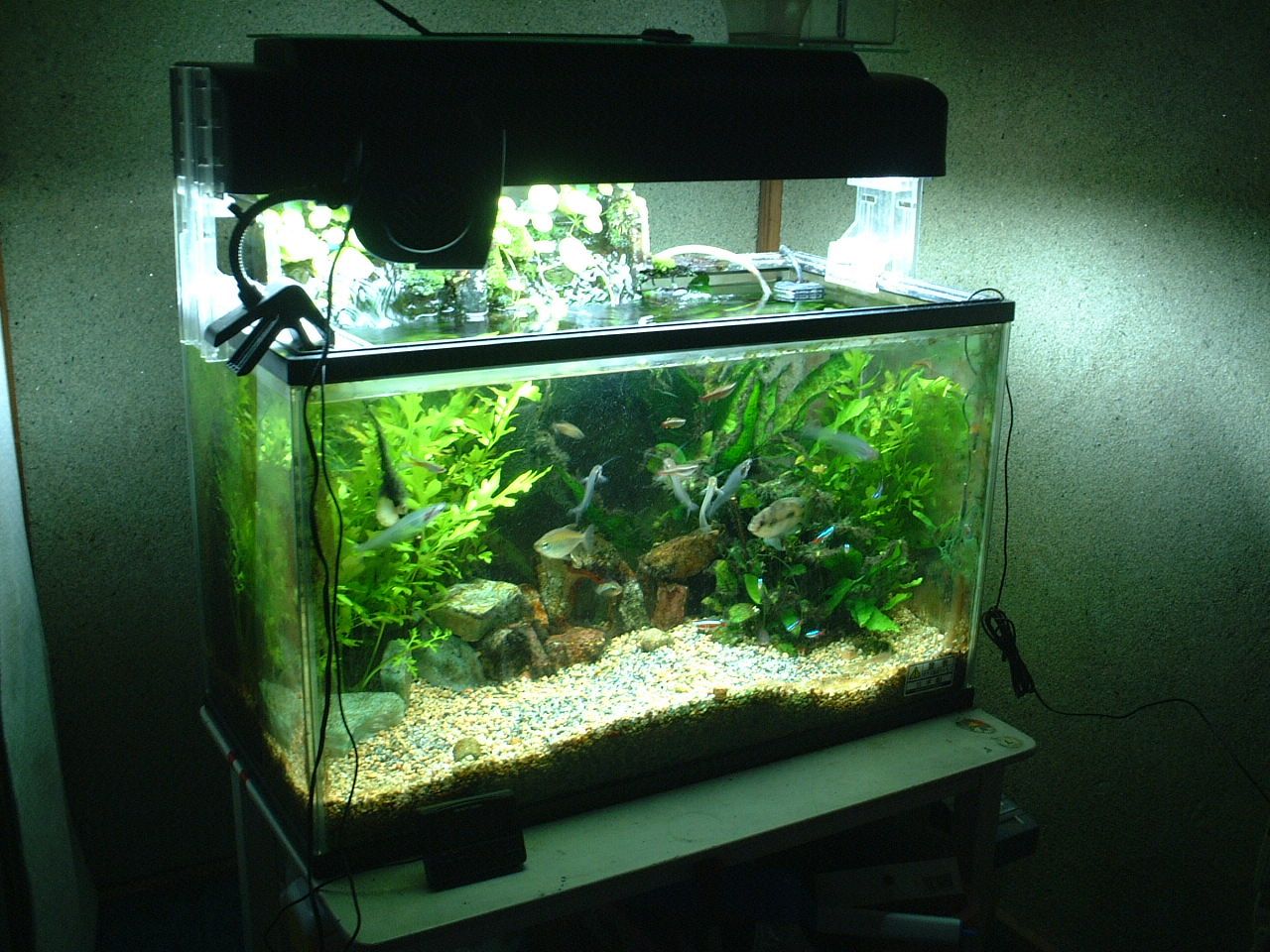
A nitrite reading above zero means the bacteria in your filter aren't keeping up with the waste. Merck lists nitrite spikes among the things that kill fish in new tanks. In an old tank, they often mean something knocked the filter back. The fix starts tonight and takes mostly water.
Quick answer
Any nitrite above zero means the filter is behind. Change a large share of the water now, add air, and feed lightly or skip a day. Merck flags toxicity above 0.1 mg/L, and Aquarium Co-Op acts above 0.2 ppm. Salt protects the gills for a while but doesn't remove the nitrite.
What nitrite does to a fish
Nitrite is the middle step of the nitrogen cycle. One group of bacteria turns ammonia into nitrite, and a second group turns nitrite into nitrate. When the second group is missing or overwhelmed, nitrite piles up.
It gets into fish through the gills. In the blood it turns hemoglobin into methemoglobin, which can’t carry oxygen. Merck calls this brown blood disease and lists piping at the surface as the behavior it causes 1. SRAC adds that fish can suffocate even when the water holds plenty of oxygen 3. More oxygen still helps. Auburn’s example is a moderately affected fish that survives at 7 ppm dissolved oxygen and probably doesn’t at 2 ppm 4.
Don’t wait for color. Merck says the chocolate-brown gills and blood are hard to see until methemoglobin is already high 1, and a Purdue note says fish often hold on until they exert themselves 11.
Species differ a lot. In pond fish, bass and bluegill shrug off high nitrite, catfish and tilapia are sensitive, trout are sensitive to very small amounts, and goldfish sit between catfish and bass 3. Purdue puts the 50% lethal range for most freshwater fish anywhere from 0.60 to 200 mg/L 11. We found no ranking like that for tetras, bettas or livebearers, so in a home tank any reading above zero is worth acting on. That last part is our judgment.
Confirm the reading
Retest, and read the tube in daylight against the card. Then check three things.
Your kit’s unit. Merck says many kits report nitrite-nitrogen (NO2-N), and that you multiply by 3.3 to get nitrite 1. Aquarium Science treats hobby kits as reading full nitrite and uses 3.36 to convert research numbers 6. Your kit’s label tells you which one you have. We cover the same trap for ammonia in the nitrogen cycle guide.
The top of the scale. One FishLore member pointed out that the API Master kit only reads nitrite up to 5 ppm 9. A tube that looks as dark as it can get may be hiding a much higher number. In that thread another member estimated their peak by mixing one part tank water with four parts nitrite-free water and multiplying the result by five 9. It’s a rough trick, but it explains why repeated water changes seem to do nothing.
Your tap water. In the same thread the owner’s tap water carried 0.5 to 1 ppm ammonia, which kept feeding the nitrite loop after every change 9. Test a bucket of conditioned tap water before you blame the filter.
How much is too much
The sources don’t agree, and they come from different worlds.
| Source | Nitrite level | Context |
|---|---|---|
| Merck | Reference range 0 mg/L; toxicity flagged above 0.1 mg/L, with “tremendous species-specific variation” 1 2 | Fish medicine, freshwater |
| Aquarium Co-Op | Partial water change above 0.2 ppm of ammonia or nitrite 7 | Retailer advice for fish-in cycling |
| Purdue (1998) | No more than 0.10 mg/L for channel catfish, 0.50 mg/L for salmonids 11 | Aquaculture |
| Aquarium Science | Says nitrite is less poisonous than many claim, but aims for undetectable because any nitrite signals weak filtration 5 | One hobbyist author; no figure we could check |
Our reading: above 0.2 ppm, act the same day. Anything above zero in a tank with fish, watch daily until it clears. That’s built from Merck and Co-Op, not a published rule.
What to do tonight
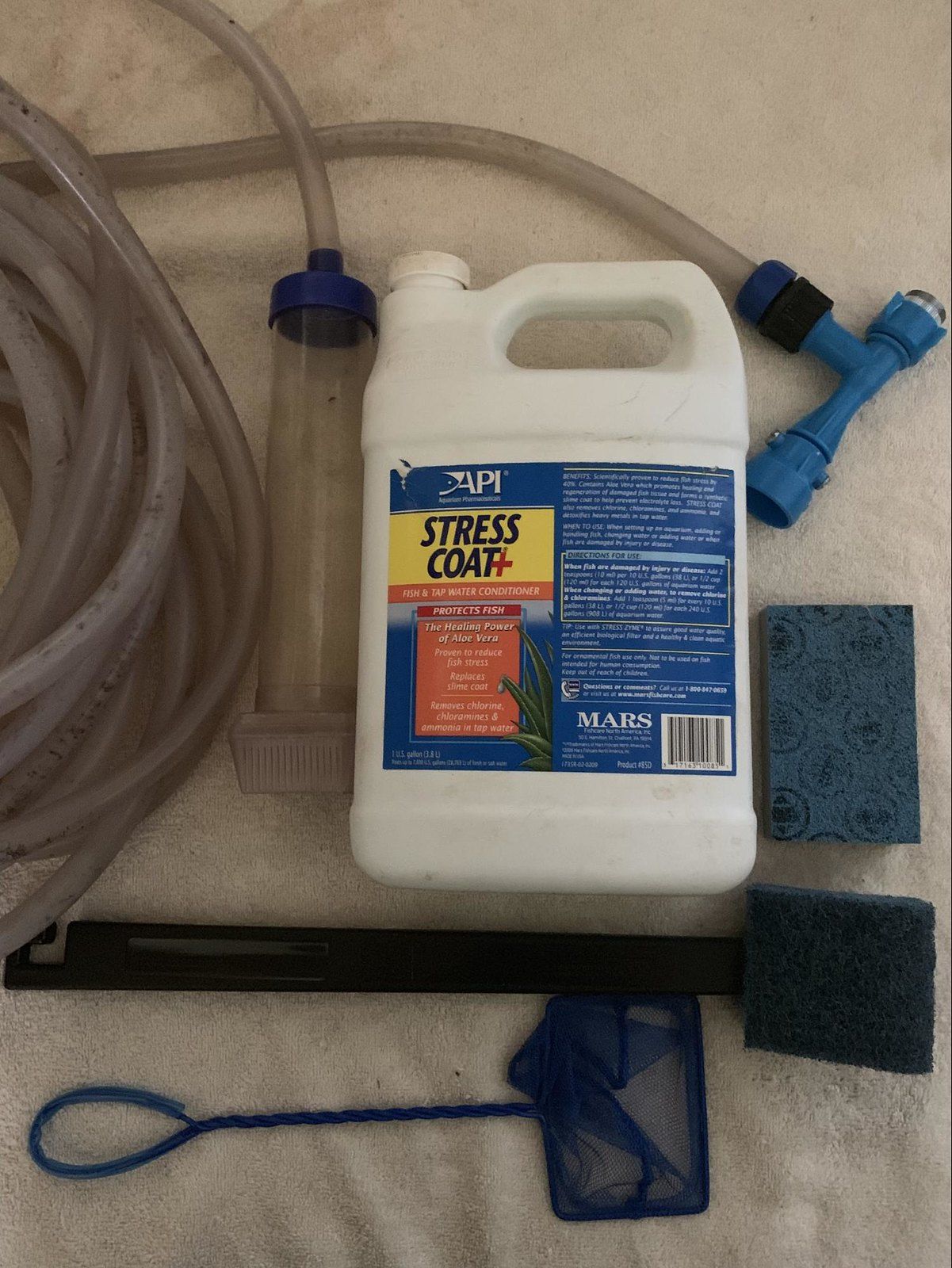
- Change water, and change a lot of it. Merck says a water change corrects nitrite toxicity rapidly and recommends one, plus filter maintenance, for aquariums 1. None of the reference sources gives a percentage for nitrite. The arithmetic is simple: a change of 50% leaves half the nitrite behind. If the reading is pegged or fish are gasping, FishLore members suggested 75% to 100% 9. We agree. A half change that leaves 2 ppm behind is not much of a rescue. Dechlorinate the new water, since Merck lists zero total chlorine as the target for tap-fed tanks 2.
- Add air. Point a filter outlet at the surface, add an air stone, or lower the water level a couple of inches so the outflow splashes. In one FishLore thread the fish looked fine right after each change and gasped again hours later. A moderator guessed they were using up the oxygen, and the owner lowered the water line 10.
- Feed less. SRAC calls cutting the nitrogen going in the most obvious preventive measure 3. A day or two without food hurts a healthy fish far less than the nitrite does.
- Fix the cause. Merck’s advice is to address the underlying problem, such as a failed biofilter 1. The next section is about finding it.
- Hold off on new fish until the reading stays at zero.
Using salt
Chloride and nitrite use the same route through the gills. When there is enough chloride in the water, less nitrite gets in. That’s why salt shows up in every guide on this problem. If you use it, our aquarium salt dose chart shows how to weigh it by tank size. SRAC puts the target for catfish at a chloride to nitrite ratio of at least 10 to 1 3. Auburn uses 9 to 1 4. Aquarium Science works from 6 to 1, citing an SRAC recirculating-systems fact sheet that says 5 to 6 parts of chloride protect fish from 1 part of nitrite 6. Merck says salt may still be used to halt mortality during a sudden jump in aquariums, while the water change and filter work get done 1.
The next table is our own estimate. It isn’t from any source. We took the chloride to nitrite ratios above and turned them into grams of table salt (NaCl) for a 10 US gallon tank.
The math, so you can check it:
- Chloride needed (mg/L) = ratio × nitrite (ppm). Example: 2 ppm nitrite at 10:1 needs 20 mg/L of chloride.
- Salt per liter = chloride × 1.649, because NaCl weighs 58.44 per mole and the chloride in it weighs 35.45 (58.44 ÷ 35.45 = 1.649). Example: 20 × 1.649 = 33 mg of salt per liter.
- Salt for the tank = that × liters. 10 US gallons is 37.85 L. Example: 33 mg × 37.85 L = about 1,250 mg, or 1.25 g.
It assumes your tap water has no chloride of its own, and it rounds to the nearest tenth of a gram in the table.
| Nitrite (ppm) | Chloride needed (6:1 to 10:1) | Salt for 10 gal (6:1 to 10:1) |
|---|---|---|
| 0.5 | 3 to 5 mg/L | 0.2 to 0.3 g |
| 1 | 6 to 10 mg/L | 0.4 to 0.6 g |
| 2 | 12 to 20 mg/L | 0.8 to 1.3 g |
| 5 | 30 to 50 mg/L | 1.9 to 3.1 g |
The amounts are small. SRAC’s own formula subtracts the chloride already in the water: chloride to add equals the ratio times the nitrite, minus the chloride you have 3. Tap water carries some, so the real dose can be lower. Scale the grams to your tank. If your kit reads nitrite-nitrogen, multiply by 3.3 first. SRAC doesn’t say whether its nitrite figure means nitrite or nitrite-nitrogen, and using the larger number is the safer mistake.
Salt has limits. It reduces the effect and doesn’t cancel it, and Aquarium Science says plants usually dislike it 6. That site also gives two doses for the same problem on neighboring pages: level tablespoons equal to nitrite ppm divided by 4 per 10 gallons on one 5, and teaspoons equal to ppm divided by 8 on the other 6. That’s roughly a sixfold gap, so we didn’t use either. SRAC says relief in a pond takes about 24 hours 3. And it isn’t a substitute for the water change.
Does Prime handle nitrite?
Seachem says yes. Prime “detoxifies” nitrite, and for an emergency up to 5 times the normal dose may be used. In its FAQ Seachem says the mechanism isn’t well understood and that the finding came from customer reports 8. Aquarium Science says conditioners do nothing for nitrite toxicity and calls the claim hype 5. In the FishLore thread, members recommended Prime so fish could survive the spike, and noted the test may still read high while the nitrite is bound 9.
We’d treat Prime as a bridge while you change water, not a replacement. We found no independent test either way.
Why nitrite shows up
A new tank. Nitrite is a step in the cycle. Ammonia comes first, then nitrite, and nitrate rises once the second group of bacteria catches up. Merck says a new biofilter takes about six weeks to establish 1. Our guide to cycle times has the other estimates. If you cycled the tank without fish, a nitrite peak is expected and the fishless method tells you what to do about it.
An established tank. Something hurt the bacteria. The usual list:
- Antibiotics or other chemicals. Merck and Purdue both name them 1 11.
- Overcrowding and overfeeding 11.
- A failed or clogged filter 1.
- Cold. Auburn says the bacteria that make nitrite work faster than the ones that remove it in cool water, and that lethal nitrite can build within 24 hours when ammonia is high 4. That was written about ponds, but it’s the same biology.
- A pH crash. A FishLore moderator described losing a tank after a low-KH pH drop to around 6.0, then a 50% change that swung the pH back up. By that account the ammonia bacteria woke up at once and the nitrite bacteria had starved 10. That’s one hobbyist’s explanation, not a tested one.
SRAC gives a handy warning sign: 1 ppm of total ammonia nitrogen can turn into about 3 ppm of nitrite within a short time 3. If ammonia is climbing, nitrite is coming.
What hobbyists report
A 20 gallon tank, three weeks in, fish still inside. The owner did repeated 50% changes and the nitrite tube stayed dark purple. One member noted a 50% change only halves the number, so a reading at the top of the kit could mean a much higher starting level. One zebra danio died after the third change. The owner moved the other fish to a small tank with fresh conditioned water, kept doing large changes and brought the reading under 0.5 ppm before putting them back with a capful of Prime. Members who had been there said it can take far more water changes than you’d think 9.
A cycled tank that spiked after a routine 30% change. Fish were at the surface and the nitrite read 1.0. The owner did 50% and 70% changes, lowered the water line, skipped feeding for the weekend and kept testing. The readings were back to zero in about two days and no fish died. They never found the cause. One member said the nitrite-eating bacteria regrow more slowly than the ammonia-eating ones, so the nitrite step is the last to recover 10.
Stopping the next spike
- Test daily while a tank is new, after any medication, and after a filter change. Merck recommends daily testing of ammonia and nitrite, with frequent water changes, until the biofilter is running 1.
- Add fish a few at a time. A bigger load needs more bacteria.
- Keep the old media when you upgrade a filter. Our nitrogen cycle guide explains where the bacteria live.
- After a spike, watch for disease. SRAC says infections often show up 1 to 3 weeks after nitrite stress 3.
FAQ
Can fish recover from nitrite poisoning? Often, yes. SRAC says the condition can be reversed by adding salt in a pond, and that survivors are more prone to bacterial infections for the next one to three weeks 3. Both FishLore owners above saw their fish recover once the reading dropped 9 10.
Will nitrite go away by itself? In a new tank, yes, once the second group of bacteria is established. Merck puts that at about six weeks 1. In an old tank, it usually means a cause is still active, so look for it.
Do I need salt? Not as a first step. Water changes and air do most of the work, and Merck lists salt for sudden jumps 1. If you use it, mind the plants 6.
Why doesn’t my reading drop after a water change? Check the kit’s range, your tap water, and how much you changed. A 50% change halves the number, so a very high start needs several changes 9.
Does Prime fix nitrite? Seachem says it detoxifies it, Aquarium Science says it doesn’t, and we found no independent test 8 5.
All the numbers, with sources
| What | Value | Type | Source |
|---|---|---|---|
| Merck reference range for nitrite in freshwater | 0 mg/L | Stated by source | [2] |
| Merck: nitrite toxicity flagged above | 0.1 mg/L nitrite | Stated by source | [1] |
| Aquarium Co-Op: do a partial water change when ammonia or nitrite is above | 0.2 ppm | Stated by source | [7] |
| Merck: converting a nitrite-nitrogen (NO2-N) reading to nitrite | Multiply by 3.3 | Stated by source | [1] |
| SRAC: chloride to nitrite ratio that protects catfish in ponds | At least 10 to 1 | Stated by source | [3] |
| SRAC: time for salt to relieve brown blood disease in a pond | About 24 hours | Stated by source | [3] |
| SRAC: how much nitrite 1 ppm of total ammonia nitrogen can become | About 3 ppm | Stated by source | [3] |
| SRAC: infections can follow nitrite stress after | 1 to 3 weeks | Stated by source | [3] |
| Purdue: reported 50% lethal range for most freshwater fish | 0.60 to 200 mg/L | Stated by source | [11] |
| Seachem: Prime dose for a nitrite emergency | Up to 5 times normal | Stated by source | [8] |
| Merck: time for a new biofilter to establish | About 6 weeks | Stated by source | [1] |
Sources
- Merck Veterinary Manual (University of Florida; last updated June 2026) (2026). Environmental Diseases of Aquatic Animals in Aquatic Systems
- Merck Veterinary Manual (2026). Table: “Normal” Reference Ranges for Routine Water Quality Analysis
- Southern Regional Aquaculture Center (1997). Nitrite in Fish Ponds (SRAC Publication No. 462, revised June 1997; pond and catfish data)
- Auburn University Extension, Jesse A. Chappell (2008). Nitrite Poisoning or “Brown Blood” Disease: A Preventable Problem (pond and catfish data)
- Aquarium Science (aquariumscience.org, one hobbyist author) (n.d.). 5.3. Safe Nitrite Levels in the Aquarium
- Aquarium Science (aquariumscience.org, one hobbyist author) (n.d.). 5.3.2. Safe Nitrite Levels in the Aquarium in More Depth
- Aquarium Co-Op (fish and aquarium products retailer) (n.d.). Freshwater Fish Tank Cycling: How to Prepare for New Fish
- Seachem Laboratories (maker of the product) (n.d.). Prime (product page, directions and FAQ)
- FishLore Aquarium Forum (n.d.). Nitrite still high after multiple 50% wc (forum thread, hobbyist experience)
- FishLore Aquarium Forum (n.d.). Nitrite Spike In Cycled Tank, Post Water Change (forum thread, hobbyist experience)
- Purdue University, Animal Disease Diagnostic Laboratory (1998). Nitrite Toxicosis in Freshwater Fish “Brown Blood Disease” (aquaculture and aquarium; 1998)