How Much Aquarium Salt per Gallon? Doses, a Chart and When to Skip It
Last reviewed · By Manel Vadillo
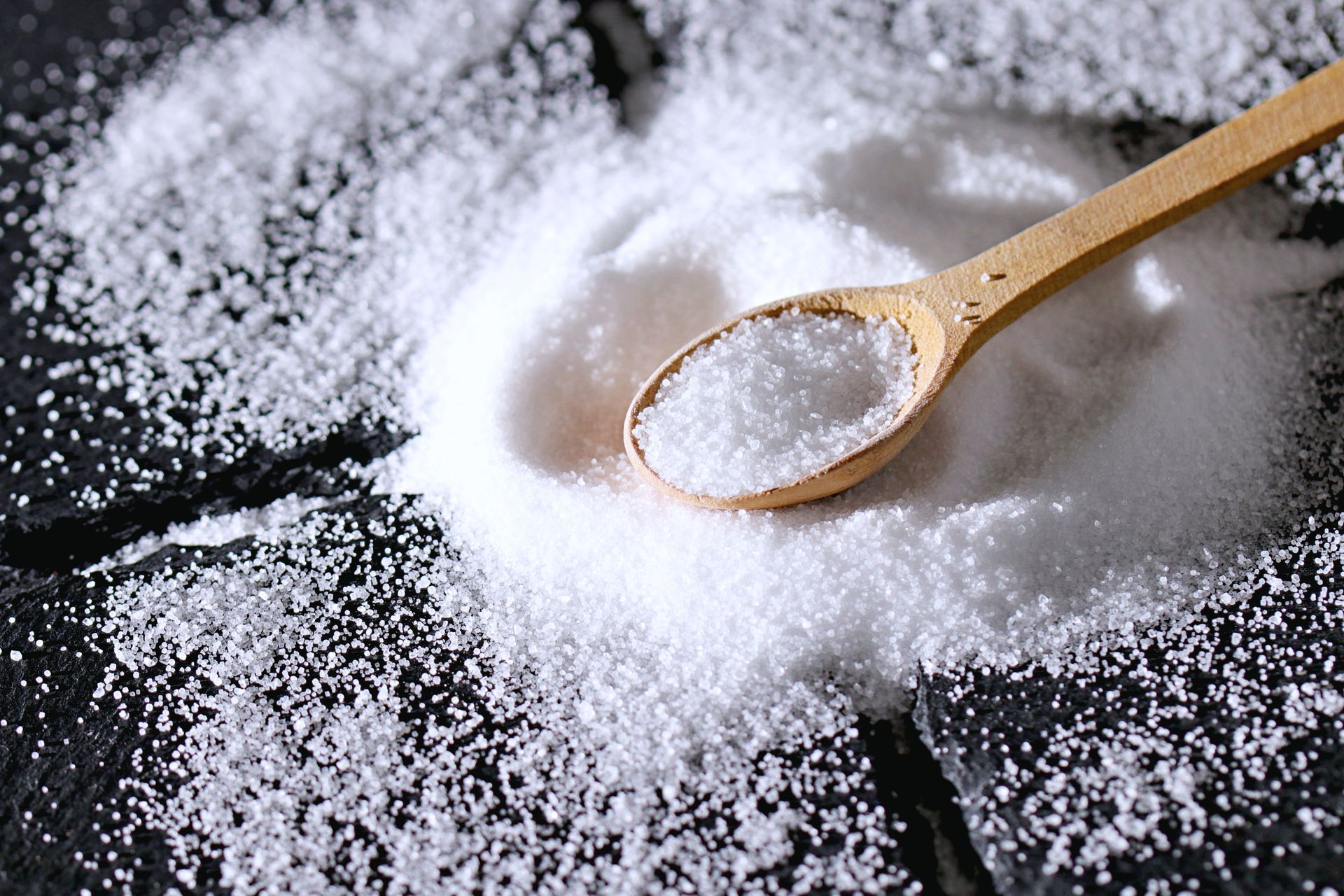
How much aquarium salt per gallon depends on who you ask, because the boxes, the stores and the universities don't agree. The trouble starts with the spoon: a tablespoon of one salt can weigh twice as much as a tablespoon of another. So this guide works in grams and parts per thousand, then gives you a chart by tank size.
Quick answer
The API label says 1 rounded tablespoon per 5 US gallons, at least 1.7 to 3.6 g per gallon depending on the grain. UF/IFAS uses 4 to 5 g/L for ich, about 15 to 19 g per gallon. Weigh the salt, dissolve it in tank water first, and skip it with sensitive fish and planted tanks.
Why the doses disagree
Put three sources side by side and you get three answers. The API box says 1 rounded tablespoon per 5 US gallons 4. Aquarium Co-Op, a retailer that sells salt, runs three levels: 1 tablespoon per 3 gallons, per 2 gallons and per 1 gallon 5. UF/IFAS, an extension service, gives 4 to 5 g/L for ich 7.
Two things hide the gap. The first is the unit. Co-Op’s top level uses five times the salt of the API label, just by changing “per 5 gallons” to “per gallon”. The second is the spoon. The University of California Cooperative Extension weighed it: one tablespoon of canning or table salt is 18 g, Morton coarse kosher is 14.4 g and Diamond Crystal kosher is 8.4 g 6. Same spoon, more than double the salt. UC adds that fine salt measures differently from coarse salt or flakes 6.
Neither API nor Co-Op says how many grams their spoon holds, and “rounded” adds an unknown amount on top. So a spoon dose is a guess. NCRAC, a USDA-funded fact sheet written by Purdue specialists, is blunt about it: use accurate scales, because “guesstimating may only end in disaster” 1. A kitchen scale that reads in single grams is enough.
ppt, g/L and grams per gallon
Salt strength is measured in parts per thousand (ppt). One ppt is 1 gram of salt per liter of water, or about 3.8 g per US gallon 2. NCRAC gives the same conversion in smaller steps: 1 ppm is 0.00378 g per gallon, and 1% is 10,000 ppm 1. Multiply any ppt by 3.785 and you have grams per gallon (this is our arithmetic; liters per US gallon is 3.785).
Aquarium salt per gallon: the short chart
This table puts the label, the retailer and the extension doses in one unit. The spoon-based rows are our conversion, using UC’s weights of 8.4 to 18 g per tablespoon 6 for a level spoon. We don’t know which salt each source had in mind, so we show the range.
| Dose | Grams per US gallon | ppt | Source |
|---|---|---|---|
| API label (1 rounded Tbsp per 5 gal) | 1.7 to 3.6 g or more | 0.4 to 1 | API 4, our conversion |
| Co-Op Level 1 (1 Tbsp per 3 gal) | 2.8 to 6 g | 0.7 to 1.6 | Co-Op 5, our conversion |
| Co-Op Level 2 (1 Tbsp per 2 gal) | 4.2 to 9 g | 1.1 to 2.4 | Co-Op 5, our conversion |
| Co-Op Level 3 (1 Tbsp per gal) | 8.4 to 18 g | 2.2 to 4.8 | Co-Op 5, our conversion |
| Handling and transport stress | 3.8 to 7.6 g | 1 to 2 | USFWS 2 |
| Ich, UF/IFAS (at 75 to 79 °F) | 15 to 19 g | 4 to 5 | UF/IFAS 7 |
| Ich, Merck (one week, 75 °F or warmer) | about 19 g | 5 | Merck 8 |
One more number shows how wide the field is. NCRAC lists 1,000 to 10,000 ppm (0.1 to 1%) as an indefinite treatment for stress in aquaculture, which is 1 to 10 ppt, or roughly 3.8 to 38 g per gallon 1. That is for farm tanks, not a planted community tank.
How much salt for a 10, 20 or 55 gallon tank
Pick the target, then read across. The three columns are 1 ppt (the low end of the USFWS handling range), 2 ppt (the top of it) and 5 ppt (the ich dose). Amounts are in grams, rounded, and they are our calculation: ppt × 3.785 g × gallons.
| Tank size | 1 ppt | 2 ppt | 5 ppt |
|---|---|---|---|
| 5 gal | 19 g | 38 g | 95 g |
| 10 gal | 38 g | 76 g | 189 g |
| 20 gal | 76 g | 151 g | 379 g |
| 29 gal | 110 g | 220 g | 549 g |
| 40 gal | 151 g | 303 g | 757 g |
| 55 gal | 208 g | 416 g | 1,041 g |
| 75 gal | 284 g | 568 g | 1,419 g |
The 5 ppt column is above the 96-hour lethal level reported for dwarf gouramis (see the species list below), so check your fish before using it. A 20 gallon tank at the ich dose needs about 379 g, which matches the 300 to 380 g range in our ich guide.
Use the real water volume, not the label on the tank. Gravel, rock and wood take up room, and a tank that holds 17 gallons of water needs 17 gallons’ worth of salt. Our aquarium volume calculator does the subtraction.
Can you add aquarium salt straight to the tank?
Co-Op says you can pour it in, though some people dissolve it in a cup first 5. We’d dissolve it: stir the weighed salt into a bucket of tank water and pour that in slowly, near the filter outlet. That part is our habit, not a finding. NCRAC also advises testing on a few fish before treating a whole system, because fish and waters react differently 1.
If you dose a new tank or a water change, API says to put conditioner in the new water first, then the salt 4. Our dechlorinator guide covers the conditioner side.
How long to leave it in, and how to get it out
Co-Op says to leave the salt until the fish look healthy, then do a 30% water change with no salt, wait a week, and repeat if the problem stays away 5. Its Level 1 runs 4 to 5 days for mild infections, then steps up if the fish don’t improve. For ich it uses Level 2 for 10 days and raises the dose if fish get worse after 5 days 5. UF/IFAS lists 7 to 10 days for ich at 4 to 5 g/L 7.
Salt doesn’t evaporate and the filter doesn’t remove it. API says to add it only with each water change 4, and Co-Op notes the salt stays behind when water evaporates, so it only goes in with water changes 5. Top off evaporation with plain water. In practice: dose each gallon of new water at the same grams-per-gallon you started with.
To see how fast it leaves, use this table. It is our arithmetic, assuming the new water has no salt and mixes fully: what remains after each change is the previous amount times (1 minus the share you changed).
| Water changes done | Salt left after 25% changes | Salt left after 50% changes |
|---|---|---|
| 1 | 75% | 50% |
| 2 | 56% | 25% |
| 3 | 42% | 13% |
| 4 | 32% | 6% |
| 5 | 24% | 3% |
| 6 | 18% | 2% |
So six 25% changes still leave about a fifth of the salt. If you want it gone, bigger changes work faster. Our water change guide covers how big a change is reasonable.
Which fish, shrimp and plants may not take salt
Tolerance varies a lot and the evidence for hobby species is thin. A 2022 review in Aquaculture Research found acute toxicity of salt ranging from 3.5 to 150 g/L depending on species, and warned that many species are sensitive at concentrations near the ones used for treatment 3.
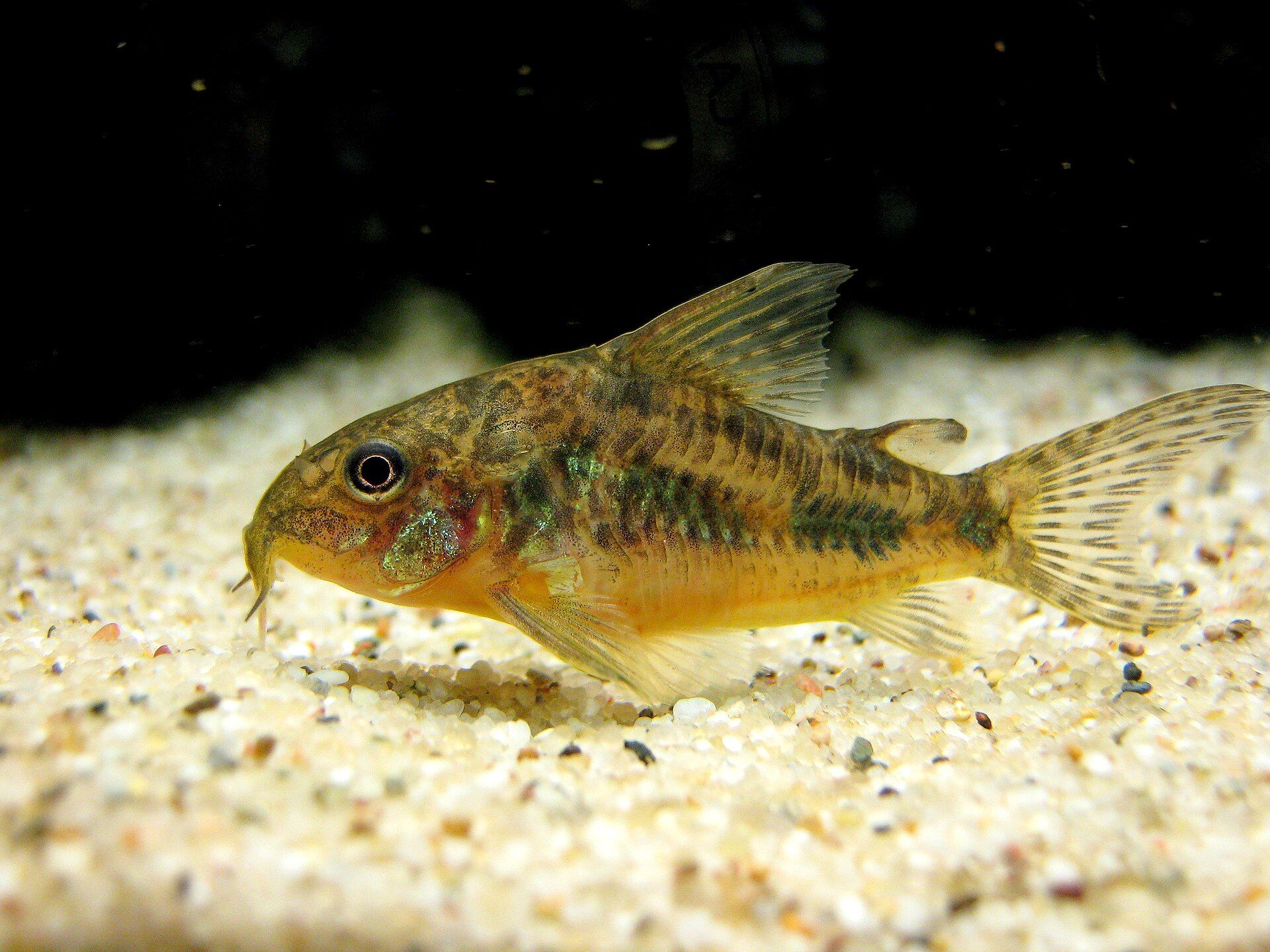
- Catfish and corydoras. Co-Op names anchor catfish as the exception at its lowest level, and says its top level is very hard on scaleless fish 5. A forum poster quoted in our fin rot guide warned against salt with otocinclus and corydoras. We found no study on corydoras and salt. If you keep them, read our corydoras care guide and treat in a separate hospital tank.
- Danios and tetras. Co-Op calls danios, tetras, rasboras and livebearers fairly tolerant 5. The review is more cautious. In a study it cites, zebrafish (Danio rerio) fry exposed to 1 and 3 g/L had 18 to 30% mortality, while fry of black skirt tetras, Buenos Aires tetras and three-spot gouramis were unaffected. For adult zebrafish, the review’s table gives a 96-hour lethal level of 10.4 g/L 3. Tolerance doesn’t follow the group a fish belongs to, and young fish can be less tolerant.
- Goldfish. In the same review, goldfish tolerated 12-hour baths at 5 and 10 g/L, and a 200-hour test put the lethal level for half the fish at 7.3 g/L 3. That is above the 5 g/L ich dose, but not by much: 5 g/L is about two-thirds of a level that killed half the goldfish in roughly 8 days.
- Gouramis and bettas. The review’s table lists 96-hour lethal levels of 3.5 g/L for the dwarf gourami (Trichogaster lalius), 4.1 g/L for the thick-lipped gourami, and 7.1 and 11.9 g/L in two studies of Betta splendens 3. The dwarf gourami figure sits below the 4 to 5 g/L ich dose, so full-strength ich salt is a poor idea for them.
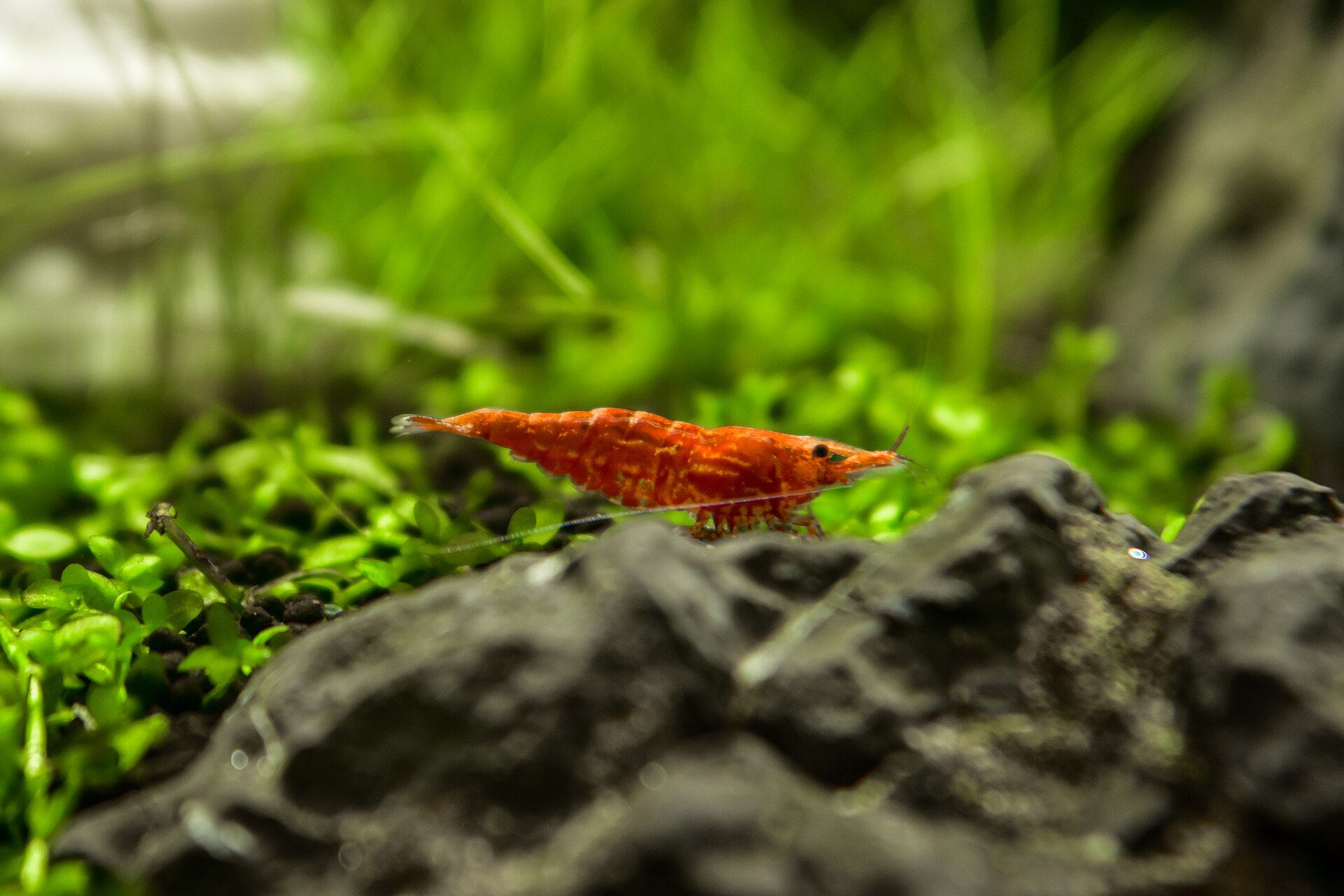
- Shrimp. Co-Op says Neocaridina cherry shrimp are “quite hardy” in salt, and that it hasn’t tested crystal (Caridina) shrimp much 5. We found no study of shrimp and salt. Our cherry shrimp care guide covers their water needs.
- Snails and live plants. Co-Op says salt can’t be used with most live plants and snails 5. UF/IFAS says aquarium plants may not tolerate increased salinity 7, and API warns that some plants may be sensitive 4. None of them gives a list or a number. If the tank is planted, treat in a separate tank.
Does salt actually treat disease?
Less than the box suggests. USFWS says the scientific evidence that low levels of salt (1 to 5 ppt) work against parasites is “spotty at best”. Its explanation is that salt doesn’t kill the parasites, it helps the fish survive the salt loss the damage causes. Like a saline drip in a hospital, it keeps the patient alive while the body does the work 2. The same source says most freshwater fish benefit from 1 to 2 ppt when handled or hauled 2.
UF/IFAS and Merck still list salt for ich, for fish that tolerate it 7 8. Where salt fits in our other guides:
- Ich: the full schedule, with salt as one option, is in our ich treatment guide.
- Fin rot: the sources split on salt. See fin rot for the warnings.
- Nitrite: chloride competes with nitrite at the gills, so salt can blunt a spike. Our nitrite guide has the ratios. Water changes come first.
- Bettas and goldfish: no source gives a long-term tank dose for either, so we give none beyond the chart. The toxicity figures for both are in the section above. Our betta and goldfish care guides cover everything else.
Pest snails are another case. We give no salt dose against them: our pest snail guide notes that Co-Op advises against salt dips, because it is hard to find a dose that kills snails but spares plants.
Aquarium salt vs table salt, sea salt and Epsom salt
NCRAC lists table, meat-curing, pickling and rock salt as the forms used in aquaculture, and says the meat-curing type is the cheapest 1. Co-Op says to use aquarium salt or plain sodium chloride rock salt, not table, marine or Epsom salt 5. API says its product is made from evaporated sea water 4.
What about additives? UC says canning and pickling salt is pure, with no additives, and that anticaking agents and iodine are not safety issues for food but can affect how preserves look 6. We found no source on how those additives affect fish. Our reading is to buy a plain salt with sodium chloride as the only ingredient, and to check the label.
Epsom salt is a different compound, magnesium sulfate, so it can’t stand in for sodium chloride. Our pH and KH guide mentions how hobbyists use it.
The short version
How much aquarium salt per gallon comes down to what you are treating and who lives in the tank. Four steps cover most cases. Work out the real water volume. Weigh the salt in grams from the chart, not by the spoon. Dissolve it in tank water before it goes in, and watch the fish for the first day. When you’re done, remove it with water changes, using the dilution table to know how long that takes.
How we got these numbers
The doses, the tablespoon weights and the label figures come from the sources above, which we opened on October 22, 2026 (Merck as read for our ich guide on October 20). The parts that are ours are the conversions to grams per gallon, the tank-size chart, the dilution table and the practical order of steps. The sources disagree on dose and duration, and we’ve shown the spread instead of picking one. We found no source for several things people ask about, such as salt tolerance in specific plants, snails, shrimp and corydoras, and said so where it applies. Aquarium Co-Op and API both sell salt, so weigh their dosing advice with that in mind. This page is general information and doesn’t replace an aquatic veterinarian.
FAQ
Can I add aquarium salt directly to the tank? Co-Op says you can, but some keepers dissolve it first 5. We’d dissolve it in a bucket of tank water, which is our habit and not a finding.
How long should I leave aquarium salt in my fish tank? Co-Op says until the fish look healthy, then remove it with 30% water changes 5. UF/IFAS gives 7 to 10 days for ich 7.
Is aquarium salt the same as table salt? Both are mostly sodium chloride, and NCRAC lists table salt among the forms used in aquaculture 1. Co-Op says to use aquarium salt or plain rock salt, not table salt 5, and API’s product is made from evaporated sea water 4. If you use table salt, check the label for additives.
Is aquarium salt the same as Epsom salt? No. Epsom salt is magnesium sulfate. Co-Op says not to use it in place of aquarium salt 5.
Is aquarium salt safe for shrimp? Co-Op calls Neocaridina cherry shrimp “quite hardy” 5. We found no study. Start low or keep them out of the treated tank.
Is aquarium salt safe for plants? Often not. Co-Op says it can’t be used with most live plants 5, and UF/IFAS and API warn that plants may not tolerate it 7 4. We found no list of safe plants.
Should I keep salt in the tank all the time? USFWS recommends salt for periods of stress such as handling and transport 2, and Co-Op describes a course that ends with water changes that remove it 5. UF/IFAS says many fish can live in 3 ppt permanently, but that you need to know each species’ tolerance, and that plants may not cope 7.
All the numbers, with sources
| What | Value | Type | Source |
|---|---|---|---|
| Grams per US gallon at 1 ppt (1 g/L) | 3.8 g (USFWS); NCRAC gives 0.00378 g/gal per ppm | Stated by source | [2] |
| API label dose | 1 rounded Tbsp per 5 US gal (20 L) | Stated by source | [4] |
| UC Cooperative Extension: one tablespoon of table salt | 18 g | Stated by source | [6] |
| UC Cooperative Extension: one tablespoon of Diamond Crystal kosher salt | 8.4 g | Stated by source | [6] |
| Our conversion of the API dose | At least 1.7 to 3.6 g per gallon (0.4 to 1 ppt), for a level spoon | Our calculation | [4] |
| USFWS: benefit for most freshwater fish when handled or hauled | 1 to 2 ppt (about 3.8 to 7.6 g per gallon) | Stated by source | [2] |
| UF/IFAS: salt for ich | 4 to 5 g/L for 7 to 10 days, about 15 to 19 g per gallon | Stated by source | [7] |
| Co-Op: Level 3 dose | 1 Tbsp per gallon, 5 times the API label rate | Stated by source | [5] |
Sources
- North Central Regional Aquaculture Center; Swann (Purdue, Illinois-Indiana Sea Grant) and Fitzgerald, DVM (1992). Use and Application of Salt in Aquaculture (Publication No. 105)
- U.S. Fish and Wildlife Service, Pacific Region Fish Health Program (2018). Fish Health News You Can Use, July 2018: Salt use, parasites, stress, and osmoregulation
- Aquaculture Research 53:715-734; Tavares-Dias (2022). Toxicity, physiological, histopathological, handling, growth and antiparasitic effects of the sodium chloride salt in freshwater fish aquaculture
- Mars Fishcare, API (manufacturer) (n.d.). API Aquarium Salt (product page and directions)
- Aquarium Co-Op (aquarium retailer that sells salt) (n.d.). Aquarium Salt: How to Use It Properly for Treating Sick Fish
- University of California Cooperative Extension (UC ANR) (2023). Salt for Preserving and Cooking
- UF/IFAS Extension; Francis-Floyd, Yanong and Pouder (n.d.). Ichthyophthirius multifiliis (White Spot) Infections in Fish (CIR920/FA006)
- Merck Veterinary Manual (full review May 2022, last updated June 2026) (2026). Parasitic Diseases of Fish