Goldfish Care Guide: Tank Size, Food, Water and Lifespan
Last reviewed · By Manel Vadillo
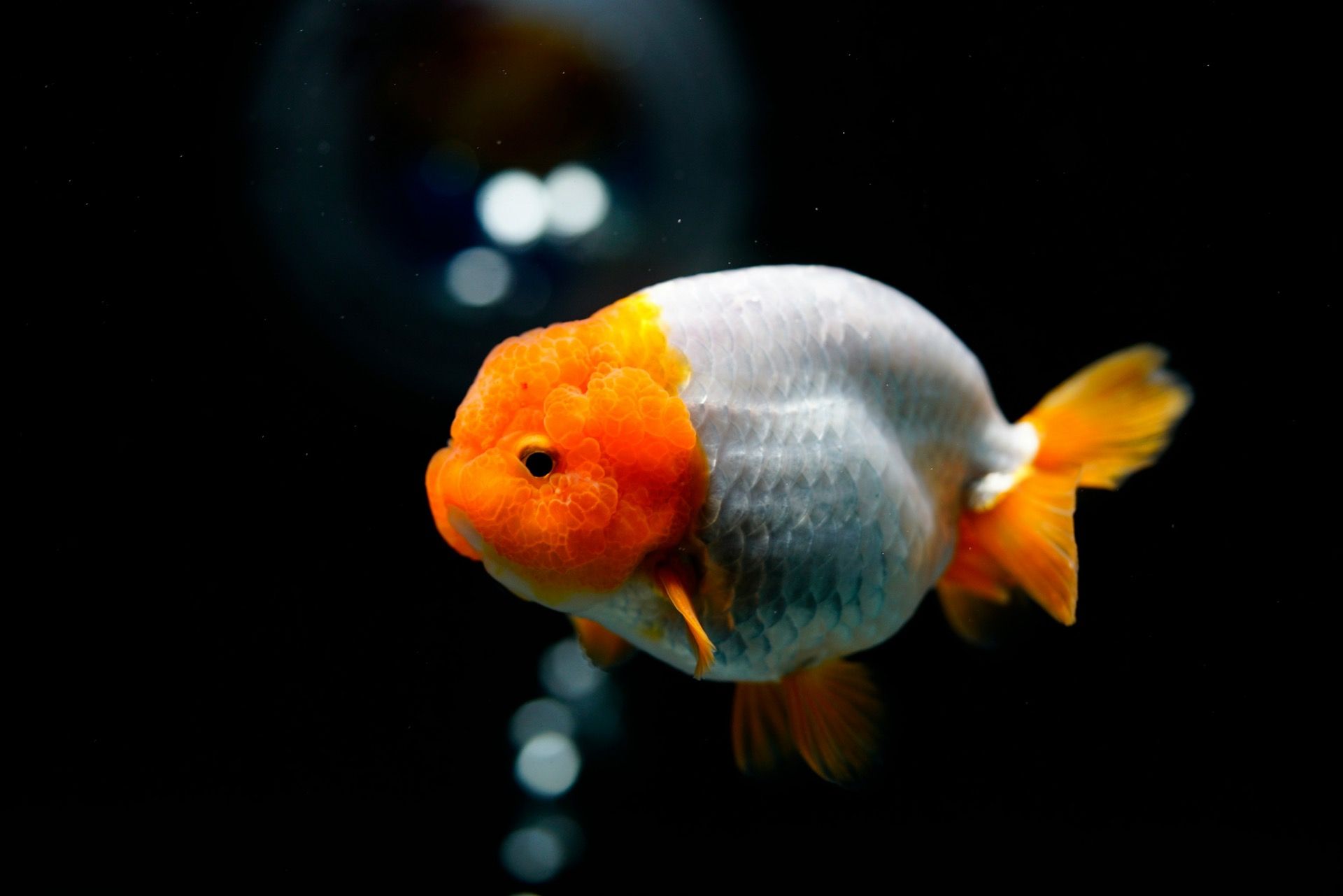
Most goldfish die long before they should. They get sold as a starter fish for a bowl on the counter, and the bowl is the problem. With room and clean water they can live 10 to 15 years.
Quick answer
Single-tail goldfish (common, comet, shubunkin) grow big and do best in a pond. In a tank, 20 gallons per fish is only Aqueon's floor, and bigger is always better. Fancy goldfish need 20 gallons for the first fish and 10 more for each extra. Room-temperature water is fine, so you usually don't need a heater.
How long do goldfish live?
About 10 to 15 years on average, some varieties reach 30 with good care, and plenty never get close because of poor housing 1.
Aqueon puts it higher, at over 20 years in captivity 2.
The record is Tish. A seven-year-old boy won him at a fairground stall in 1956, and he lasted 43 years, until 6 August 1999. Guinness World Records adds that goldfish have been reported to live over 50 years in China, though few of those cases are authenticated 6. Tish is the exception. Plan around 10 to 15.
Two kinds of goldfish
They’re one species, Carassius auratus 2, but the body shape decides which tank you need.
Single-tail goldfish are the common goldfish, the comet and the shubunkin. Slim, fast, one tail. These are the cheap ones sold in feeder tanks.
Fancy goldfish are short and round with double tails: oranda, ryukin, fantail, ranchu, telescope-eye and others. They swim slowly and have needs the single-tails don’t 3.
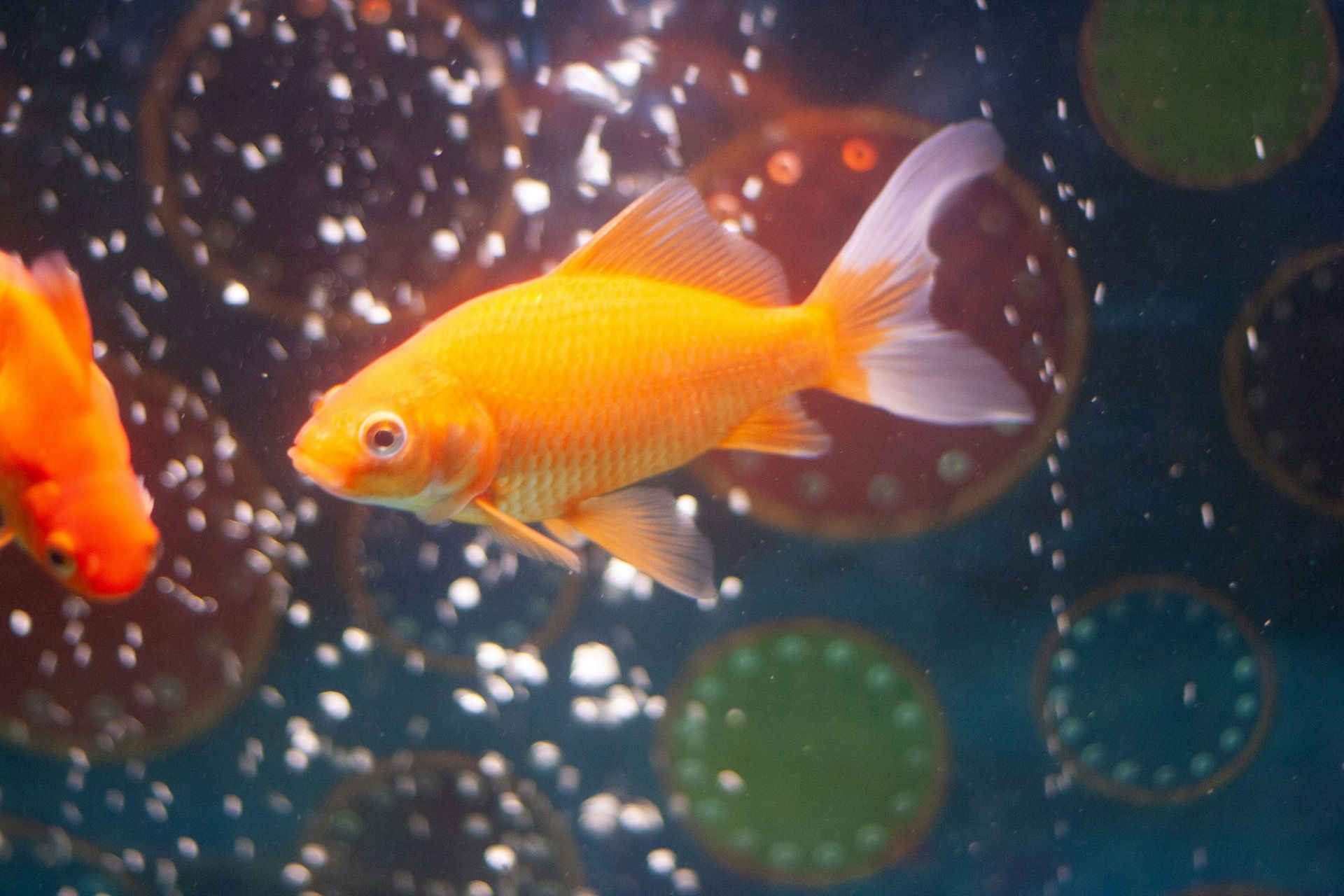
What size tank does a goldfish need?
Go bigger than you think you need. Plan on 20 gallons for the first fancy goldfish and 10 more for each extra fish 3.
Single-tails grow big. USGS gives a typical standard length of 4.7 to 8.7 inches and a maximum of 16 5.
Fancies stay smaller, but one can still reach 8 inches 4.
Twenty gallons per fish is only Aqueon’s floor for them, and we’d put them in a pond, where they do well and survive fairly cold winters 2.
Aqueon’s floors are lower than Aquarium Co-op’s, so we’d lean toward the higher number.
| Source | Fancy goldfish | Common, comet, shubunkin |
|---|---|---|
| Aqueon 2 | At least 10 gal per adult fish | At least 20 gal per adult fish |
| Aquarium Co-op 3 | 20 gal for the first fish, +10 gal for each extra | Not covered |
For a bare minimum, RSPCA asks for 50 liters (13 gal) for any goldfish 1.
One goldfish alone in a 20 gallon runs out of room in five or six years and you’ll be doing frequent water changes, while five or six goldfish in a 60 or 70 gallon are easier to keep up with 3.
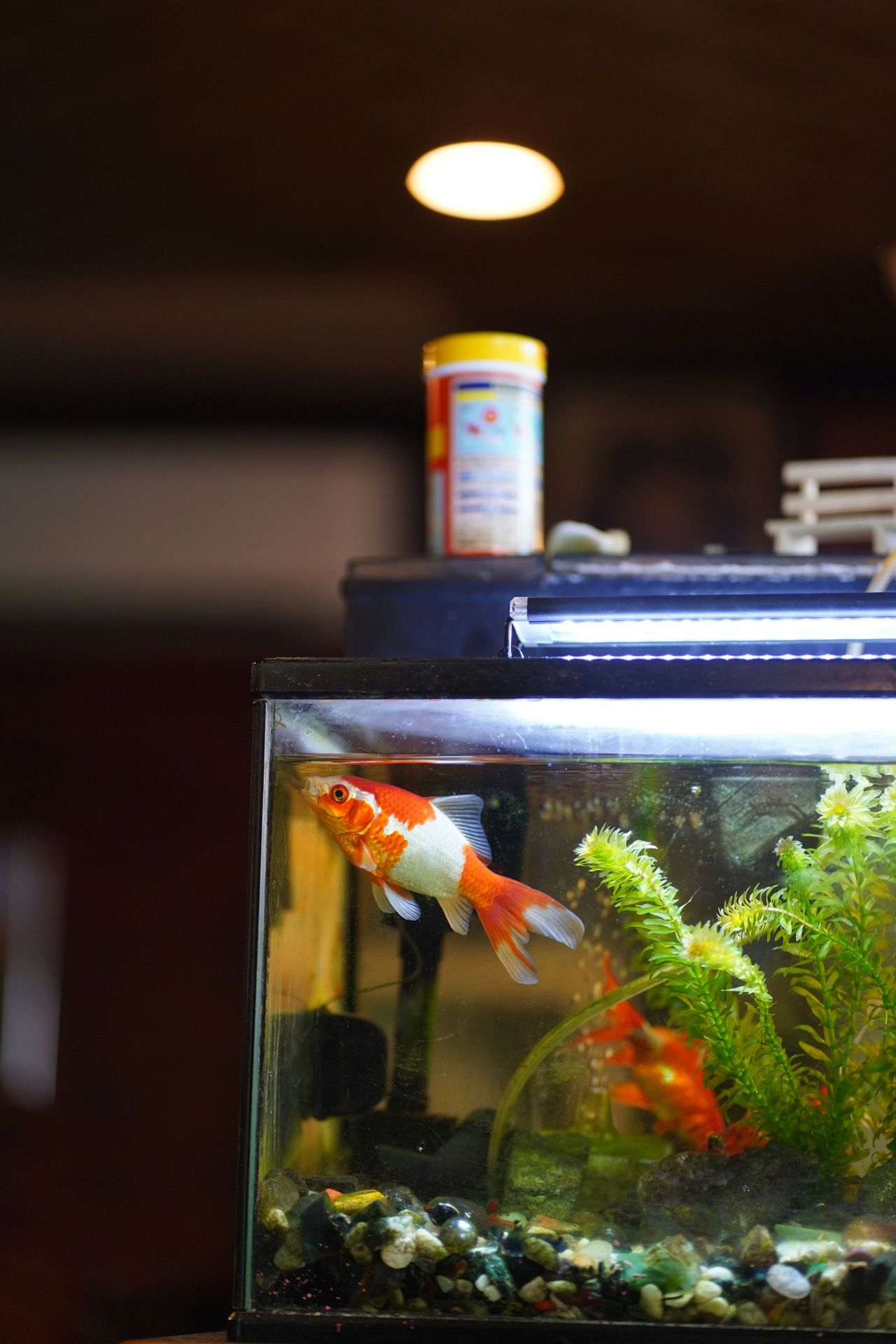
Shape counts too. A squat tank with a wide surface beats a tall, narrow one, because more surface gives the fish more swimming room and more oxygen 3.
Do they stay small in a small tank?
Don’t count on the old line that a goldfish only grows to the size of its tank. Aquarium Science argues that goldfish in small tanks stay small through growth-inhibiting hormones, and that this isn’t necessarily harmful 7. The care guides we read still treat bowls and small tanks as inadequate, and we’d get the bigger tank.
Water: temperature, pH and filtration
Do goldfish need a heater?
Usually not, since room temperature suits them. Aim for 68 to 74 °F (20–23 °C) for fancies and 60 to 70 °F (16–21 °C) for comets and shubunkins 2. See also our aquarium temperature chart.
Other guides give slightly different ranges, from 50 to 70 °F 3 up to about 75 °F 1, so don’t fuss over a degree or two. If a cold room has you reaching for a heater anyway, see our heater size guide.
pH
Don’t chase it. If your tap water sits between 7.0 and 7.5, leave it alone. The two guides we checked give slightly different ranges, 7.0 to 8.4 2 and 6.5 to 7.5 1, and both include that band. Sudden swings in temperature or water chemistry are what hurt.
Filtration
Oversize the filter a little and add aeration if the water runs warm 2.
Goldfish make a lot of waste, so keep the current gentle, since strong flow makes fancy types struggle to swim 1.
Hang-on-back and sponge filters both work, as long as the surface moves 3.
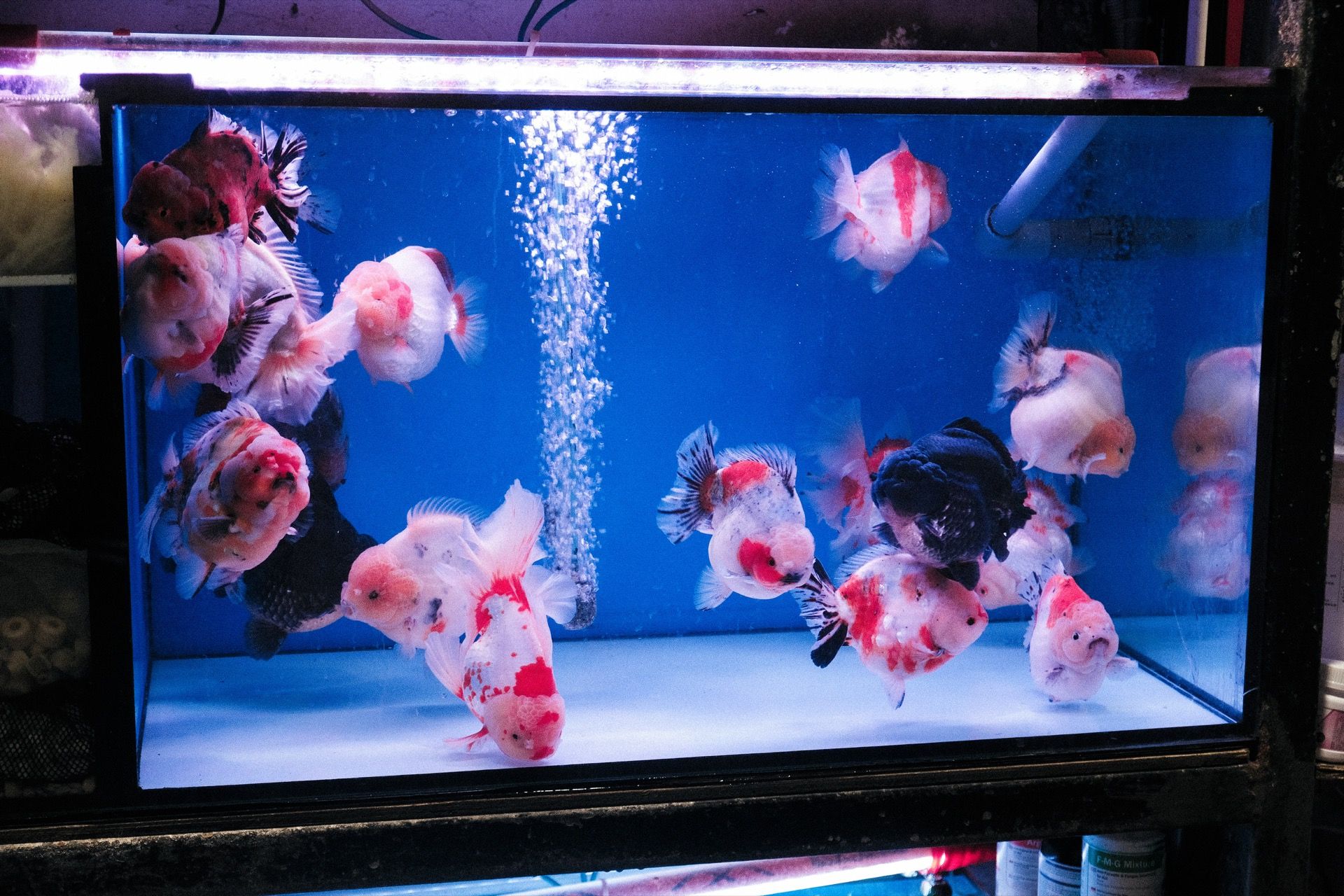
Cycle the tank before any fish go in. If that’s new to you, start with the fishless cycle calculator and our guide to telling when a tank is cycled. Aim for ammonia under 0.1 ppm, nitrite under 0.2 ppm and nitrate under 50 ppm 1.
Water changes
Change 10 to 25% of the water every week and vacuum the gravel. Treat the tap water first. When you clean the filter, rinse the media in old tank water, never tap, or the chlorine kills the bacteria 1.
Other guides vary: 10% weekly or 25% every two weeks, or simply 30 to 50% whenever nitrate passes 50 ppm. More in our water change guide.
What do goldfish eat?
Goldfish are omnivores. A goldfish flake or small pellet makes a good base, with frozen brine shrimp, daphnia, vegetables or scalded peas now and then 1.
Overfeeding is the usual mistake. Feed once or twice a day, only what they finish in about two minutes. Guides say anything from under two to three. Two small meals beat one big one, since goldfish bloat easily, and cleaner food like quality pellets, gel food or frozen brine shrimp means fewer water changes 3.
Floating food and swim bladder trouble
With a fancy, use sinking pellets, and soak flake before you feed it. It costs nothing, though the sources split on whether it matters.
RSPCA says fancies shouldn’t get flake or floating pellets, only sinking ones, because gulping air at the surface leads to buoyancy problems 1.
Aqueon agrees: soak flake briefly and skip floating pellets 2.
Aquarium Co-op, which sells its own goldfish food, calls the rule an internet adage and says it has fed floating food for over a decade with no trouble 3.
What hobbyists report
Forum posts are anecdotes. Nobody checked a diagnosis, and none of this proves anything. But they show what owners run into. We’ve paraphrased two FishLore threads.
- A new ryukin owner 8 had one of two ryukins floating at the surface and gulping air, a week after switching both from flake to a sinking fancy-goldfish pellet. They’d noticed the “sinking” pellets float for a moment, so they began holding them under the water before letting go. The fish was still floaty weeks later, and replies in the thread ranged from food to parasites without settling it. One member said a goldfish of theirs stopped having swim problems after they quit feeding 3 mm pellets whole and broke them up, though they didn’t know why. Another suggested dropping the food in at the filter outlet so it goes in below the surface.
- The owner of a small common goldfish (not a fancy) about seven years old 9 soaks sinking pellets in tank water before every meal. After eating, the fish still gasps at the surface and floats head-down for a while, and it’s back to normal by the next day. Fasting and peas haven’t stopped it, and the owner suspects it’s now a habit.
So soaking and sinking pellets may not break the air-gulping on their own. The cause might be the food, the pellet size, or just the fish.
Plants
Stick to tough plants like Anubias, Java fern and Cryptocorynes, and tie rhizome plants to driftwood or rock so they can’t be uprooted. Bigger goldfish eat many other live plants, and may uproot even those 2.
Goldfish tankmates
Keep goldfish with other goldfish, and at least two. They’re social, and it’s better for them 1.
- Peaceful, similar-sized fish only. Fin-nippers and boisterous fish are the ones to avoid 2. The tiger barb is the classic fin-nipper 1.
- Cool-water tankmates only. White cloud mountain minnows, danios and gold medaka suit smaller tanks 1. Most tropical species want warmer water than goldfish do, so an unheated goldfish tank rules them out.
- Nothing that fits in the mouth. Tankmates should be bigger than the goldfish’s mouth 1.
- Keep slim and fancy types apart as they grow. Commons, comets and shubunkins can get too boisterous for small fancies 2.
- Give unusual varieties their own kind. Celestials do better with their own kind, since they struggle to compete for food 1.
Problems to watch for
- Cloudy water in a new or newly stocked tank is often a bacterial bloom. Wait a week and don’t make drastic changes 3. More in our guide to cloudy aquarium water.
- White spots may be ich. Look for them, and for a wen growing over the eyes, whenever you feed 3.
- Sinking, bobbing at the surface, clamped fins, or sitting in a corner for a long time are signs of poor health 1.
FAQ
Can a goldfish live in a bowl? No. Goldfish should never be kept in bowls, small aquariums or any unfiltered container 2.
How many goldfish in a 20 gallon? One fancy, with 10 more gallons for each extra fish 3. Some guides would allow two, but we’d stay with the cautious number.
How often should I feed a goldfish? Once or twice a day, only what they finish in a few minutes 1.
All the numbers, with sources
| What | Value | Type | Source |
|---|---|---|---|
| Average lifespan (some varieties up to 30 years) | 10–15 years | Stated by source | [1] |
| Oldest goldfish on record (Tish, 1956 to 1999) | 43 years | Stated by source | [6] |
| Fancy goldfish tank, Aquarium Co-op | 20 gal (76 L) for the first fish, +10 gal (38 L) for each extra | Stated by source | [3] |
| Comets, shubunkins and commons, Aqueon minimum | 20 gal (76 L) per adult fish | Stated by source | [2] |
| Fancy goldfish temperature, Aqueon | 68–74 °F (20–23 °C) | Stated by source | [2] |
| Nitrate limit, RSPCA and Aquarium Co-op | Below 50 ppm | Stated by source | [1] |
Sources
- RSPCA Australia Knowledgebase (2024). How should I care for my goldfish?
- Aqueon (n.d.). Goldfish Care Guide
- Aquarium Co-Op (2026). Care Guide for Fancy Goldfish: Housing, Feeding, and More
- Aquarium Co-Op (2026). How Many Fish Can I Put in a Fish Tank? Rules for Adding More Fish
- U.S. Geological Survey (2026). Carassius auratus (Goldfish), Nonindigenous Aquatic Species fact sheet
- Guinness World Records (1999). Oldest goldfish ever
- Aquarium Science (aquariumscience.org) (2020). 17.5.2. Size of Goldfish
- FishLore Aquarium Forum (n.d.). Goldfish, Possible swim bladder problem. Advice please! (forum thread, hobbyist experience)
- FishLore Aquarium Forum (n.d.). Goldfish Tail Up, Head Down (forum thread, hobbyist experience)