What Size Heater for Your Tank? A Wattage Chart for 5–40 Gallons
Last reviewed · By Manel Vadillo
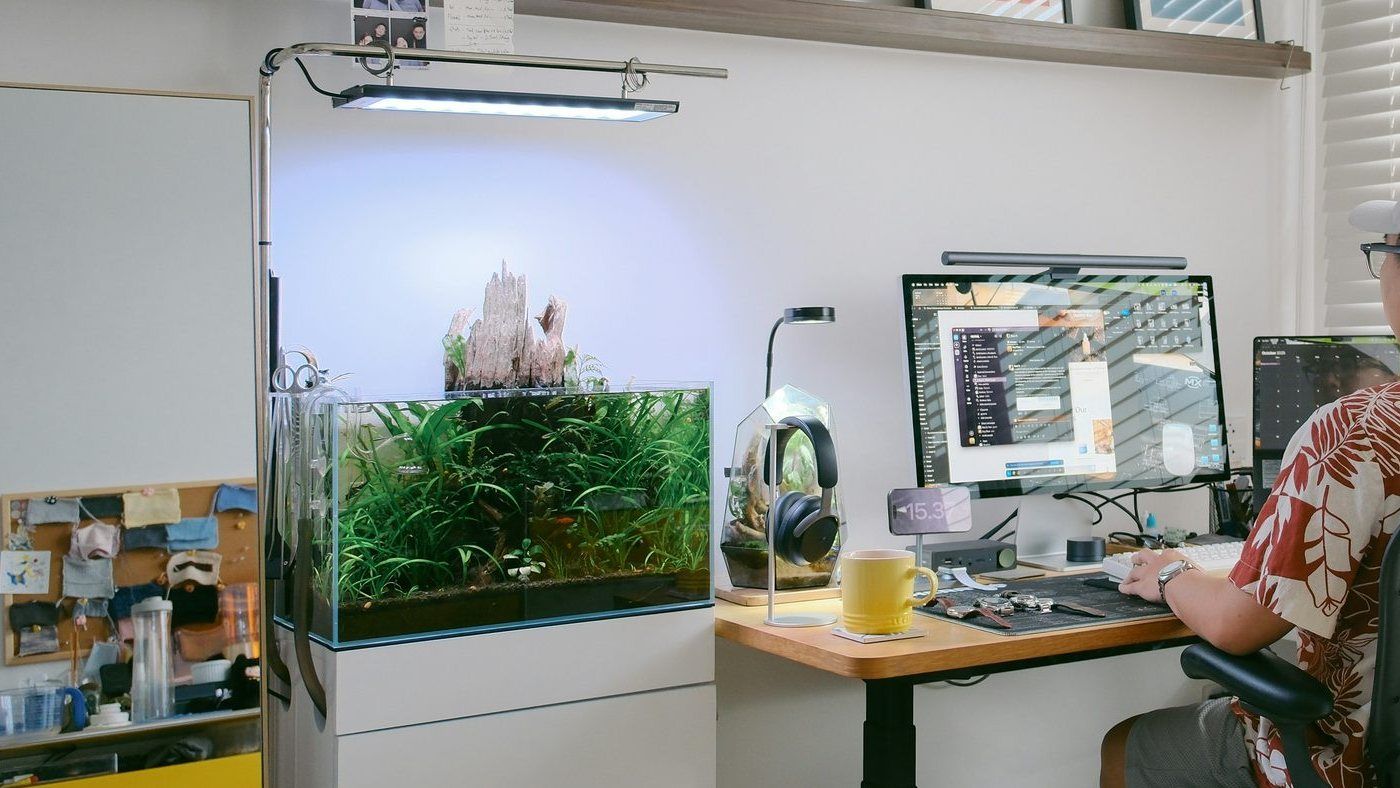
Ask what heater a 20 gallon needs and you'll hear 50, 100 and 150 watts, often in the same thread. They can all be right. The number that matters isn't the gallons, it's how much colder your room is than the water.
Quick answer
In a room about 10 °F cooler than your tank, use 50 W for 5 and 10 gallons, 100 W for 20 and 29 gallons and about 150 W for 40 gallons. If the room is only 5 °F cooler, a 20 gallon gets by on 50 W and a 40 gallon on 100 W. Colder room or no lid? Size up, or split the heat between two heaters.
The chart
Find your tank on the left. Then work out how far the water has to sit above the coldest your room gets, usually at night in winter. Most tropical fish do well at 75 to 80 °F 1, so the columns assume a 78 °F tank.
Not sure how many gallons your tank really holds? Measure the inside and use our aquarium volume calculator.
Two quick examples. A 10 gallon betta tank in a 70 °F apartment needs about 8 °F of lift, so the 50 W column covers it. A 29 gallon in a basement that drops to 62 °F is past the chart. That’s two-heater territory, covered below. If you haven’t picked the fish yet, see which species fit a 10 and which need a 20.
Why one tank gets three different answers
Search “what size heater for 20 gallon tank” and you’ll get 50 W, 100 W and 150 W, all stated with the same confidence. Each one traces back to a specific source and a specific room.
The 50 W answer is Aqueon’s. Its wattage guide covers 5 to 20 gallons with a 50 W heater 2, and its chart agrees when the room is only 5 °F cooler than the tank 1.
The 100 W answer is the old 5 watts per gallon rule. People repeat it without the fine print, which Aquarium Co-Op spells out: it holds when you need up to 10 °F above room temperature and the tank has a lid to stop evaporative cooling 4. Aqueon’s chart lands on 100 W too, once the gap reaches 10 °F 1.
The 150 W answer comes from cold rooms. On FishLore, one member laid out the whole range for a 20 gallon: 50 to 150 W depending on the temperature rise, 75 to 100 W for a 78 °F tank in a house that stays at 70, and 150 W if the heating drops at night in winter 19.
Then there’s the opposite camp. The author of Aquarium Science calls 5 W per gallon dangerous, because a heater that sticks on can cook the tank. The site’s advice is a total of no more than 3 W per gallon, split between two heaters. For a 20 gallon in a 70 °F room, that means two 25 W heaters and a 10 W 9.
Nobody’s wrong here. They’re just picturing different rooms.
Room temperature and the lid
A heater only has to put back the heat the tank loses, and that depends mostly on the room and on how much water evaporates off the top. Aquarium Co-Op’s list of what changes the answer covers room temperature, what the tank is made of, how warm you set it, whether filters are adding heat, and whether there’s a tight lid 5.
Other gear helps a little: a canister filter drawing 30 W works like a small heater 4. Placement counts too. Aqueon suggests going bigger, or adding a second heater, when the tank is in a cold room, on an outside wall or near an outside door 1.
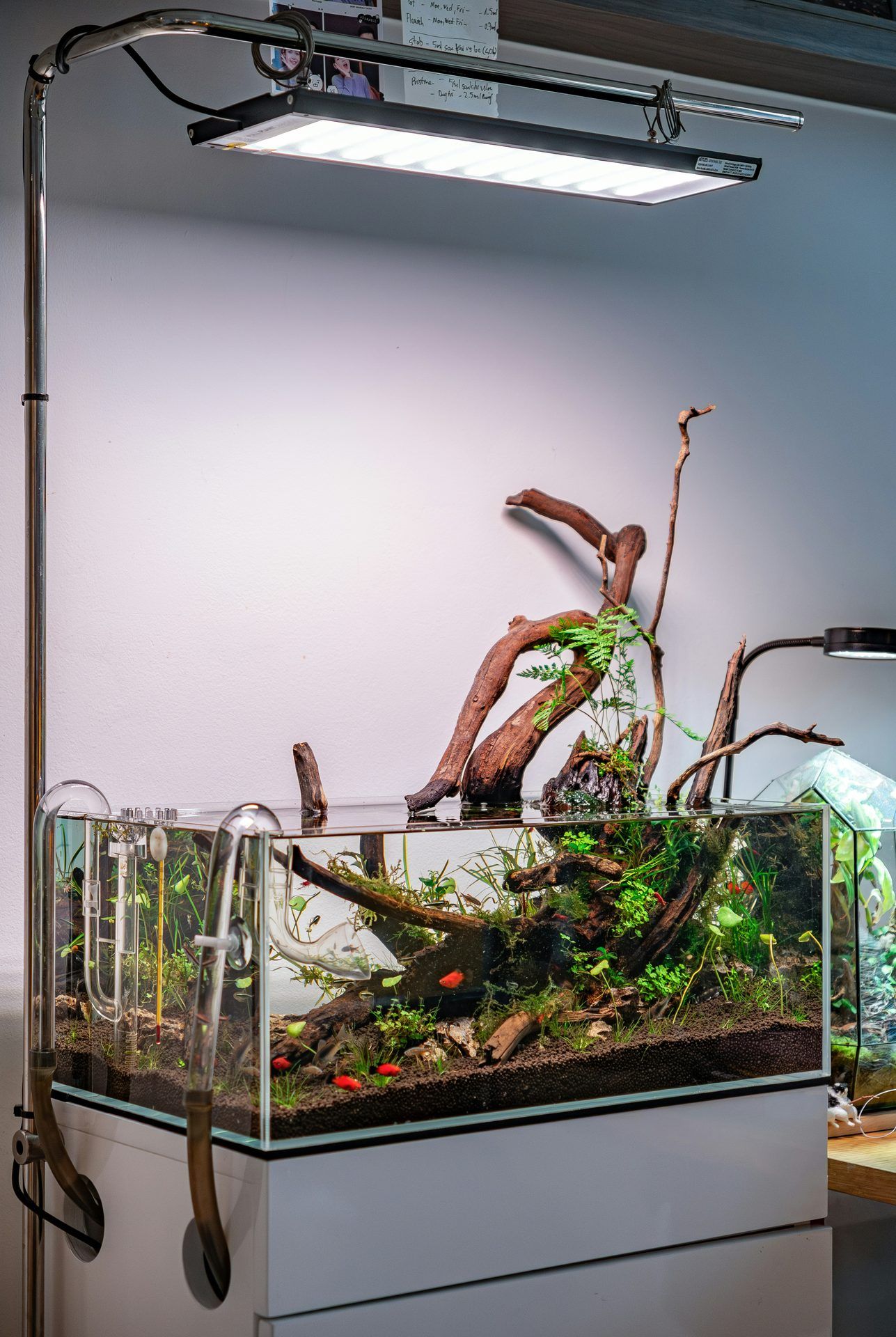
How much? Aquarium Science reckons a tank with a big bubble wall in dry air may need double the usual wattage, and says every tank should have a cover 9. Our own rule of thumb, not a published one: without a lid, read the chart one column to the right.
When to use two heaters instead of one
Use two once the gap gets past about 15 °F. Aquarium Co-Op suggests a second heater for a 29 gallon in a 65 °F home that needs a 15 degree lift 4. Fluval says that past 18 °F (10 °C) you should add a heater or upgrade to a more powerful one 6.
There’s also a safety case, even in a warm room. Aquarium Co-Op would rather use two 100 W heaters than one 200 W. If one sticks on, it’s probably too weak to overheat the tank by itself. If one dies, the other keeps the water from getting too cold 4. Aquarium Science does the math for a 20 gallon: one stuck 100 W heater could take it to 105 °F (41 °C), while a stuck 50 W heater out of a pair might only reach 90 °F (32 °C) 9. The same site suggests setting the pair a few degrees apart, say 78 and 74 °F, so one does the daily work and the other only kicks in when the room gets cold. It even recommends a pair on a 5 gallon: two 10 W heaters 9.
Where to put the heater and the thermometer
Put the heater where the water moves, right by the filter output or intake 1 4. A tube heater works well at a 45 degree angle 4, and a fully submersible one can also lie flat near the bottom 1. Leave space around it: no gravel or decorations touching the heater 1 7.
Mounting it low has a bonus. A heater near the substrate stays underwater when you drain for a water change 9.
The thermometer goes at the opposite end, so you know the heat is reaching the far side 1 4. Aqueon prefers stick-on LCD thermometers on the outside of the glass, just above the gravel, away from sunlight or a heating vent 1. Keep the tank itself out of direct sun. Merck warns that sunlight can warm the water, and warmer water holds less oxygen 10.
Tropical fish that can go without a heater
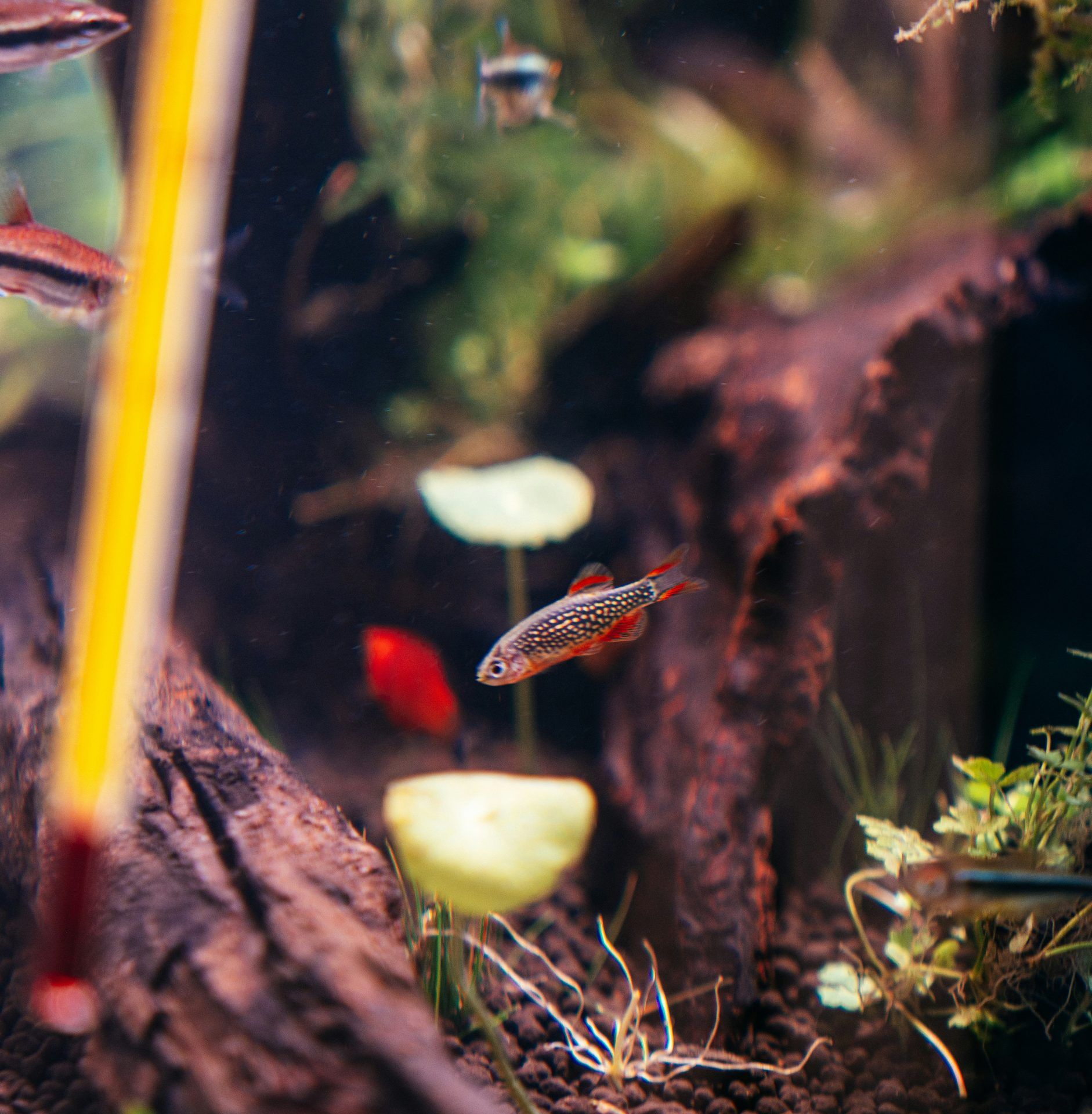
A few popular fish come from cooler water. White cloud mountain minnows and Japanese ricefish are fine without a heater, according to Aquarium Co-Op 4, and their FishBase ranges agree: For a chart of ranges by species, see our aquarium temperature guide.
- White cloud mountain minnow: 64–72 °F (18–22 °C) 12
- Zebra danio: 64–75 °F (18–24 °C) 13
- Japanese ricefish (medaka): 64–75 °F (18–24 °C) 14
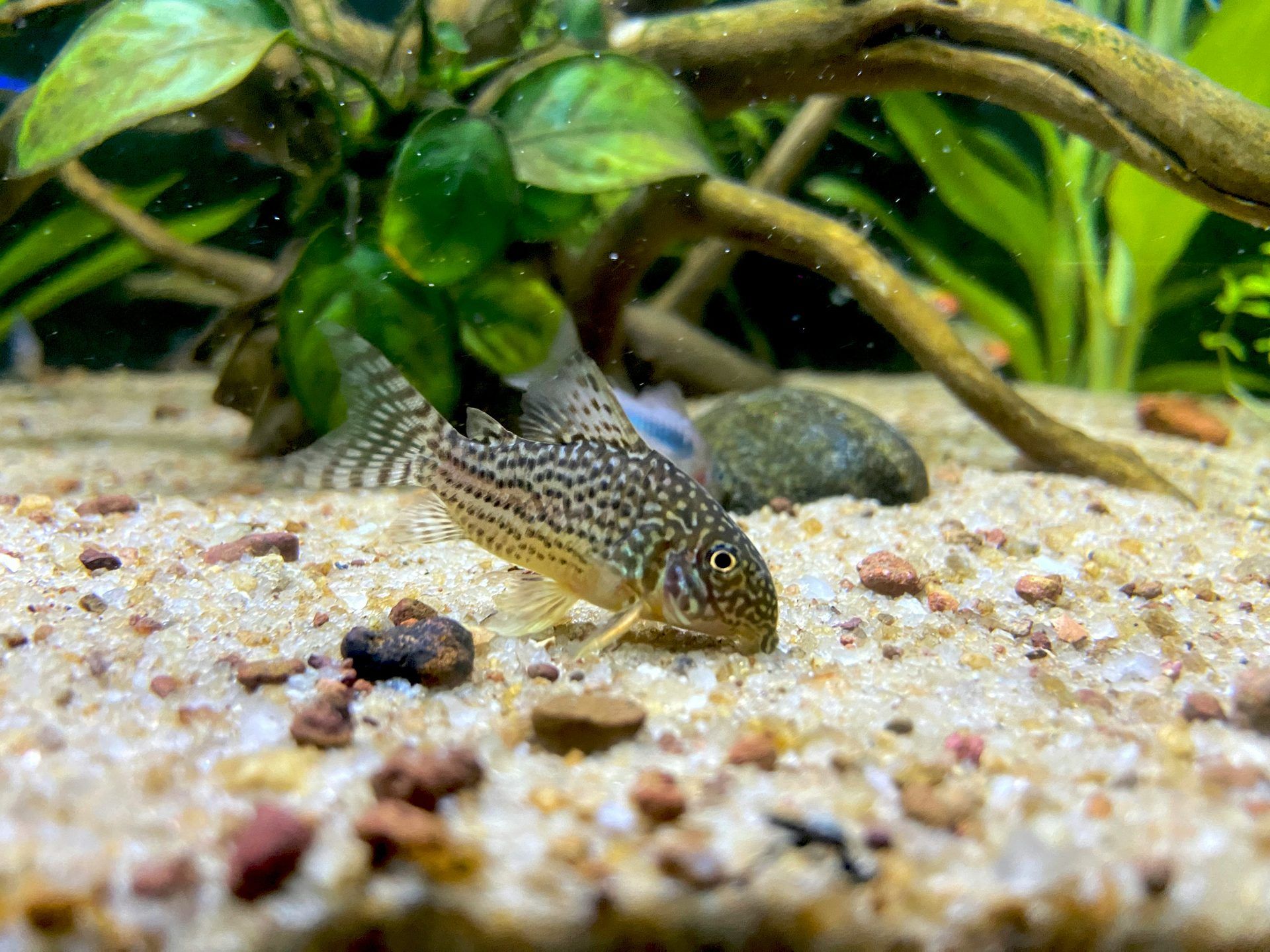
- Peppered cory: 64–73 °F (18–23 °C) 15
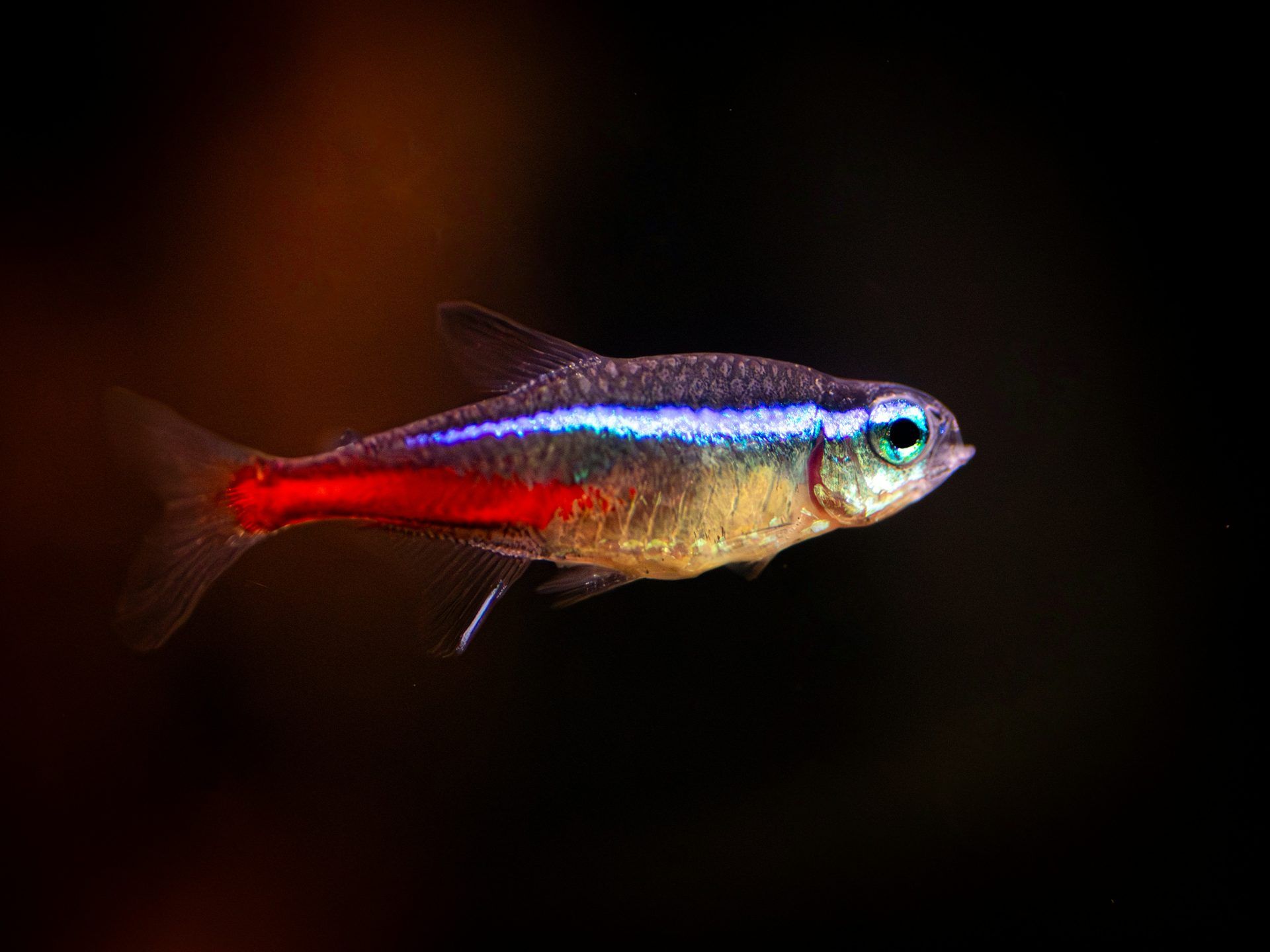
Others need the heat. FishBase lists 75–86 °F (24–30 °C) for the betta 17. The neon tetra sits in between at 68–79 °F (20–26 °C) 16.
The sources don’t agree on how much this matters. Merck says a heater is necessary for tropical fish 10. Aquarium Co-Op says most fish can handle cooler water, but a steady warm temperature is less stressful and helps prevent disease 4. The author of Aquarium Science goes furthest, arguing that tropical fish handle rooms down to 65 °F and that water below 60 °F can typically be deadly 9. If your house never drops much below the fish’s range, a heater mostly buys you stability. In a basement that heads toward 60 °F, it’s not optional.
Common heater mistakes
A heater too small for a cold room. The chart assumes a normal living room. One FishLore member moved a 20 gallon tall into a garage that drops to about 50 °F and wanted 76 to 78 °F in the tank. That’s a lift of 25 degrees or more, as they pointed out, and far past any single-heater chart 20. Another member, whose 20 gallon sits in a basement in Maine, bought a new heater as the weather turned and kept the old one as a backup. They also wrap the tank in blankets on cold nights 18.
Trusting the dial. A dial gets you close, not exact. Aqueon rates its Pro heater at ±1 degree 3, and Aquarium Co-Op rates its own heater at ±2 °F 5. Merck recommends a separate thermometer so you can check the water independently of the heater 10. Aqueon suggests comparing the setting to the thermometer and waiting several hours after each adjustment before you check again 1. The Maine basement tank above shows why: a 100 W Aqueon set to 80 °F, and 78 °F on a thermometer at the other end 18.
Taking it out of the water while it’s plugged in. Merck says not to plug a heater in until the tank is full, because many heaters sit in a glass tube that can shatter without water around it 10. Aquarium Co-Op adds that a heater left running in air can burn out or crack. Unplug it before a water change 4. When you install one, let it sit in the water for 20 to 30 minutes before you plug it in. When you remove one, unplug it and wait at least 30 minutes 4 1.
Refilling with cold water. A big water change with cold tap water undoes the heater’s work. Merck’s general rule is no more than 1 °F of change per hour 11, so match the new water with a thermometer. Our water change guide covers the rest.
Heaters that fit the chart
These are real models whose ratings we checked against the maker’s own page. We haven’t tested them ourselves.
- Aqueon Pro Adjustable. 50 W rated for tanks up to 20 gallons, adjustable from 68 to 88 °F, with an automatic shut-off if it overheats 3. Models: Aqueon Pro Adjustable Heater 50W, Aqueon Pro Adjustable Heater 100W.
- Fluval M series. M50 up to 15 gallons, M100 up to 30 and M150 up to 45 6. Models: Fluval M100 Submersible Heater, Fluval M150 Submersible Heater.
- Aquarium Co-Op heater. 50 or 100 W, adjustable from 64 to 91 °F 5. Model: Aquarium Co-Op Aquarium Heater 100W.
For a nano tank, Aquarium Co-Op suggests 25 W or less for 6 gallons and under, depending on your room 4.
FAQ
Is a 50 watt heater enough for a 20 gallon tank? Yes, if the room stays within about 5 °F of the tank temperature 1. If your house drops to the high 60s at night, go to 100 W.
Can a heater be too big for a tank? It can. A big heater that sticks in the on position can overheat a small tank fast 9. That’s the reason to use two smaller heaters on bigger tanks.
What size heater for a 5 gallon tank? Aquarium Co-Op suggests 25 W or less for tanks of 6 gallons or less 4. Aqueon’s chart lists 50 W, its smallest size in that chart 1. On the Aquarium Co-Op forum, one keeper runs 50 W heaters on several 5 gallon tanks in a house kept at 68 °F and says they stay stable 21.
What size heater for a 29 or 40 gallon tank? For a 29 gallon, 100 W in a normal room, or 150 W if the room is 15 °F colder than the tank 1. For a 40 gallon, our chart gives 150 W for a 10 °F gap. Fluval’s M150 and Cobalt’s 150 W are both rated to about that size 6 7.
Should I turn the heater off at night? No. Aquarium Co-Op says you can leave it on around the clock, because the thermostat switches it off once the water reaches the set temperature 4.
Does temperature matter while cycling a new tank? Yes. Warmth speeds up the filter bacteria. Our guide on how long cycling takes explains how warm to go.
All the numbers, with sources
| What | Value | Type | Source |
|---|---|---|---|
| Aqueon chart, 5 gal tank | 50 W at +5, +10 and +15 °F above room | Stated by source | [1] |
| Aqueon chart, 10 gal tank | 50 W at +5 and +10 °F; 100 W at +15 °F | Stated by source | [1] |
| Aqueon chart, 20 gal tank | 50 W at +5 °F; 100 W at +10 and +15 °F | Stated by source | [1] |
| Aqueon chart, 30 gal tank (used for 29 gal) | 100 W at +5 and +10 °F; 150 W at +15 °F | Stated by source | [1] |
| Aqueon chart, 55 gal tank | 150 W at +5 and +10 °F; 200 W at +15 °F | Stated by source | [1] |
| Room temperature the Aqueon chart assumes | 68–72 °F (20–22 °C) | Stated by source | [1] |
| 40 gal tank, our chart | 100 W at +5 °F, 150 W at +10 °F, 200 W at +15 °F | Our calculation | [1] |
| Aqueon rule of thumb | 5 W per gallon up to 55 gal; 3 W per gallon over 60 gal | Stated by source | [1] |
| Aqueon wattage guide | 50 W: 5–20 gal; 100 W: 15–40 gal; 150 W: 30–55 gal | Stated by source | [2] |
| Aquarium Co-Op rule of thumb | 5 W per gallon, for up to 10 °F above room, with a lid | Stated by source | [4] |
| Fluval M series ratings | 50 W to 15 gal; 100 W to 30 gal; 150 W to 45 gal | Stated by source | [6] |
| Fluval: add a heater or size up when room-to-tank gap exceeds | 18 °F (10 °C) | Stated by source | [6] |
| Cobalt Neo-Therm Pro ratings | 50 W to 12 gal; 75 W to 20 gal; 100 W to 29 gal; 150 W to 40 gal | Stated by source | [7] |
| Eheim thermocontrol ratings | 50 W: 25–60 L (about 7–16 gal); 75 W: 60–100 L (about 16–26 gal); 100 W: 100–150 L (about 26–40 gal) | Stated by source | [8] |
| Aquarium Science maximum | 3 W per gallon total, split between two heaters | Stated by source | [9] |
| Aquarium Science, 20 gal in a 70 °F room kept at 78 °F | Two 25 W heaters plus one 10 W | Stated by source | [9] |
| One stuck 100 W heater in a 20 gal (Aquarium Science) | Can reach 105 °F (41 °C); a stuck 50 W of two, about 90 °F (32 °C) | Stated by source | [9] |
| Most tropical fish (Aqueon) | 75–80 °F (24–27 °C) | Stated by source | [1] |
| Bettas and discus (Aqueon) | 76–85 °F (24–29 °C) | Stated by source | [1] |
| Thermostat accuracy, Aqueon Pro heater | ±1 degree | Stated by source | [3] |
| Temperature accuracy, Aquarium Co-Op heater | ±2 °F | Stated by source | [5] |
| Wait before plugging in a new heater / before removing one | 20–30 min / at least 30 min | Stated by source | [4] |
| Maximum temperature change (Merck general rule) | 1 °F (or 1 °C) per hour | Stated by source | [11] |
| White cloud mountain minnow | 64–72 °F (18–22 °C) | Stated by source | [12] |
| Zebra danio | 64–75 °F (18–24 °C) | Stated by source | [13] |
| Japanese ricefish (medaka) | 64–75 °F (18–24 °C) | Stated by source | [14] |
| Peppered cory | 64–73 °F (18–23 °C) | Stated by source | [15] |
| Neon tetra | 68–79 °F (20–26 °C) | Stated by source | [16] |
| Betta | 75–86 °F (24–30 °C) | Stated by source | [17] |
Sources
- Aqueon (n.d.). Fish Tank Heater Tips for Cold Weather (includes the Aqueon Heater Guidelines chart)
- Aqueon (n.d.). Aqueon Heater Wattage Guidelines (PDF)
- Aqueon (n.d.). Pro Adjustable Heater (product page)
- Aquarium Co-Op (n.d.). How to Choose the Right Aquarium Heater
- Aquarium Co-Op (n.d.). Aquarium Co-Op Aquarium Heater, 50W & 100W (product page and instructions)
- Fluval USA (n.d.). M150 Submersible Heater (M series models and FAQ)
- Cobalt Aquatics (2025). Neo-Therm PRO Heater, tank size recommendations (archived copy, September 9, 2025; the live store was offline when we checked)
- EHEIM (n.d.). EHEIM thermocontrol 100 (series comparison table)
- Aquarium Science (aquariumscience.org) (2026). 14.8. Aquarium Heaters
- Merck Veterinary Manual (Pet Owner Version) (2026). Providing a Home for Fish
- Merck Veterinary Manual (2026). Environmental Diseases of Aquatic Animals in Aquatic Systems
- FishBase (2026). Tanichthys albonubes, White cloud mountain minnow (species summary)
- FishBase (2026). Danio rerio, Zebrafish (species summary)
- FishBase (2026). Oryzias latipes, Japanese rice fish (species summary)
- FishBase (2026). Corydoras paleatus, Peppered corydoras (species summary)
- FishBase (2026). Paracheirodon innesi, Neon tetra (species summary)
- FishBase (2026). Betta splendens, Siamese fighting fish (species summary)
- FishLore Aquarium Forum (n.d.). Trouble keeping 20 gallon above 74 degrees. How do I heat it up more? (forum thread)
- FishLore Aquarium Forum (n.d.). Heater for 20 gallon high (forum thread)
- FishLore Aquarium Forum (n.d.). 20 Gal Heater Size (forum thread)
- Aquarium Co-Op Forum (2024). What size heater for 5 gallon? (forum thread)