How Many Fish in a 10 or 20 Gallon Tank? Counts by Species, Not Inches
Last reviewed · By Manel Vadillo
Ask how many fish go in a 10 gallon and you'll hear ten inches. Then the tetra you wanted turns out to need more floor than the tank has, and it only looks right in a school of eight. Species, floor space and the age of your filter matter more than the gallons.
Quick answer
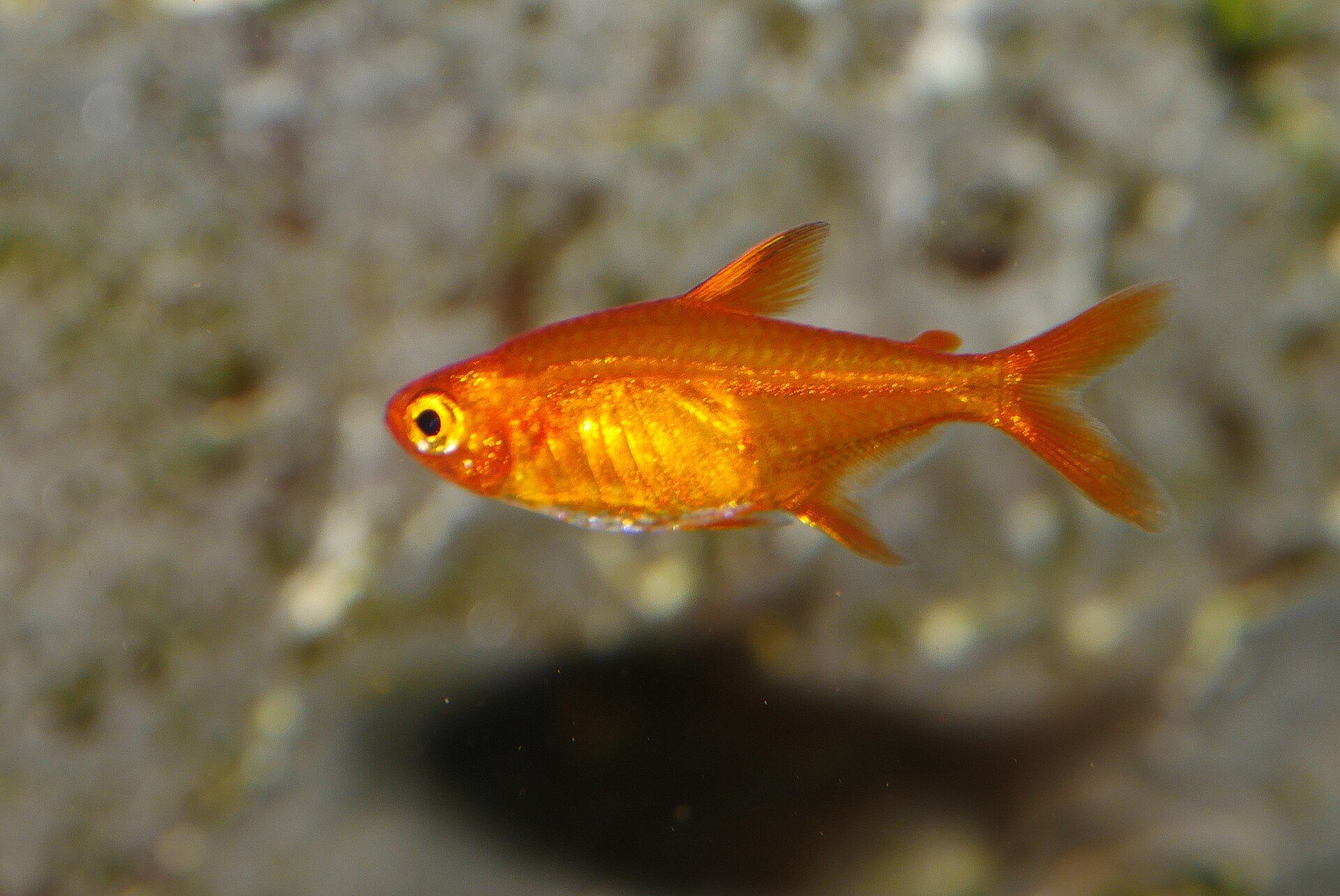
In a 10 gallon: one betta, or a school of 8 to 10 chili rasboras or ember tetras. In a 20 gallon: a school of 8 to 10 neon tetras or harlequin rasboras, plus a small group of pygmy corys. Pick one school and add it in stages, because a new tank can't process a full load of waste yet.
Why “1 inch per gallon” gives you more than one answer
The old rule says 10 inches of fish for a 10 gallon and 20 for a 20. Merck’s veterinary manual gives a different freshwater rule: 1 inch of fish for every 12 square inches of surface area 1. On Aqueon’s standard tanks 2 that works out to about 17 inches in a 10 gallon, about 25 in a 20 high and about 31 in a 20 long. Those are our numbers, worked from the outside dimensions and rounded down. The water surface is a little smaller than the outside of the glass, because the glass has thickness.
If your tank isn’t a standard size, the aquarium volume calculator gives its gallons from your own inside measurements.
Why lean on the surface rule? Surface is where the water trades gas with the air, so a rule built on it follows something real about a small tank. A gallon count doesn’t. Merck doesn’t spell out that reasoning, so that part is ours. What Merck does say is that the area rule is for freshwater, and that it saves the volume rule for saltwater, which carries less dissolved oxygen 1.
It’s still a guide. Merck itself says a tank’s carrying capacity comes down to filtration and the territory available to the fish 1. The author of Aquarium Science is blunter. He says the inch rule is a rough approximation that works for fish of 2 to 3 inches and breaks down above that, because weight grows with the cube of length: one 2 inch fish weighs as much as eight 1 inch fish 3. He calls stocking largely opinion, and he keeps tanks far fuller than most people do, with very large filters. Even so, his “light” level for a new tank with ordinary filtration is a tenth of his heavy numbers 3.
Every fish below is under 3 inches, so the inch rule isn’t far off for them. What it can’t tell you is whether the species fits the floor, whether there are enough of them to feel safe, and whether the filter is ready. Those are the three checks that follow.
Check 1: does the species fit the floor?
Seriously Fish gives a recommended tank base for each species. Floor area is easier to compare than gallons, because a “20 gallon” can be tall or long.
A standard 10 gallon has about 213 square inches of floor. Seriously Fish recommends an 18 × 12 inch base (216 square inches) for the chili rasbora 5, ember tetra 6, pygmy cory 8, guppy 10 and a single betta 9. The 10 gallon’s length, 20¼ inches, clears the 18. Its depth, 10½ inches, is 1½ short of the 12. The areas come out close, and the ember and betta profiles say “or equivalent”, but it isn’t an exact match. Treat the 10 gallon as a snug fit for these species, not a roomy one.
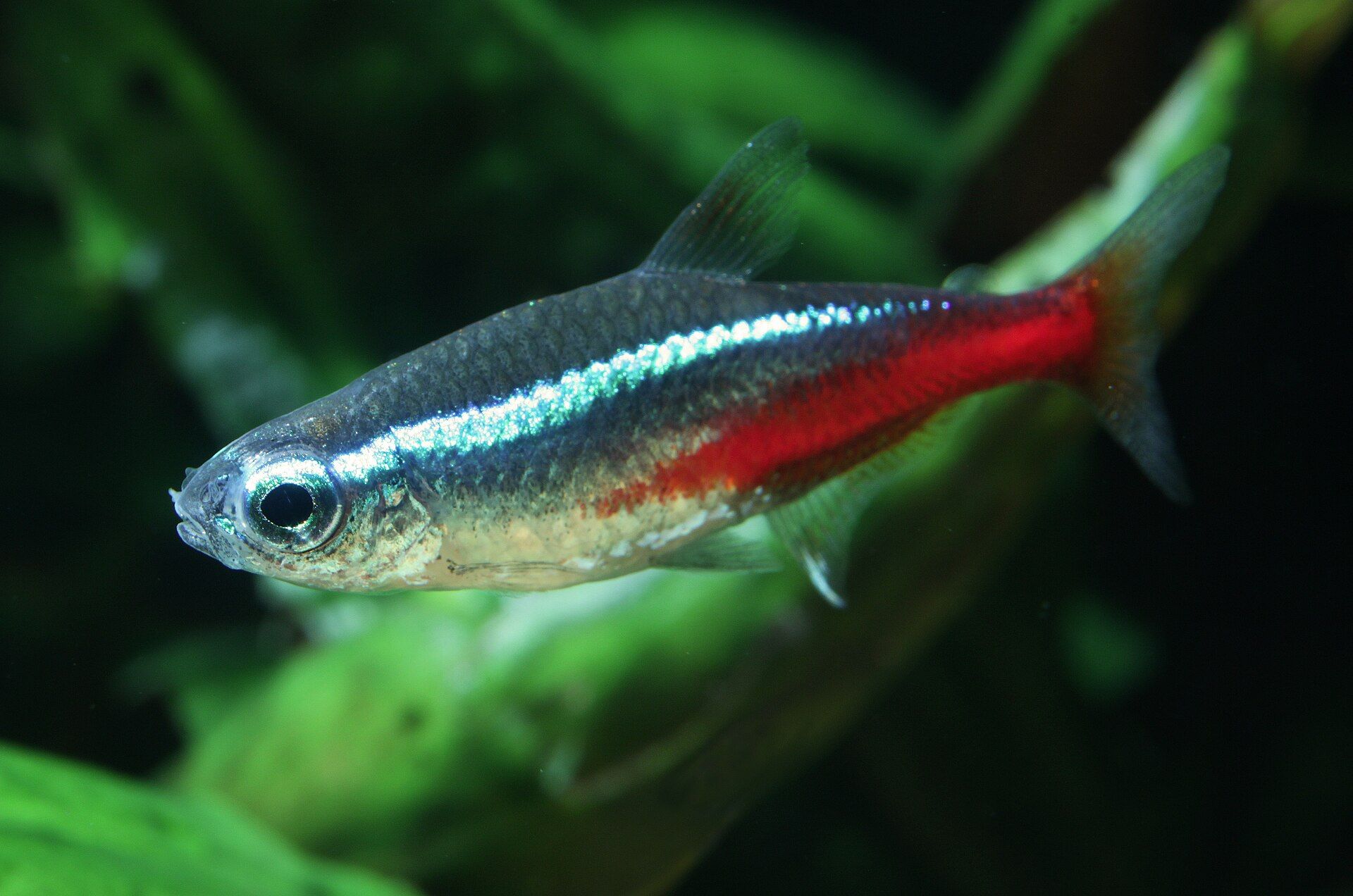
The neon tetra 4 and the harlequin rasbora 7 ask for 24 × 12 inches, which is 288 square inches. For the neon, Seriously Fish converts that to about 14 US gallons 4. A 10 gallon is under that floor, and a 20 high or a 20 long clears it. That’s one source’s recommendation, not a law, but it’s the one that gives a number. Our neon tetra guide sets it against FishBase’s figures.
Check 2: are there enough of them to be a school?
Most small schooling fish don’t do well in ones and twos. Seriously Fish recommends 8 to 10 for the neon 4, chili rasbora 5, ember tetra 6 and harlequin 7. For the pygmy cory it says at least 6, preferably 10 or more 8.
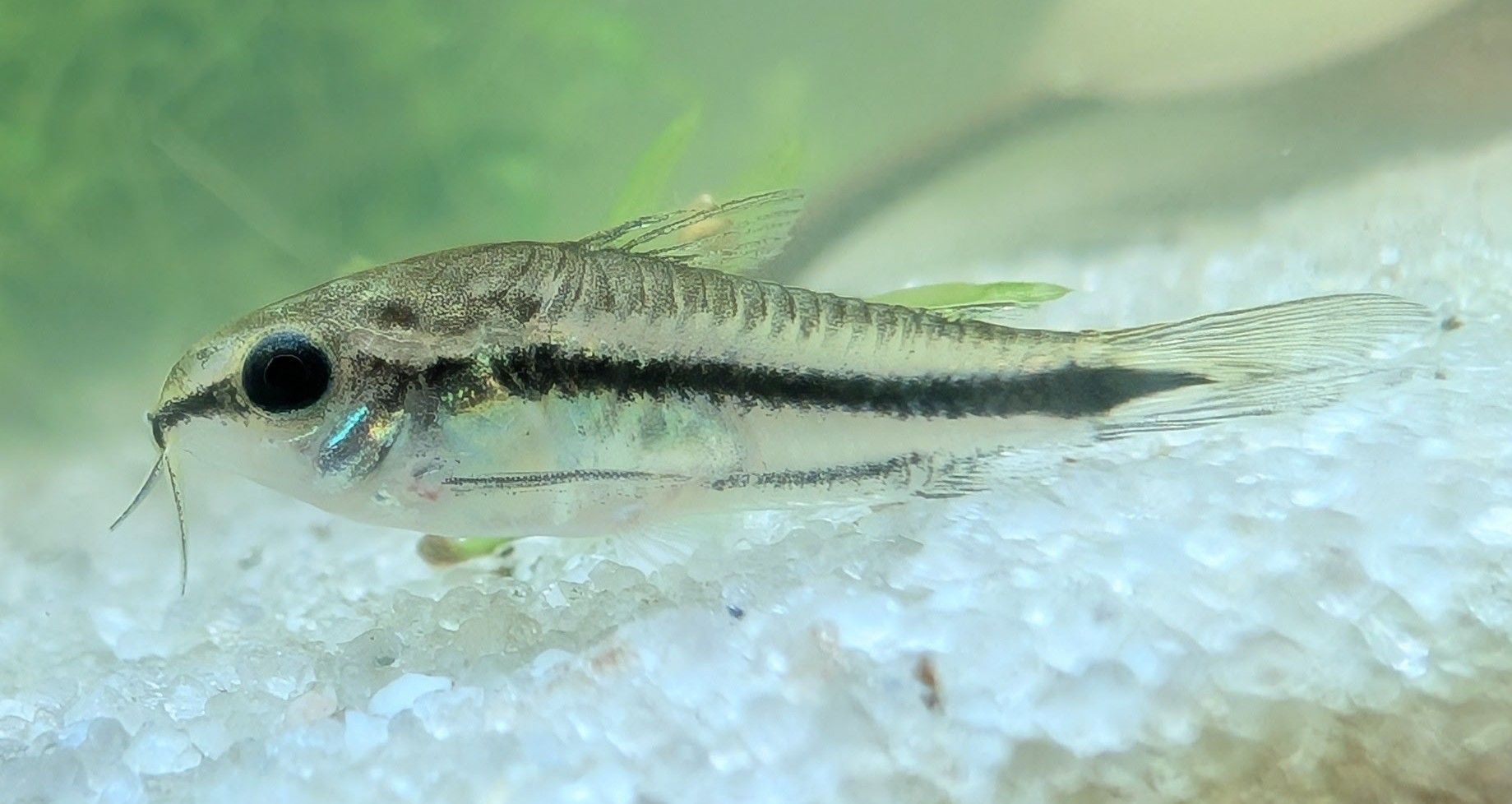
That’s why a “one of each” shopping list fails. Three neons, two guppies and a pair of corys in a 10 gallon leaves none of them in a proper group. Fewer species in bigger groups works better. A 10 gallon is one school, sometimes with a small group of bottom fish.
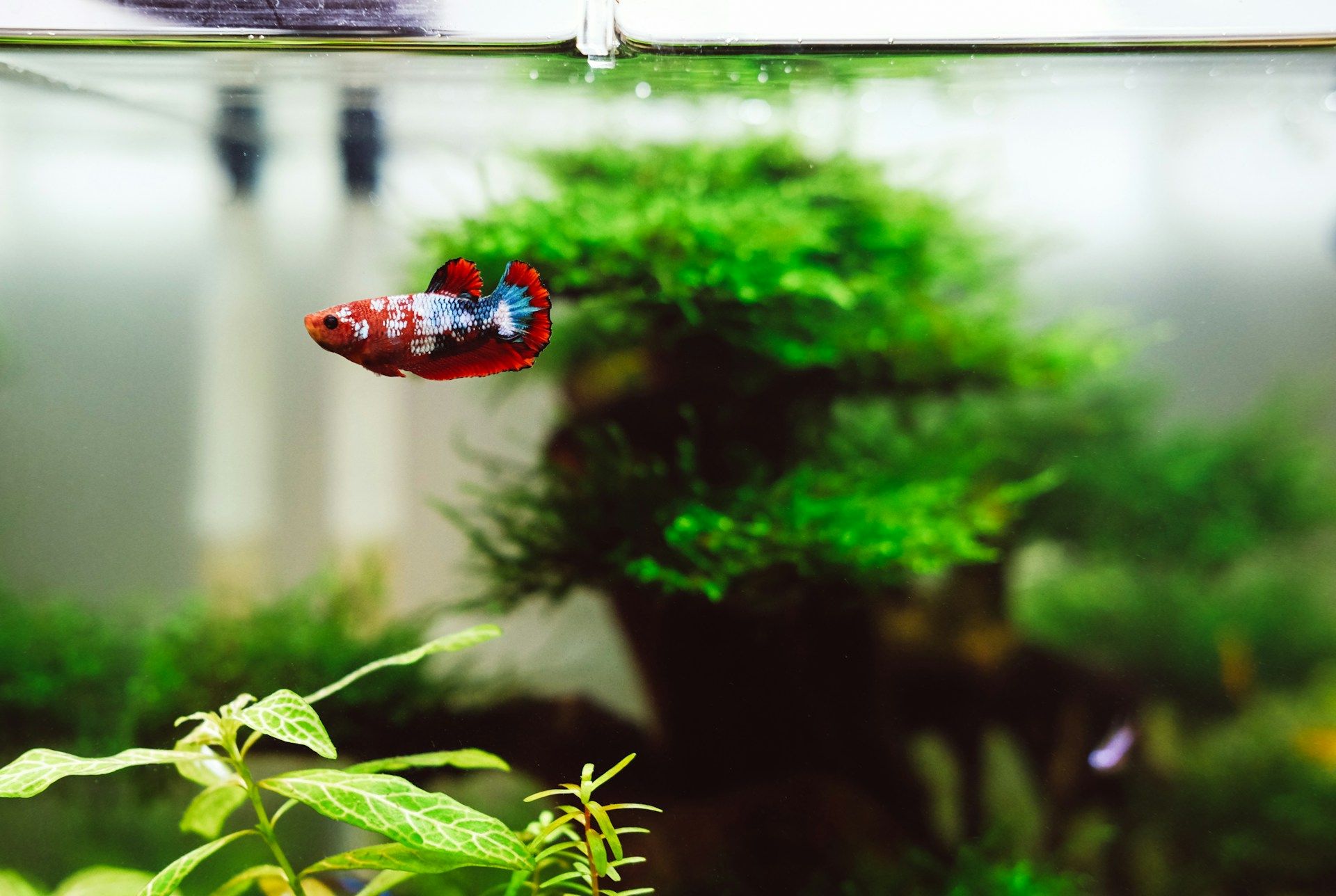
The betta is the opposite case. Seriously Fish says it’s best kept alone, that ornamental strains are more aggressive than any other betta, and that in most cases only one can live in a tank. It also says 18 × 12 inches is large enough for a single male, and that it doesn’t support keeping them in tiny tanks or jars 9.
The chili rasbora profile names pygmy corys as suitable companions 5, and the neon profile lists small catfishes 4. Every example stays inside the surface-rule budget.
Check 3: is the tank ready for them?
This is the check people skip. Merck says the beneficial bacteria develop on their own in 4 to 6 weeks, and that adding too many fish at once overwhelms them and lets toxins build up fast. Its advice is to add fish gradually, 1 or 2 at a time over several weeks 1. The cost is more chances to bring in disease, so it recommends quarantining new fish.
The other route Merck gives is to stock the tank and test ammonia and nitrite daily, controlling any rise with frequent water changes. It calls this more work, but it can end up stable 1. The chili rasbora profile is blunter: don’t introduce Boraras to a biologically immature aquarium 5.
So the counts in this article are where you end up, not what goes in on day one. Cycling before the fish arrive gets you around the problem, and it’s the easier route when a species wants a school of 8 to 10. Our fishless cycle guide covers it, the cycle calculator does the dosing, and how to tell if a tank is cycled says when you’re done. If the fish are already in the tank, read how long a tank takes to cycle first.
20 gallon: high or long?
Both hold 20 gallons, but the floor differs. The high has about 303 square inches and the long about 378 2. Both clear the 288 that neons and harlequins ask for. The surface rule also gives the long more fish, about 31 inches against about 25 1.
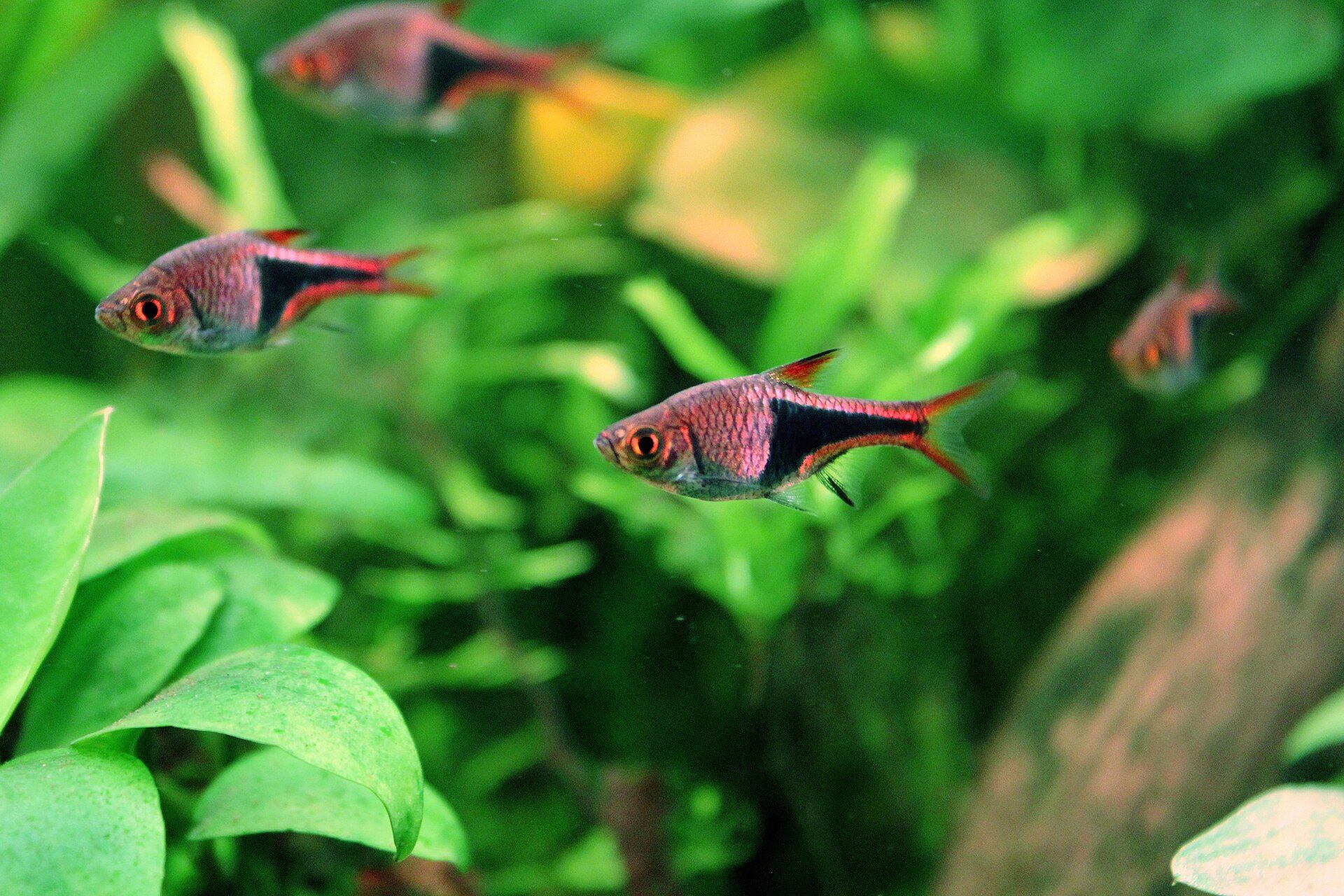
Our stocklists for either one are 10 neons and 6 pygmy corys, or 10 harlequin rasboras. Check the heater for the tank you pick: our heater size chart covers both 10 and 20 gallons.
What about guppies?
Seriously Fish gives the guppy a 2.4 inch standard length and an 18 × 12 inch base. It calls it a very peaceful fish that does well in a quiet community with other livebearers, rasboras, corydoras, small loricariids and tetras, and says not to keep it with fin-nippers such as tiger barbs and serpae tetras 10. It gives no group size, and guppies are livebearers, so any count we gave you would stop being right once they breed. We’d rather leave the number out than make one up.
FAQ
Can I keep 10 neon tetras in a 10 gallon? Seriously Fish asks for a 24 × 12 inch base for neons, about 14 US gallons 4. A standard 10 gallon floor is smaller than that, so a 20 gallon is the better fit.
How many bettas fit in a 10 gallon? One. Seriously Fish says ornamental bettas are more aggressive than any other betta species and that only a single fish can be kept per tank in most cases 9.
How many fish can I add at once? Merck suggests 1 or 2 at a time over several weeks in a new tank 1. If you cycle first, a school can go in together, but keep testing ammonia and nitrite as Merck describes.
All the numbers, with sources
| What | Value | Type | Source |
|---|---|---|---|
| Merck freshwater stocking guideline | 1 inch of fish per 12 sq in of surface area | Stated by source | [1] |
| Aqueon 10 gallon, outside size | 20¼ × 10½ in (about 213 sq in) | Stated by source | [2] |
| Aqueon 20 high, outside size | 24¼ × 12½ in (about 303 sq in) | Stated by source | [2] |
| Aqueon 20 long, outside size | 30¼ × 12½ in (about 378 sq in) | Stated by source | [2] |
| Fish allowed by the surface rule, 10 gallon | About 17 in | Our calculation | [1] |
| Fish allowed by the surface rule, 20 high / 20 long | About 25 in / about 31 in | Our calculation | [1] |
| 10 gallon depth vs the 18 × 12 in base (Seriously Fish) | 20¼ in length clears 18; 10½ in depth is 1½ in short of 12; area about 213 vs 216 sq in | Our calculation | [2] |
| Neon tetra: size, base, group | 1.2 in SL; 24 × 12 in base (about 14 gal); 8–10 fish | Stated by source | [4] |
| Chili (mosquito) rasbora: size, base, group | 0.8 in SL; 18 × 12 in base (about 11 gal); 8–10 fish | Stated by source | [5] |
| Ember tetra: size, base, group | 0.8 in SL; 18 × 12 in base (about 11 gal); 8–10 fish | Stated by source | [6] |
| Harlequin rasbora: size, base, group | 1.8 in SL; 24 × 12 in base; 8–10 fish | Stated by source | [7] |
| Pygmy cory: size, base, group | 1.2 in SL; 18 × 12 in base (about 11 gal); at least 6, preferably 10+ | Stated by source | [8] |
| Betta: size, base, group | 2.8 in SL; 18 × 12 in base for a single male; best kept alone | Stated by source | [9] |
| Guppy: size, base | 2.4 in SL; 18 × 12 in base (about 11 gal) | Stated by source | [10] |
| Time for beneficial bacteria to develop on their own | 4–6 weeks | Stated by source | [1] |
| Merck: how many fish to add at a time | 1 or 2, over several weeks | Stated by source | [1] |
| Total fish length in the 10 gallon example (8 chili rasboras + 6 pygmy corys) | 13.6 in SL | Our calculation | [5] |
| Total fish length in the 20 gallon example (10 neons + 6 pygmy corys) | 19.2 in SL | Our calculation | [4] |
Sources
- Merck Veterinary Manual (Pet Owner Version) (2026). Providing a Home for Fish
- Aqueon (n.d.). Aqueon aquariums, sizing information (PDF, critical dimensions)
- Aquarium Science (aquariumscience.org) (2022). 13.1. Stocking Opinions
- Seriously Fish (2026). Paracheirodon innesi (Neon Tetra)
- Seriously Fish (2026). Boraras brigittae (Mosquito Rasbora, sold as chili rasbora)
- Seriously Fish (2026). Hyphessobrycon amandae (Ember Tetra)
- Seriously Fish (2026). Trigonostigma heteromorpha (Harlequin)
- Seriously Fish (2026). Gastrodermus pygmaeus (Pygmy Cory, long known as Corydoras pygmaeus)
- Seriously Fish (2026). Betta splendens (Siamese Fighting Fish)
- Seriously Fish (2026). Poecilia reticulata (Guppy)