Cloudy Aquarium Water: What the Color Tells You and How to Fix It
Last reviewed · By Manel Vadillo
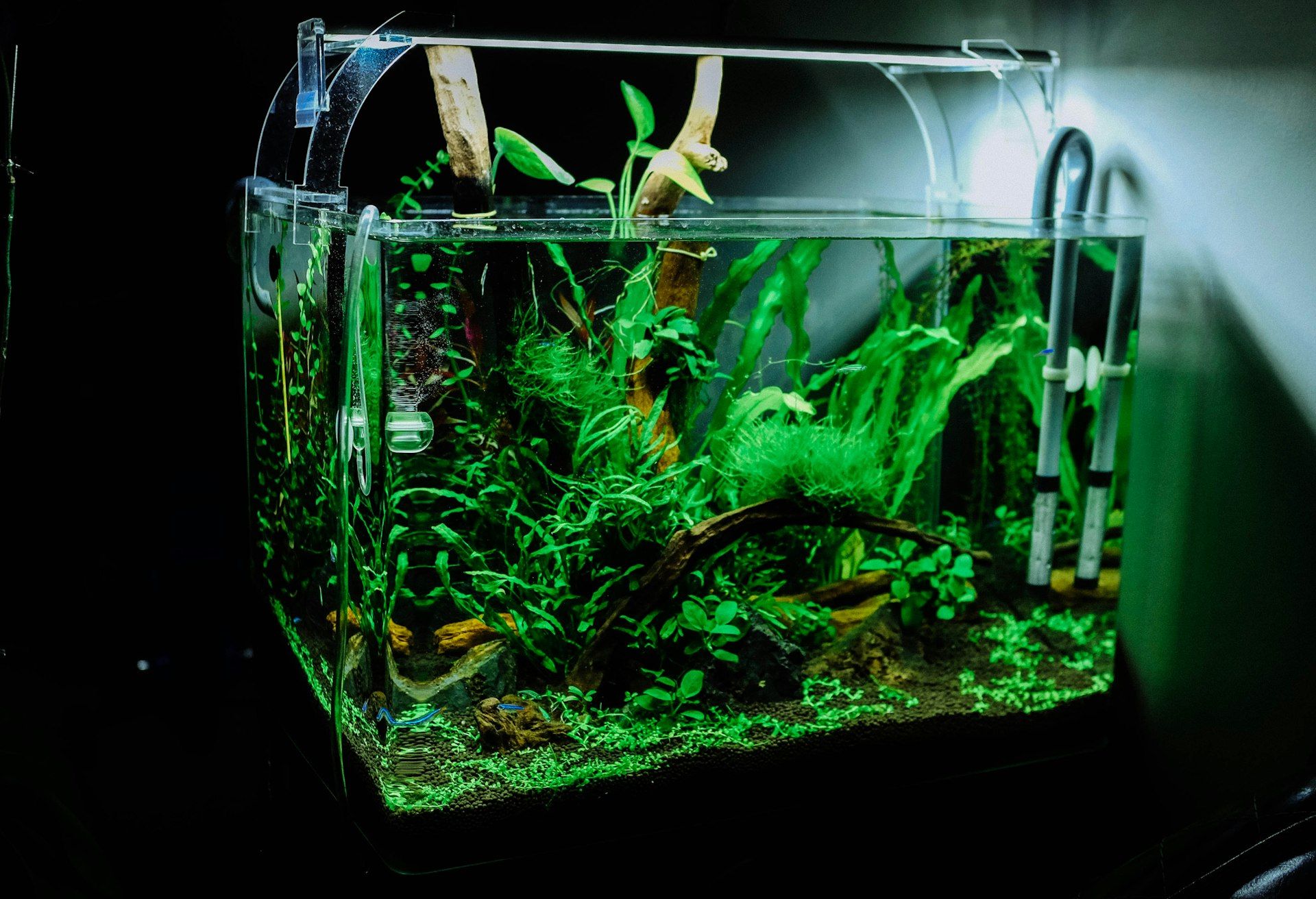
Cloudy water looks alarming, but most of the time it's the tank telling you something ordinary. The color is the best clue to what's going on. Match it below, then fix the cause instead of chasing the haze.
Quick answer
Milky white water is usually a bacterial bloom from extra food or waste, common in tanks with a filter under three months old. Green water is free-floating algae. Brown or yellow water is tannins from wood. Gray water with specks is substrate dust. Most of these are harmless; the fix is patience and less food, not a filter scrub.
Match the color first
Look through the glass from the side, against a plain wall. The color of the haze narrows it down fast.
Milky white water
This one is very common in new tanks 1. Leftover food and fish waste release dissolved organic compounds. Bacteria that feed on them multiply in the open water, and within days tiny organisms that eat those bacteria join in. That mix is the haze 1.
These aren’t the nitrifying bacteria that cycle your tank. They can’t grow fast enough to cloud the water 2. The real problem is that the filter doesn’t yet hold enough of the brown gunk that would normally eat this food first. The usual triggers are a filter less than three months old, a filter cartridge that was just swapped for a new one, media that got scrubbed clean, and plain overfeeding 1.
Is it dangerous? Usually not. The bloom itself is rarely made of disease bacteria 1. What can hurt fish is what’s behind it. Low oxygen and high ammonia are the two water problems most likely to kill fish outright 3. Excess feeding is on the list of causes of low oxygen in ponds 3, and in our view a new tank getting too much food can end up with both. Test ammonia, and if fish are hanging at the surface gulping air, treat it as low oxygen. That “piping” is the classic sign 3.
What to do. Feed less. One hobbyist rule of thumb is about 1% of the fish’s body weight in dry food per day, and that’s not a lot of food 1. Then leave it alone. Left be, the haze usually clears in a few weeks as the filter matures 1. On one forum thread, a keeper with a newly cycled 50-gallon tank was changing water twice a week and had packed quilt batting into the filter, and the cloud still hung on. Other members told them to wait it out, and one said theirs had lasted a couple of weeks 10.
- Test ammonia, and nitrite if the tank is new [3]
- Feed less. Overfeeding is a common trigger [1]
- Watch for fish gasping at the surface [3]
- Give it a week or two before you worry [1, 10]
- Deep-clean the filter or rinse media under the tap [1]
- Swap in a new filter cartridge [1]
- Do daily big water changes just to clear the haze [1]
- Count on a UV sterilizer to fix it (it clears the haze, not the cause) [1]
The sources don’t fully agree on water changes. Aquarium Science’s author says changing water during a cycling bloom just drags it out, because it removes the food the filter bacteria need 1. Dr. Tim’s, writing about the cloud a rotting-shrimp cycle can cause, says it clears on its own and that you can also change the water 2. Our take is that fish come first. If ammonia is climbing with fish in the tank, change water. If the numbers are fine, a big change just to clear the view isn’t worth it. For how long a new filter takes to mature, see how long to cycle a fish tank, and to check where yours stands, use the 24-hour ammonia test.
A look-alike. If the haze appears about an hour after a water change and is gone by morning, it’s tiny air bubbles coming out of the tap water, not bacteria. It’s harmless 1.
Green water
Pea-soup green is algae floating in the water column, usually mixed with bacteria and tiny critters 4. Like any algae, it grows when light and nutrients are plentiful. In lakes and bays, the main nutrients behind blooms are phosphorus and nitrogen 5.
Is it dangerous? Not right away, but it makes oxygen and pH less stable. Algae make oxygen and use up carbon dioxide in the light, then reverse at night, so pH swings through the day 3. The death of an algal bloom is also a known cause of low oxygen in ponds 3.
- Algae make oxygen
- Algae use up CO₂
- pH drifts up
- Algae and fish use oxygen
- CO₂ builds up
- pH drifts down
That’s why blacking out a tank full of fish can backfire. With the lights off, the algae die, bacteria break them down and use up the oxygen, and the dead algae release ammonia. If you black out a tank with fish in it, run a big air stone the whole time 4.
What to do depends on the tank’s age:
- Under about three months old. Aquarium Science’s advice is to leave it. Don’t change water, don’t clean, and keep pH at 7.0 or higher. If fish are in the tank and ammonia is climbing, change water anyway. The filter usually clears it in two to six weeks, often overnight 4. If you’re cycling without fish, just turn the light off. Fishless cycling doesn’t need it 4.
- Established tank. Look for the fuel. Too many hours of light, or direct sunlight, is a common one. So is nitrate over 80 ppm, or phosphate over 0.1 ppm from plant fertilizer or a pH buffer 4. Fix the source and do water changes to bring the nutrients down.
A UV sterilizer will clear green water, often overnight, but it doesn’t touch the cause 4. Skip algae-killing chemicals. The same author warns that anything strong enough to kill algae can also harm plants and fish 4.
Brown or yellow water
Tea-colored water that isn’t hazy, just tinted, is tannins. It’s humic acid from decaying plant material, the same thing that turns well water yellow to dark brown where it runs through peaty soil and rotting vegetation 6. In a tank it comes from driftwood 7 and from leaves or peat that some keepers add on purpose 8.
Is it dangerous? No. The Aquarium Science author calls tannic acid harmless at aquarium levels, with a small effect on pH, something like 7.4 to 7.3 7. Some keepers like the brown color and leave it 7.
What to do. If you don’t like the color, activated carbon in the filter removes it 8. A piece of wood can leach for years, so plan on about a tablespoon of fresh carbon every two weeks to two months, depending on the carbon and the wood 7. Water changes lighten it too. Boiling new wood is common advice, but the same author says it only strips tannins from the surface layer 7.
A brown film on the glass or decor, rather than tinted water, is a different problem. In a new tank it’s usually diatoms; here’s how long it lasts and what to do about it. For other films, threads or tufts, see our guide to identifying fish tank algae.
Gray water with specks
Fine gray or colored dust hanging in the water right after setup is substrate dust, especially from clay-based plant substrates. One forum member found the sand version much dustier than the gravel 11. Seachem says its own Flourite can arrive dusty, should be rinsed, and that some cloudiness at first is normal. It suggests pouring water into a bowl set on the gravel so the flow doesn’t stir it up, and running filter floss to catch the fines 9.
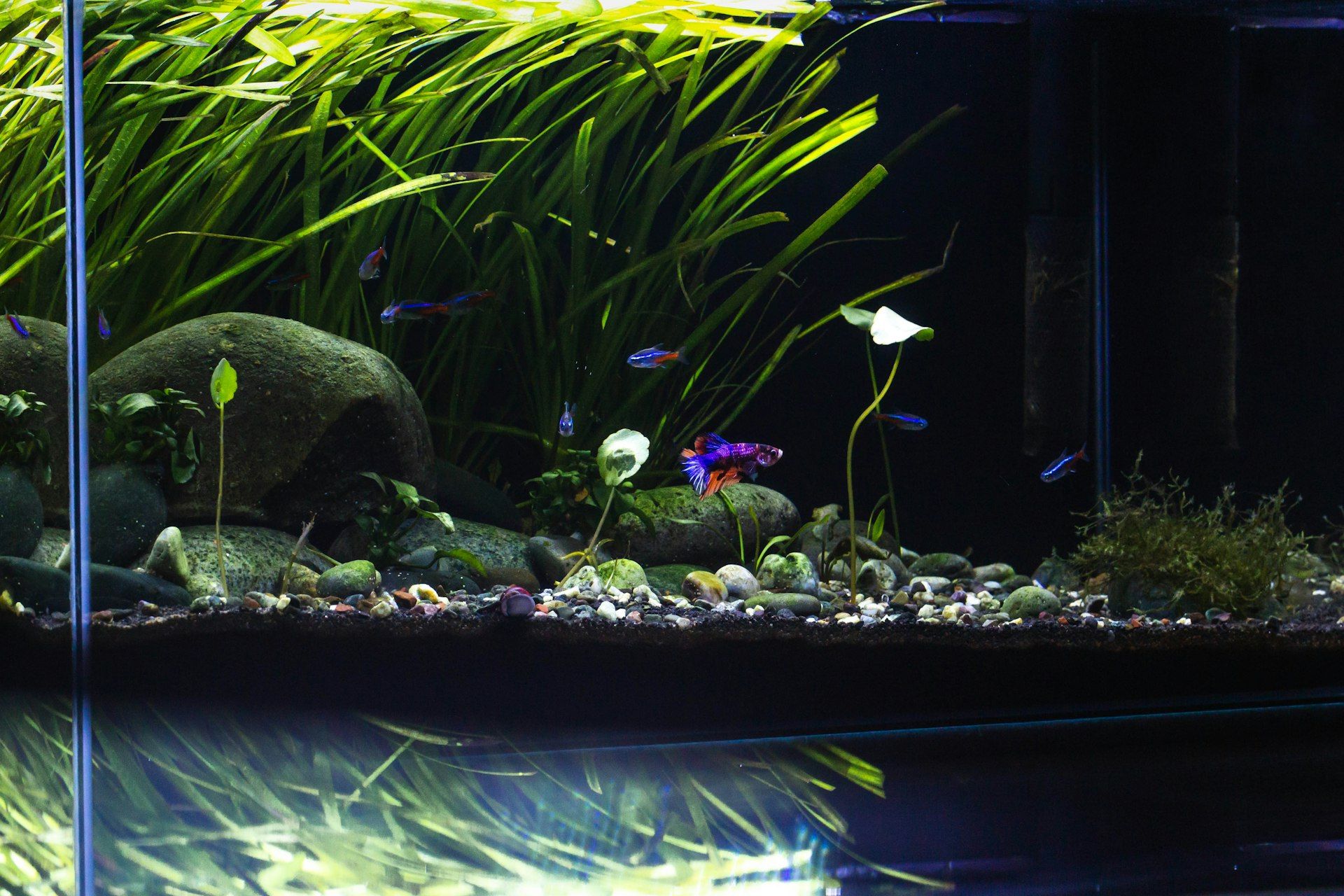
Is it dangerous? In our view it’s more an eyesore than a threat, but forum members suggest keeping fish out until you’re done cleaning it up 11.
What to do. If the tank is empty, turn off the pumps and let the dust settle. That tip comes from a longtime moderator on one forum thread 11. If fish are in, gravel-vac gently. The same moderator skims only about 1/4 inch (5 mm) into the substrate, and with a polishing pad in the filter the water clears in about an hour after each change 11. Expect some dust every time you dig in. Another member mixed one bag of red clay substrate into a tank and had orange water for about a week, and it took weeks to clear fully 11.
When cloudy water means trouble
Most cloudy water is cosmetic. Act fast if you also see fish gasping at the surface, fish dying, a rotten smell, or ammonia or nitrite on the test kit. Those point to a water quality problem, not a clarity problem 3. Test first, then change water. Treat new water for chlorine and match the temperature, since both chlorine and sudden temperature swings harm fish too 3.
FAQ
Why is my new fish tank cloudy white? Usually a bacterial bloom. Leftover food and waste release dissolved organic compounds, bacteria that feed on them multiply in the open water, and tiny organisms that eat those bacteria join in 1. It’s very common in new tanks 1.
How long does cloudy water last in a new tank? Left alone, a milky haze usually clears in a few weeks as the filter matures 1. Green water in a tank under about three months old usually clears in two to six weeks, often overnight 4.
Is cloudy water harmful to fish? Milky water is usually not, because the bloom itself is rarely made of disease bacteria 1. What can hurt fish is low oxygen or high ammonia behind it, so test ammonia and watch for fish gasping at the surface 3.
Should I change the water to clear it? The sources disagree. Aquarium Science says changing water during a bloom drags it out 1, while Dr. Tim’s says you can 2. Our take: change water if ammonia is climbing with fish in the tank, otherwise don’t bother.
Why is my tank water brown or yellow? Tannins from driftwood, leaves or peat. They’re harmless at aquarium levels 7, and activated carbon in the filter removes the color 8.
Why did my water turn cloudy right after a water change? If the haze appears about an hour after a water change and is gone by morning, it’s tiny air bubbles coming out of the tap water, not bacteria. It’s harmless 1.
All the numbers, with sources
| What | Value | Type | Source |
|---|---|---|---|
| Filter age that still counts as immature (a bloom trigger) | Under 3 months | Stated by source | [1] |
| Milky haze after a water change (tiny air bubbles) | Shows up after about an hour, gone overnight | Stated by source | [1] |
| Dry food per day (hobbyist rule of thumb) | About 1% of the fish's body weight | Stated by source | [1] |
| Green water in a tank under 3 months old, left alone | Clears in 2 to 6 weeks | Stated by source | [4] |
| Nitrate that feeds green water (hobbyist threshold) | Over 80 ppm | Stated by source | [4] |
| Phosphate that feeds green water (hobbyist threshold) | Over 0.1 ppm | Stated by source | [4] |
| pH drop from wood tannins (hobbyist example) | About 7.4 to 7.3 | Stated by source | [7] |
| Activated carbon for tannins | About a tablespoon, replaced every 2 weeks to 2 months | Stated by source | [7] |
| Gravel-vac depth in a dusty clay substrate (forum moderator) | About 1/4 inch (5 mm) | Stated by source | [11] |
Sources
- Aquarium Science (aquariumscience.org) (2026). 6.2.3. Cloudy Water
- DrTim's Aquatics (2026). Fishless Cycling (methods and troubleshooting)
- Merck Veterinary Manual (2026). Environmental Diseases of Aquatic Animals in Aquatic Systems
- Aquarium Science (aquariumscience.org) (2026). 16.7. Aquarium Green Water
- National Oceanic and Atmospheric Administration (NOAA) (2026). What is a harmful algal bloom?
- North Dakota State University, Water Quality (2026). Water is yellow to dark brown
- Aquarium Science (aquariumscience.org) (2026). 14.10. Wood
- Aquarium Science (aquariumscience.org) (2026). 7.4.2. Activated Carbon
- Seachem Laboratories (2026). Flourite (product page and instructions)
- FishLore Aquarium Forum (n.d.). Bacteria Bloom Not Going Away (forum thread)
- FishLore Aquarium Forum (n.d.). Seachem Fluorite - Super Cloudy/dusty! (forum thread)