Brown Algae in a New Fish Tank: How Long It Lasts and What to Do
Last reviewed · By Manel Vadillo
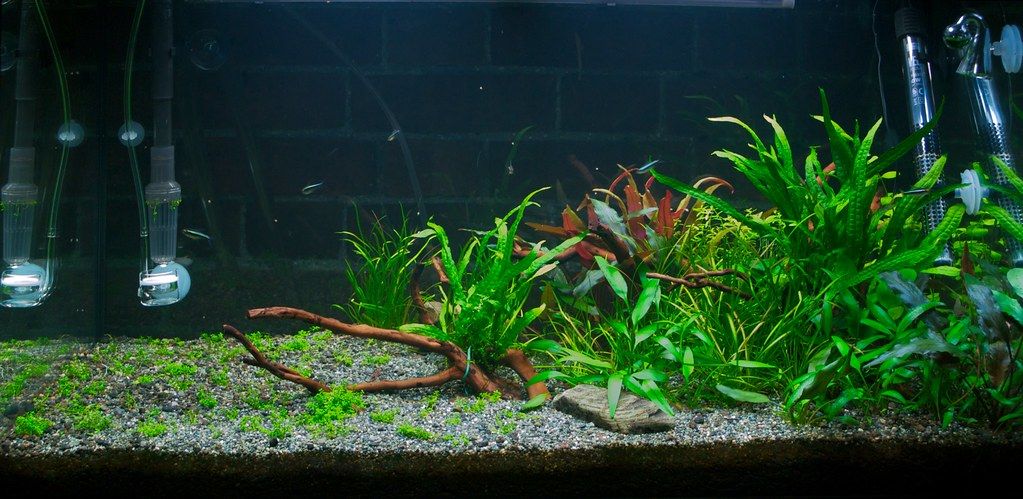
A few weeks after you set up a tank, the glass and the decor turn brown and dusty. It looks like something went wrong. Mostly it didn't. What's unclear is how long it stays: depending on who you ask, anywhere from a few weeks to a few months.
Quick answer
A brown, dusty film on glass and decor in a new tank is usually diatoms mixed with biofilm. It's common and wipes off. Sources disagree on how long it lasts, from a few weeks to about four months. Meanwhile wipe the glass, keep the light short, trim dead leaves, and don't strip the filter.
What the brown film is
Aquarium Co-Op describes brown diatom algae as a dusty, flour-like coating on the glass, substrate and decor. It’s so soft that it rubs off 4. Tropica calls these thin coatings of one-celled diatoms, red algae and green algae 5.
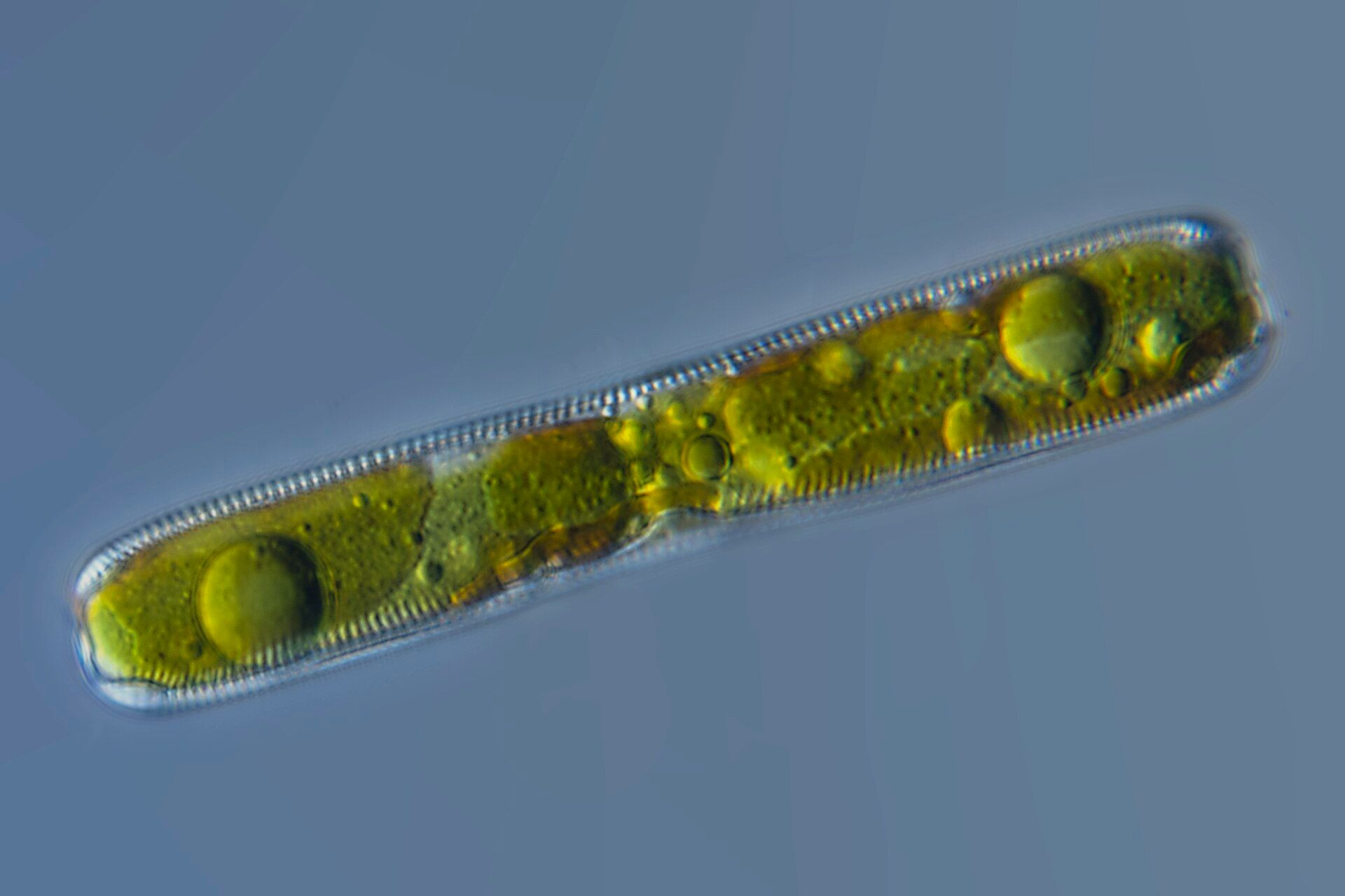
“Brown algae” is a loose name. The author of Aquarium Science says that under a microscope the film is roughly half porous detritus and slime, and half a mix of diatoms, other algae, cyanobacteria, bacteria and other small organisms. The mix changes with light and nutrients 1. He also says a filter that’s two or three months old will have a brown film on its surfaces that is beneficial bacteria. It looks the same, and it forms with no light at all 1.
Why it shows up in a new tank
A bare tank is open ground. The 2Hr Aquarist says diatoms are simply the first algae to use it, ahead of green algae, biofilm and higher plants, and that strong light, ammonia and phosphate speed them up in a new aquarium 3. Aquarium Co-Op also points to phosphates and silicates, and says plants will use them up over time 4.
Light plays in too. Merck says to keep the tank out of direct sunlight to limit algae 6. The ammonia part ties to cycling. Merck says the beneficial bacteria develop on their own in 4 to 6 weeks 6, and a new tank spends that time with ammonia around. If you want to see where yours is, our guide on how to tell if a tank is cycled has the test.
Do silicates matter?
The sources split. Aquarium Co-Op lists silicates as a cause 4. The 2Hr Aquarist says silicates are rarely the limit on diatom growth, because nearly every tap water and substrate has them, and that you shouldn’t switch to reverse osmosis water or a silicate resin just because diatoms showed up 3. The Aquarium Science author goes further. He says there’s no way to remove silica from aquarium water, and that quartz doesn’t leach it, so he calls the debate academic 1.
We’d skip silicate removers and RO water for this problem. Two of the three sources argue they won’t help, and none recommends them.
How long it lasts: the sources disagree
The 2Hr Aquarist says diatoms typically reach visible mass in about 2 to 3 weeks and disappear on their own within a few weeks as microbes that eat them establish 3. Aquarium Science says it grows very heavily for about four months and then thins out 2, and that if you leave it alone it lessens in four to six months. A properly planted tank has little to moderate brown algae once it settles, typically at six months or more 1.
We can’t reconcile those two. One is a retailer writing about planted tanks, the other a hobbyist site covering any tank. Plan for weeks to a few months, and don’t treat week 3 as the finish line.
The Aquarium Science author adds a reason it fades: at first the film is nutrient-poor and most fish won’t graze it. Over a few months it becomes richer, and fish start to eat it 1.
What to do this week
The two sources that give advice disagree here too.
- Light on for 6 to 7 hours a day for the first few weeks
- Large, regular water changes; siphon off clumps
- Trim dying leaves
- Add plants; borrow mulm or filter media from a mature tank
- Stop fertilizing, vacuuming the substrate and cleaning the filter
- Feed lightly
- Change water only when nitrate reaches 40–80 ppm
- Expect it to get worse before it gets better
- Wipe the glass when it bothers you
- Shorten the light
- Trim dead leaves
- Leave the filter media alone
The 2Hr Aquarist recommends a 6 to 7 hour light period for the first few weeks, large regular water changes that also siphon off clumps, trimming deteriorating leaves, and adding plants. It also suggests moving mulm or filter media over from a mature tank to speed up the tank’s maturing 3.
The Aquarium Science author says to do almost nothing. Stop fertilizing, vacuuming and cleaning the filter, feed lightly, and change water only when nitrate hits 40 to 80 ppm. He expects it to get worse before it improves. His case is that scrubbing it away keeps it from maturing into something fish will eat 1. He still wipes the front glass every few weeks 1.
Our middle path is plain. Wipe the glass when the brown bothers you, shorten the light (our light-hours guide shows how to adjust it step by step), trim dead leaves and leave the filter media alone. Our water change guide covers how often and how much.
One more point from Aquarium Science: its author says only blue light feeds the brown film, and that lights with only blue and white LEDs can be a problem for diatoms. Most aquarium lights also have crimson LEDs 1. That’s one source’s view, so treat it as a clue if the film won’t quit under a very blue light.
Algae eaters: wait for a stable tank
Otocinclus catfish, snails and shrimp eat brown algae, according to Aquarium Co-Op 4. Tropica says a good population of algae-eating fish and shrimp plus a soft sponge on the glass is the treatment for algal layers 5. The 2Hr Aquarist names otocinclus, Amano shrimp and nerite snails, but says to add them once the tank is stable, not as a shortcut for an immature system 3. Aquarium Science also credits nerite snails 1.
A tank that’s still cycling is the wrong place to add livestock. Cycle it first: our fishless cycle guide covers it, and the cycle calculator does the dosing.
When it isn’t diatoms
Tropica separates the brown coating from the blue-black one. The blue-black coating is blue-green algae, and Tropica says it usually appears with heavy feeding and goes away when you feed less 5. If the film is a dark blue-green rather than brown, cut the food first. For black tufts, green threads or hard green spots, our guide to other types of fish tank algae helps you tell them apart.
FAQ
Is brown algae a sign something is wrong with my tank? Usually not. The 2Hr Aquarist calls it a normal part of a new setup and not a sign of bad water 3. Aquarium Science says it occurs in all aquariums 1.
Do I need to scrub everything off? Wipe the glass if it bothers you. Aquarium Science argues that constant cleaning keeps the film from maturing 1, and Aquarium Co-Op says it rubs off easily when you do clean it 4.
Should I buy RO water or a silicate remover? Probably not. The 2Hr Aquarist says to avoid knee-jerk switches to RO water or silicate resins 3. Aquarium Science says silica can’t be removed from the water anyway 1.
All the numbers, with sources
| What | Value | Type | Source |
|---|---|---|---|
| Brown algae in a new planted tank: visible after | About 2–3 weeks | Stated by source | [3] |
| 2Hr Aquarist: how long until it clears on its own | "Within a few weeks" (no exact end given) | Stated by source | [3] |
| Aquarium Science: how long it grows very heavily | About 4 months (about 17 weeks) | Stated by source | [2] |
| Aquarium Science: how long until it lessens if left alone | 4–6 months (about 17–26 weeks) | Stated by source | [1] |
| Aquarium Science: settled, properly planted tank | Little to moderate brown algae after about 6 months or more | Stated by source | [1] |
| Months to weeks (our conversion) | 4 months ≈ 17 weeks; 6 months ≈ 26 weeks | Our calculation | [1] |
| 2Hr Aquarist: light for the first few weeks | 6–7 hours a day | Stated by source | [3] |
| Aquarium Science: change water only when nitrate reaches | 40–80 ppm | Stated by source | [1] |
| What the brown film is made of (Aquarium Science) | Roughly 50% detritus and slime, 50% diatoms, other algae, bacteria and small organisms | Stated by source | [1] |
| Brown film in a filter 2–3 months old | Beneficial bacteria, identical in appearance to brown algae | Stated by source | [1] |
| Time for beneficial bacteria to develop on their own | 4–6 weeks | Stated by source | [6] |
Sources
- Aquarium Science (aquariumscience.org) (2019). 16.8. Brown Algae
- Aquarium Science (aquariumscience.org) (2019). 1.1.9. “Brown Algae”
- The 2Hr Aquarist (plant and aquascaping products retailer) (2025). Brown Algae in a New Fish Tank: What Causes Diatoms and How to Get Rid of Them
- Aquarium Co-Op (fish and aquarium products retailer) (n.d.). How to get rid of brown diatom algae
- Tropica Aquarium Plants (plant grower) (n.d.). Types of algae
- Merck Veterinary Manual (Pet Owner Version) (2026). Providing a Home for Fish