How Long to Leave the Aquarium Light On: Start at 6 to 8 Hours
Last reviewed · By Manel Vadillo
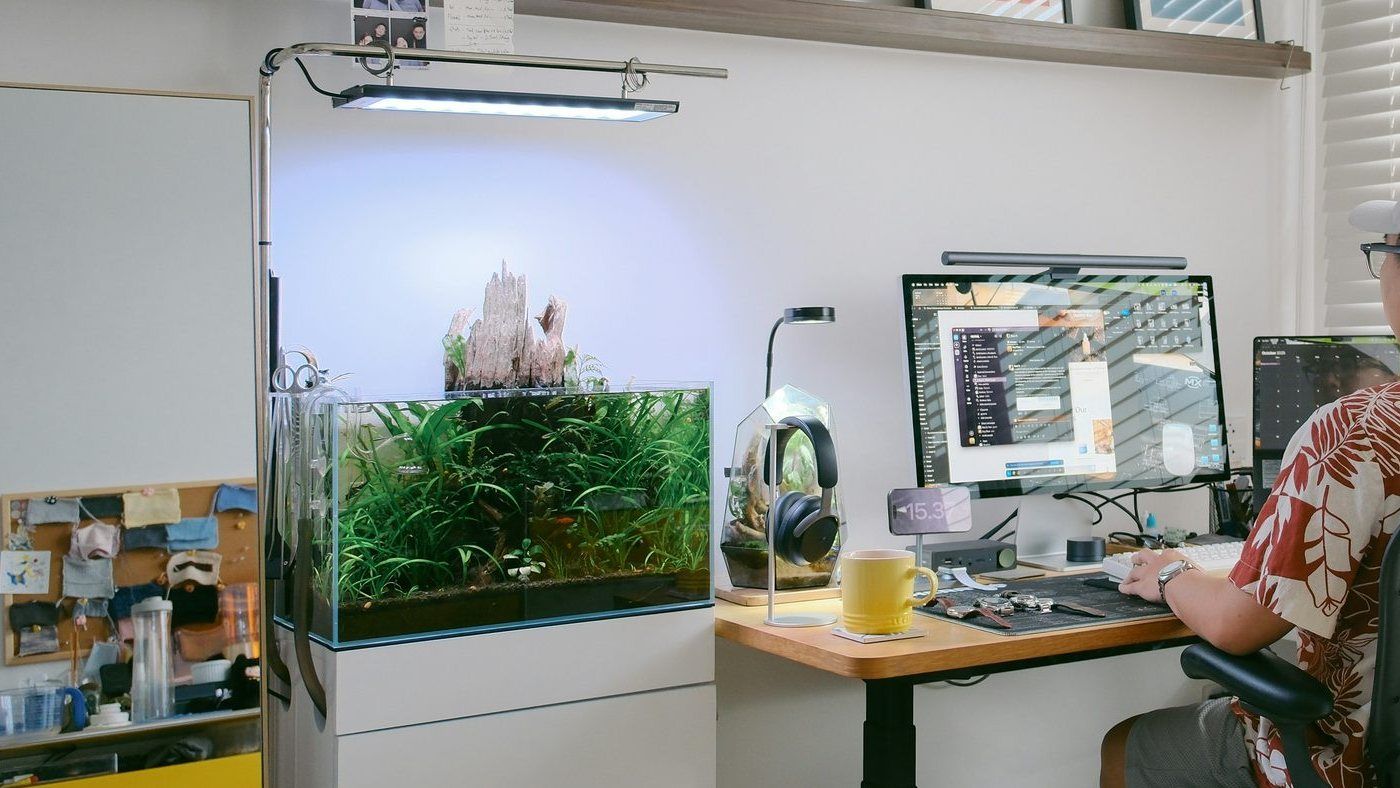
The light on your tank is there mostly for you and for the plants. The fish need a day and a night. How long the light runs decides whether you get a clean tank or a green one, and it's the easiest thing to change.
Quick answer
Start at 6 to 8 hours on a timer. Aquarium Co-Op raises planted tanks slowly to 8 to 12 hours and Tropica says no more than 10. Fish need a dark period: Merck says lights on 24 hours a day stress them. If algae appears, cut the hours or the brightness first, and change one thing at a time.
What the fish need
Fish need a day and a night. Merck says leaving the lights on 24 hours a day, 7 days a week stresses fish and leaves them more susceptible to disease 1. None of our sources gives a minimum or maximum number of hours for the fish themselves. In a forum thread, an experienced member said fish won’t care about the light at all, since it’s mostly there so you can enjoy them 4. That’s one hobbyist’s view, but it fits the rest: the schedule is for the plants and for you.
What the light does to plants and algae
Plants and algae use the same light, nutrients and carbon dioxide. Aquarium Co-Op says too much or too little light can cause algae, so the goal is to balance the three and let the plants win 2.
The sources differ at the top end. Co-Op’s advice for a new planted tank is to start with 6 to 8 hours a day, because the plants need time to adjust. Once they’ve grown and need more light, it says to raise it slowly to 8 to 12 hours 2. Tropica, a plant grower, says not to go beyond 10 hours 3. Both agree on the start, and both say to cut back if algae takes off. Co-Op: “decrease the duration again” 2.
Co-Op also says to start brightness at 20 to 40% on a programmable LED, raise it only if there’s no algae, and lower it again after a bloom. For a light without a dimmer, raise it above the tank or tape over some LEDs 2.
Why we’d start at 6 to 8 hours
Co-Op’s 6 to 8 is written for planted tanks, and the plants are the ones that need the light. A fish-only tank doesn’t need more. This part is our judgment, not a published figure: we’d run a new tank at 6 to 8 hours whatever is in it, watch for algae, and only lengthen if plants clearly need it. A new tank also tends to grow a brown film in the first weeks, and our brown algae guide covers how light fits in.
| Tank | Starting point | Basis |
|---|---|---|
| New planted tank | 6 to 8 hours | Aquarium Co-Op 2 |
| Fish only, few or no plants | 6 to 8 hours | Our judgment; a forum member suggests an 8 hour block or less 4 |
| Established planted tank | Raise slowly toward 8 to 12 hours, no more than 10 per Tropica | Aquarium Co-Op 2, Tropica 3 |
| Algae getting out of hand | Shorten hours or lower brightness | Aquarium Co-Op 2, Tropica 3 |
A way to adjust without guessing
Co-Op’s method for a low-tech tank is to change one thing at a time and wait two weeks before the next change 2. It also says the right amount moves as the tank ages. A newly planted tank needs less light because the plants are small. A mature one may have big plants that shade everything, so you prune or add light. Keeping a journal or spreadsheet of your settings shows which values worked 2. Co-Op sells its own plant light and Tropica sells plants, so weigh their equipment advice with that in mind.
Here’s how that might look in practice. The step sizes are ours, not from a source:
- Week 0. Light on a timer for 6 hours, at 30% brightness if the light dims.
- Week 2. Plants growing and no algae? Add an hour. Algae showing? Hold, or take an hour back.
- Every two weeks after that. Same rule, one hour at a time, and stop at 10 hours (Tropica’s ceiling 3) unless your plants clearly need more and the tank stays clean.
- A bloom. Lower the brightness as well as the hours, as Co-Op says 2.
If you’re not growing plants, you can stop at step 1. A fish-only tank has no reason to climb.
Timer, schedule and darkness
Use a timer. Co-Op says timers are much more reliable than people, so the plants get their light even if you forget or go away 2. Tropica says the same and adds that you should check regularly that the timer works 3.
Don’t leave a light on overnight, including a blue moonlight setting. Co-Op says plants need to rest at night, when they consume oxygen and sugars, and that algae will use light the plants can’t 2.
The hours don’t have to match daylight. Co-Op suggests an “afternoon siesta” split, with the light on in the morning, off while you’re out and on again in the evening 2. In the forum thread, one keeper runs several tanks for 6 hours starting at 5 pm, because that’s when someone is home to enjoy them 4.
Sunlight and heat
Keep the tank out of direct sun. Merck links sunlight to algae growth and to rising water temperature, and warm water holds less oxygen 1. Co-Op adds that the weather changes the light you get from day to day and season to season, which makes balancing a tank hard 2. Our setup guide covers where to put the tank.
Tropica says temperatures above about 79 °F (26 °C) almost always give algae problems, and that thread algae likes heat. Its tip is to try dropping the water to about 72 °F (22 °C) or lower if you have an algae problem 3. That’s a plant grower’s view, and it won’t suit tropical fish that want it warm. Our heater guide has the temperatures most tropical fish do well at.
If algae shows up
Tropica’s prevention list for algae is short: a varied population of algae eaters, water changes, no more than 10 hours of light, moderate feeding and avoiding high temperatures. It calls overfeeding or too many fish the number one cause of algae problems 3. Co-Op’s rule for lighting changes is one adjustment at a time, then two weeks of waiting before the next, because plants take time to react 2. Our water change guide covers the water side, and our cloudy water guide covers green water. To work out which algae you have before you change anything, see our fish tank algae identification guide.
What hobbyists report
In an Aquarium Co-Op forum thread, a new keeper with a 10 gallon planted tank asked whether leaving the light on from sunrise to sunset was too much. The answers: pick a block of 8 hours or less when you’re around, since too much light causes excess algae. Plants like consistency, and plants in general do well with 6 to 8 hours. One keeper runs 9 am to 5:30 pm with very little algae. Another told the poster to change things slowly, wait a couple of weeks between changes, and lower the intensity or the duration if algae comes on fast 4.
FAQ
Should the aquarium light be on all day? No. Merck says 24-hour light stresses fish 1, and Co-Op and Tropica both argue for fewer hours to avoid algae 2 3.
Is a moonlight mode OK at night? Co-Op says don’t leave the light on all night, not even in a blue moonlight mode 2.
How many hours for a new tank? Start at 6 to 8 hours 2.
Do I need a timer? Co-Op and Tropica both recommend one 2 3.
Can I put the tank near a window? Merck says to avoid direct sunlight because it feeds algae and can overheat the tank 1.
What happens to the schedule when I’m away? That’s what the timer is for. Co-Op says it keeps the plants on schedule even if you get sick, go on vacation or forget 2. Going away? Our vacation feeding guide covers the rest of the tank.
Do fish need darkness at night? Merck says fish need a day and night cycle for optimal health 1.
All the numbers, with sources
| What | Value | Type | Source |
|---|---|---|---|
| Aquarium Co-Op: new planted tank, starting duration | 6 to 8 hours a day | Stated by source | [2] |
| Aquarium Co-Op: once plants are bigger, raise slowly to | 8 to 12 hours a day | Stated by source | [2] |
| Aquarium Co-Op: starting brightness for a planted tank | 20 to 40% | Stated by source | [2] |
| Aquarium Co-Op: wait between changes in a low-tech tank | 2 weeks | Stated by source | [2] |
| Tropica: light per day, ceiling for algae control | No more than 10 hours | Stated by source | [3] |
| Tropica: temperatures that almost always cause algae problems | Above about 79 °F (26 °C) | Stated by source | [3] |
| Merck: lights on 24 hours a day, 7 days a week | Stresses fish and makes them more susceptible to disease | Stated by source | [1] |
Sources
- Merck Veterinary Manual (University of Florida; last updated April 2026) (2026). Providing a Home for Fish (Pet Owner Version)
- Aquarium Co-Op (fish and aquarium products retailer) (n.d.). How to Balance Aquarium Lighting to Grow Healthy Plants (and Avoid Algae)
- Tropica Aquarium Plants (plant grower) (n.d.). Preventing algae
- Aquarium Co-Op Forum (2024). Light on from Sunrise to Sunset too much? (forum thread, hobbyist experience, March 2024)