How Long Can Fish Go Without Food? What to Do Before a Trip
Last reviewed · By Manel Vadillo
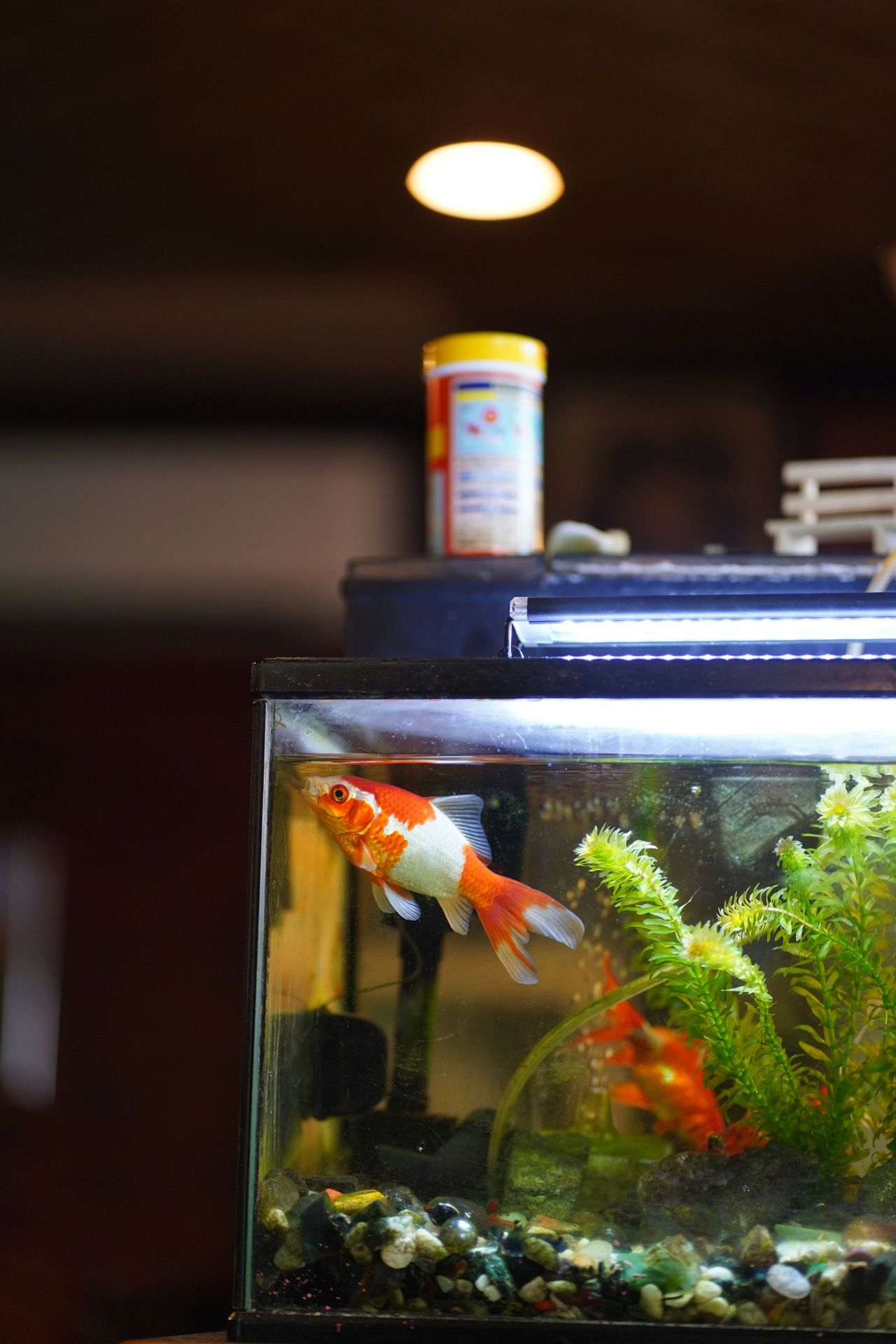
You're leaving for a long weekend, or a week, or two, and the tank has to look after itself. Every site gives a different number, so here is what each one says and what we'd do.
Quick answer
Most healthy adult fish in an established tank handle a weekend (2 to 3 days) without food. Aquarium Co-Op says adults can often go a week, and Chewy's vet-reviewed guide puts the usual range at 3 to 5 days. Past a week, nobody can promise it's harmless: Tetra's technical consultant says two weeks unfed can't be ruled out as a problem. Fry, small active fish and plant eaters need food every day or two.
How long can fish go without food? What the sources say
There’s no tidy number, and one thing is worth saying up front: we found no university or peer-reviewed source that gives a number of days. Merck’s fish manual lists starvation among the causes of fatty liver disease in captive fish, but it doesn’t say how long is too long 5. The numbers below come from companies that sell fish, food or feeders, plus one retailer guide reviewed by a vet. They’re useful, and they don’t line up.
| Source | What it says |
|---|---|
| Aqueon (aquarium products) | A weekend is fine for virtually all fish except newly hatched fry 1 |
| Aquarium Co-Op (fish seller) | Adult fish can often go about a week, depending on size, metabolism and water temperature 2 |
| Chewy (guide reviewed by a vet) | 3 to 5 days for healthy adults without lasting consequences. 10 to 14 days is “technically” possible, but not recommended 3 |
| Practical Fishkeeping, by Tetra’s technical consultant | No food is no issue for a day or so. A lengthy absence is “likely to cause problems” 4 |
Three of the four agree on the short end: 2 to 3 days is fine (Practical Fishkeeping says “a day or so”). They split at around a week. If you want the cautious reading, plan for 3 to 5 days without help and arrange feeding for anything longer.
One more point, from Veronica Pardini, DVM, an aquatic vet quoted by Chewy: overfeeding is a bigger danger than underfeeding, and healthy adults can even benefit from skipping the odd meal 3. Keep that in mind when you picture the sitter with a full tub of flakes.
Who can’t wait
The “weekend is fine” rule has exceptions. Aqueon says herbivores, small active fish and baby fish need to eat every day or two, and that large fish, carnivores and older fish don’t need food as often 1. Chewy adds that small fish have faster metabolisms, and that fasting is never recommended for juveniles or fish recovering from illness, injury or malnutrition 3.
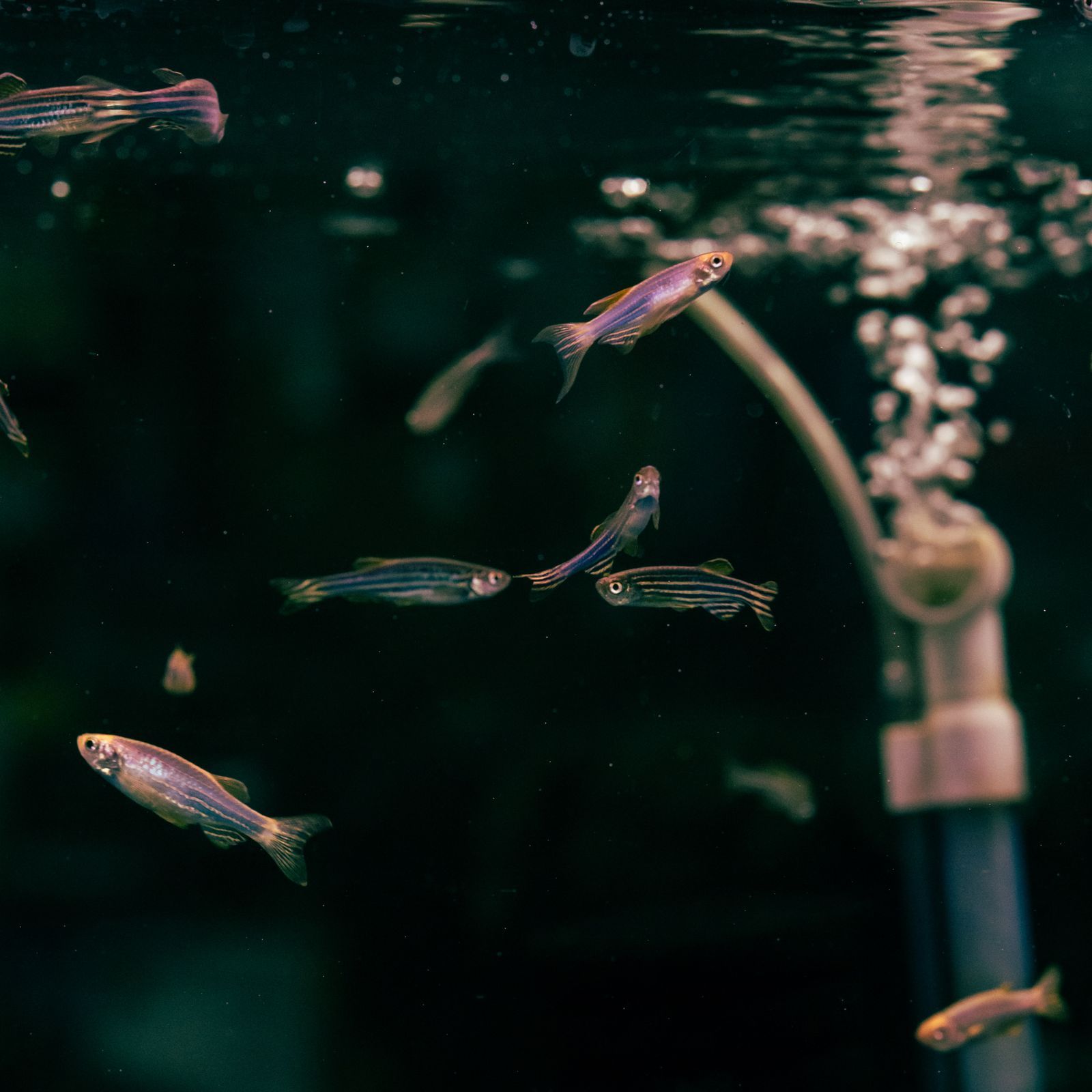
Tank age matters too. Aqueon says larger, well-established aquariums are more stable and handle longer absences, while small, new or heavily stocked tanks are more likely to have problems 1. If your tank is under a few months old, ask someone to check on it. Our guide on how to tell if a tank is cycled tells you where yours stands.
What to do for each trip length
The sources give pieces of this. The table below is how we’d put them together, so treat the middle column as our reading, not a rule.
| Time away | Healthy adults in an established tank | Fry, small fish, new or heavily stocked tank |
|---|---|---|
| 1 to 3 days | Don’t feed. No special prep needed 1 | Feed once before you go, ask someone to check in |
| 4 to 7 days | Fine for most, per Aquarium Co-Op and Chewy 2 3. Do the pre-trip prep below | Automatic feeder or sitter |
| 8 to 14 days | Don’t rely on fasting. Feeder or sitter | Feeder or sitter, plus someone who can step in |
| Over 14 days | A person who knows the tank | A person who knows the tank |
Goldfish are the case to watch. Chewy says a healthy goldfish may last 7 to 10 days, but that gaps over 5 days will likely start to affect its health 3. The same page says a healthy adult betta can survive up to 14 days, “never recommended” 3. “Can survive” and “should do” are different questions.
Feeding options when you can’t skip it
Automatic feeder
You set it to drop a measured amount of food at set times. Aqueon says economy models release food every 12 hours and better ones let you program the feeding times 1. Practical Fishkeeping notes that many fishkeepers already use one as their normal way of feeding, so a holiday only needs a bigger fill 4. Our advice: run it for a week before you leave, and watch that it drops the right amount. Aqueon still suggests someone stops in every few days to check it works 1.
Vacation feeding blocks
These dissolve slowly or release small bits of low-protein food. They work for most small to medium fish, but there are catches:
- Fish are cautious of strange new objects, so they may ignore a block at first. Practical Fishkeeping says to run trial sessions with small pieces well before the trip instead of dropping a block in on the morning you leave 4. Aqueon says to test one about a week ahead 1.
- The old white blocks use plaster of Paris, which the Tetra consultant says can push general hardness too high 4. Check what yours is made of.
- Uneaten food still breaks down, adds waste and uses up some oxygen. Blocks shouldn’t go in new, overstocked or unfiltered tanks 4.
- Some blocks come with an inner packet or film. Take it off first 4.
A fish sitter
A friend can help, but Aqueon names the main risk: someone who doesn’t know aquariums will overfeed, and in a small or new tank that can be “disastrous” 1. The fix is simple:
- Portion each feeding into its own packet or pill box, one per day.
- Write down three or four instructions at most.
- Have them feed once under your eye before you go.
- Leave a phone number for you and for someone who knows fish 1.
Aqueon suggests the sitter stops in every 2 to 3 days 1.
Before you leave: a short checklist
Aqueon says no prep is needed for 2 to 3 days. For longer, this is its list 1, with our notes:
- A week before: do a 25% water change and clean the filter. Don’t deep-clean the gravel, and don’t scrub the biological media. Our guides on water changes and cleaning a fish tank cover how. (Our water change guide mentions changing water right before you leave; Aqueon’s timing is a week earlier, which lets the tank settle while you can still check it.)
- Don’t add new fish or change anything big in the month before a long absence.
- Check the heater is holding temperature. If you’re not sure, our heater size guide explains what a stuck or undersized heater looks like.
- Put the light on a timer set to the tank’s normal day and night 1. Our light hours guide has a starting point.
- Set up your feeding plan (feeder, block or sitter) and test it.
When you get back
Aqueon says to look the fish over for injury or disease, check the heater, check filter flow and rinse the pads if needed, and take out any block or automatic feeder, then go back to normal feeding. If you were away a week or more, do a water change within a few days 1. Expect some algae and plant growth after a stretch of absence. Aqueon says to scrape it off and calls the growth a positive 1.
Don’t make up for lost meals. We found no source that recommends a bigger first meal, and the vet quoted by Chewy points the other way: overfeeding is the bigger danger 3.
FAQ
Can fish go 3 days without food? Yes. Aqueon says virtually all fish except newly hatched fry can go a weekend, and says no special prep is needed for 2 to 3 days 1.
Can fish go a week without food? Healthy adults often can, according to Aquarium Co-Op 2. Chewy says 3 to 5 days is the usual safe range and up to 7 for healthy adults in ideal conditions 3. A new tank, a small fish or a goldfish are reasons to arrange feeding instead.
Can fish go 2 weeks without food? Some survive it. Chewy says some fish can go 10 to 14 days but that it isn’t recommended 3. The Tetra consultant says you can’t say for certain that two weeks unfed has no effect on welfare, so his advice is to arrange feeding 4.
How long can a betta go without food? Chewy says a healthy adult betta can survive up to 14 days, but never recommends it 3. For a trip of more than a few days, we’d use a sitter or a small, measured feeder. See our betta care guide for what to feed normally.
How long can goldfish go without food? Chewy says 7 to 10 days is possible but not recommended, and that gaps over 5 days will likely start to affect their health 3. Our goldfish care guide covers normal feeding.
Should I leave the light on while I’m gone? Put it on a timer with the tank’s normal day and night, as Aqueon advises 1. Don’t leave it on all the time.
Are vacation feeding blocks safe? They can be, in an established, properly filtered tank, if the fish have learned to eat them first 4. Skip them in new, overstocked or unfiltered tanks.
All the numbers, with sources
| What | Value | Type | Source |
|---|---|---|---|
| Aqueon: fish that can skip a weekend of food | Virtually all, except newly hatched fry | Stated by source | [1] |
| Aquarium Co-Op: how long adult fish can often go without food | About 1 week, depending on size, metabolism and water temperature | Stated by source | [2] |
| Chewy: how long healthy adult fish can go without lasting consequences | 3 to 5 days (10 to 14 days technically possible, not recommended) | Stated by source | [3] |
| Chewy: goldfish gap that will likely start to affect health | More than 5 days | Stated by source | [3] |
| Aqueon: water change and filter clean before a longer absence | 25%, about a week before you leave | Stated by source | [1] |
| Aqueon: how often a sitter should stop in | Every 2 to 3 days | Stated by source | [1] |
| Practical Fishkeeping (Tetra): protein in a goldfish holiday food vs. typical fish food | 3% vs. 30 to 40% | Stated by source | [4] |
Sources
- Aqueon (n.d.). Vacation Tips for Aquarium Owners
- Aquarium Co-Op (n.d.). How Often Do You Feed Fish (and How Much)?
- Chewy (Kate Barrington; reviewed by Ivan Alfonso, DVM; quotes Veronica Pardini, DVM, certified aquatic veterinarian) (2025). How Long Can Fish Go Without Food?
- Practical Fishkeeping (Dave Hulse, technical consultant at Tetra) (n.d.). How to successfully feed fish during the holiday season
- Merck Veterinary Manual (n.d.). Nutritional Diseases of Fish