How to Clean a Fish Tank: What to Scrub, What to Leave Alone
Last reviewed · By Manel Vadillo
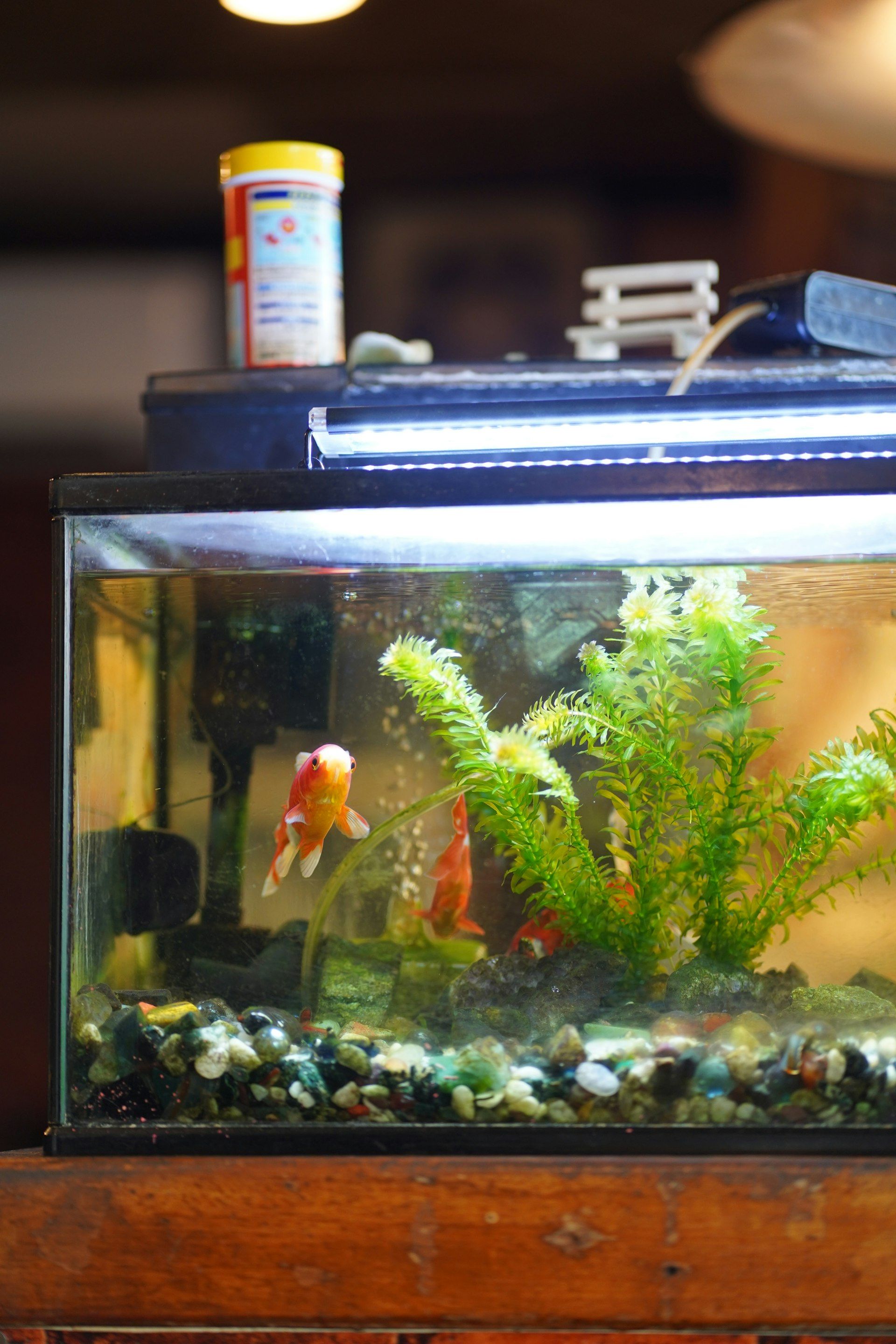
Learning how to clean a fish tank mostly means learning what to leave alone. It is a small job: scrub the glass, siphon the surface debris, swap some water. The mistakes come from doing too much, usually to the filter and the gravel. The order below works, and two places are where the sources disagree.
Quick answer
Leave the fish in. Wash your hands, switch off the equipment, scrub the glass and decor, siphon debris while you drain water, then refill with treated water at the same temperature. Never change more than 50% at once. Rinse filter media gently in old tank water, and only when the flow slows.
Don’t take the fish out
PetMD, in a piece written by an aquatic veterinarian, says not to remove fish during routine cleaning. The one exception is a substrate that smells like rotten eggs. That points to hydrogen sulfide, and the fix is to pull the gravel, replace all the water and keep the fish in a filtered holding tank meanwhile 1.
Aquarium Science gives a smell test of its own. Earthy or no smell is fine. A sour, rotten-food or sewage smell with no dead fish or snails in sight signals a problem 4.
How to clean a fish tank, step by step
PetMD’s sequence is a good base. It starts with clean hands, then switches off the filter, heater and light, and the full list is below 1. Turning the equipment off matters for the heater in particular, which shouldn’t run while the water level drops (our reading).
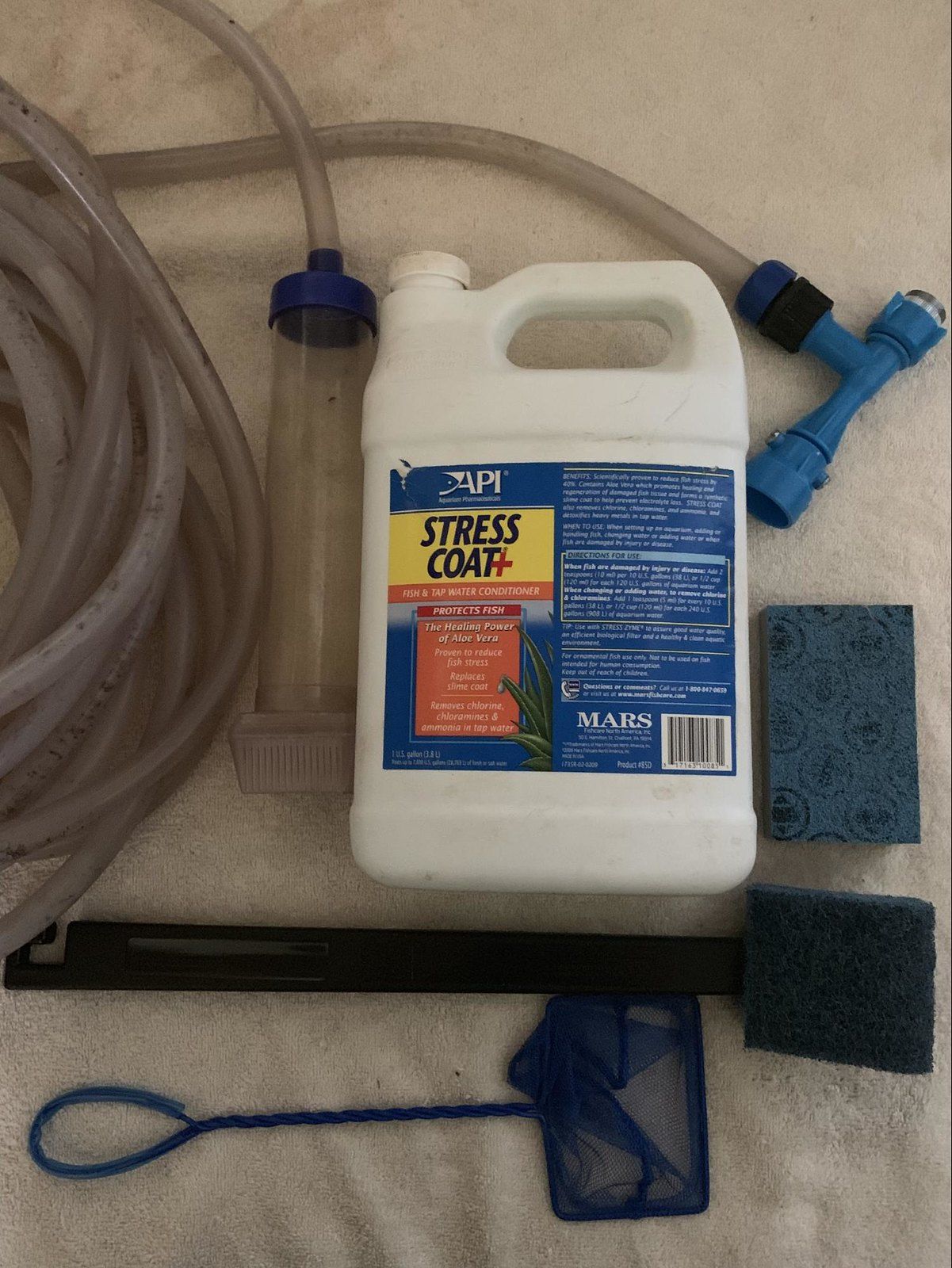
- Wash your hands and switch off the filter, heater and light. PetMD allows an airstone to keep running if you worry about oxygen 1.
- Lift out decor that needs it and set it in a bucket or on a towel. Scrub it with a brush kept only for the tank, or an old toothbrush 1.
- Scrub the glass with a scrub brush made for glass or acrylic. Acrylic needs softer sponges to avoid scratches 1.
- Siphon. Start the flow into a bucket and move the siphon across the bottom, taking a little substrate at each spot 1.
- Rinse the filter media if the flow has slowed (see below).
- Fill a bucket with fresh tap water, match the tank temperature with a thermometer and add conditioner to the bucket, not the tank 1. Our chlorine and chloramine guide has the dosing by volume.
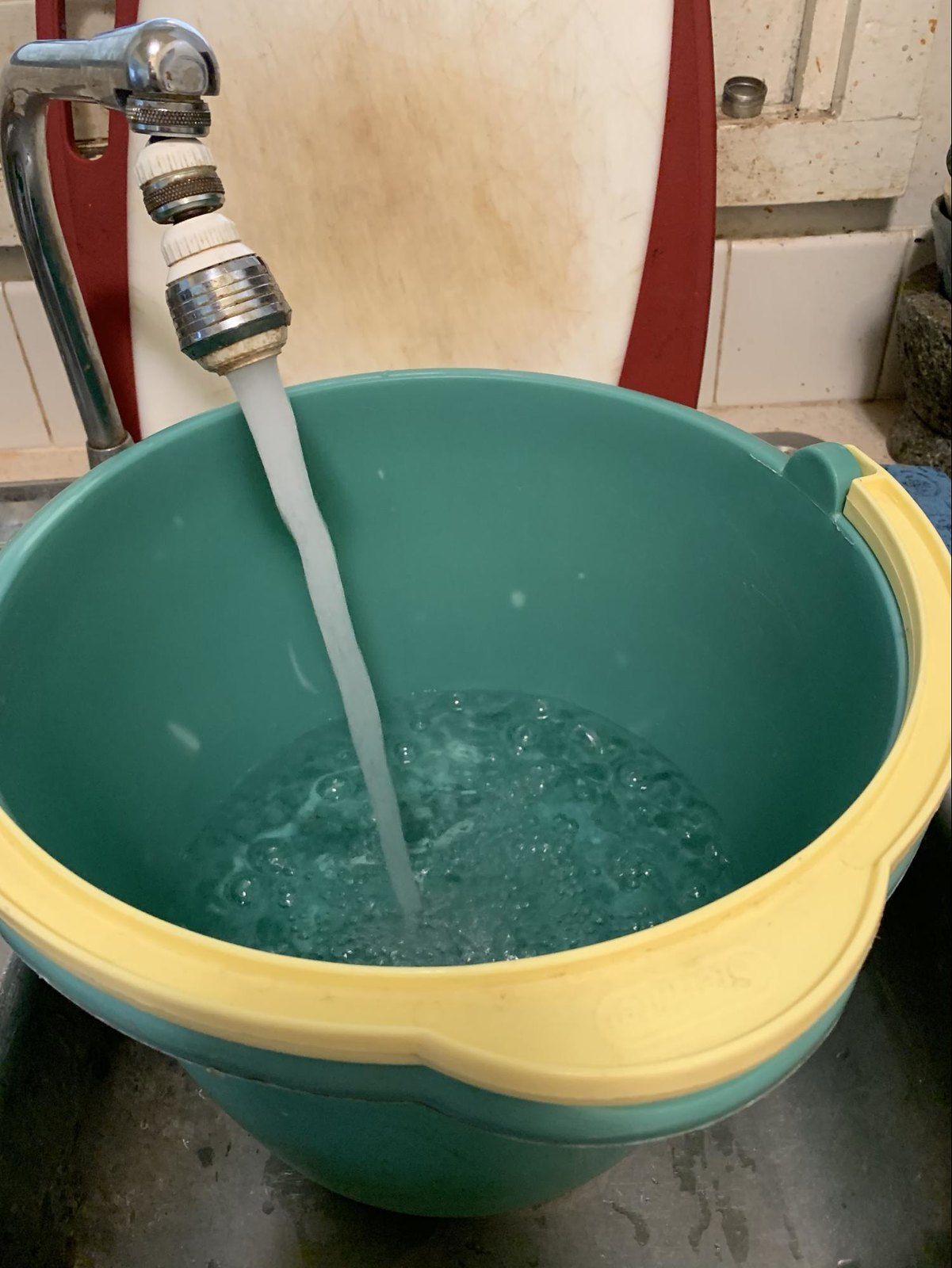
- Pour in slowly, put the decor back, then switch the equipment on. PetMD notes the filter may need priming 1.
How much water to take out is a separate question. PetMD says 10% weekly or 25% every other week, never more than 50% at once, and a test at least weekly 1. Our water change guide weighs that against the view that most keepers change more than they need to, and covers how to read your nitrate.
The gravel: skim it, don’t dig it
This is where the advice splits.
The standard instruction, including PetMD’s, is to run the siphon over the whole bottom. PetMD adds that just stirring the substrate isn’t enough 1.
Aquarium Science disagrees with deep vacuuming. It calls the weekly deep clean promoted in some videos difficult and time-consuming, with no positive effect on the tank’s health. But it says it is “perfectly fine” to vacuum the mulm, the debris that settles on top of the substrate, on a regular basis 2.
Its argument: in a mature tank, leftover food and dead material feed detritus worms and protozoans that form a harmless brown film. Digging deep disturbs that. Without it, bacteria that live without oxygen can build up in rotting material, giving the sewage smell and in some cases, it says, fin rot and other diseases. It also says easily 80% of aquariums have enough biofiltration to tolerate weekly deep vacuuming without harm 2.
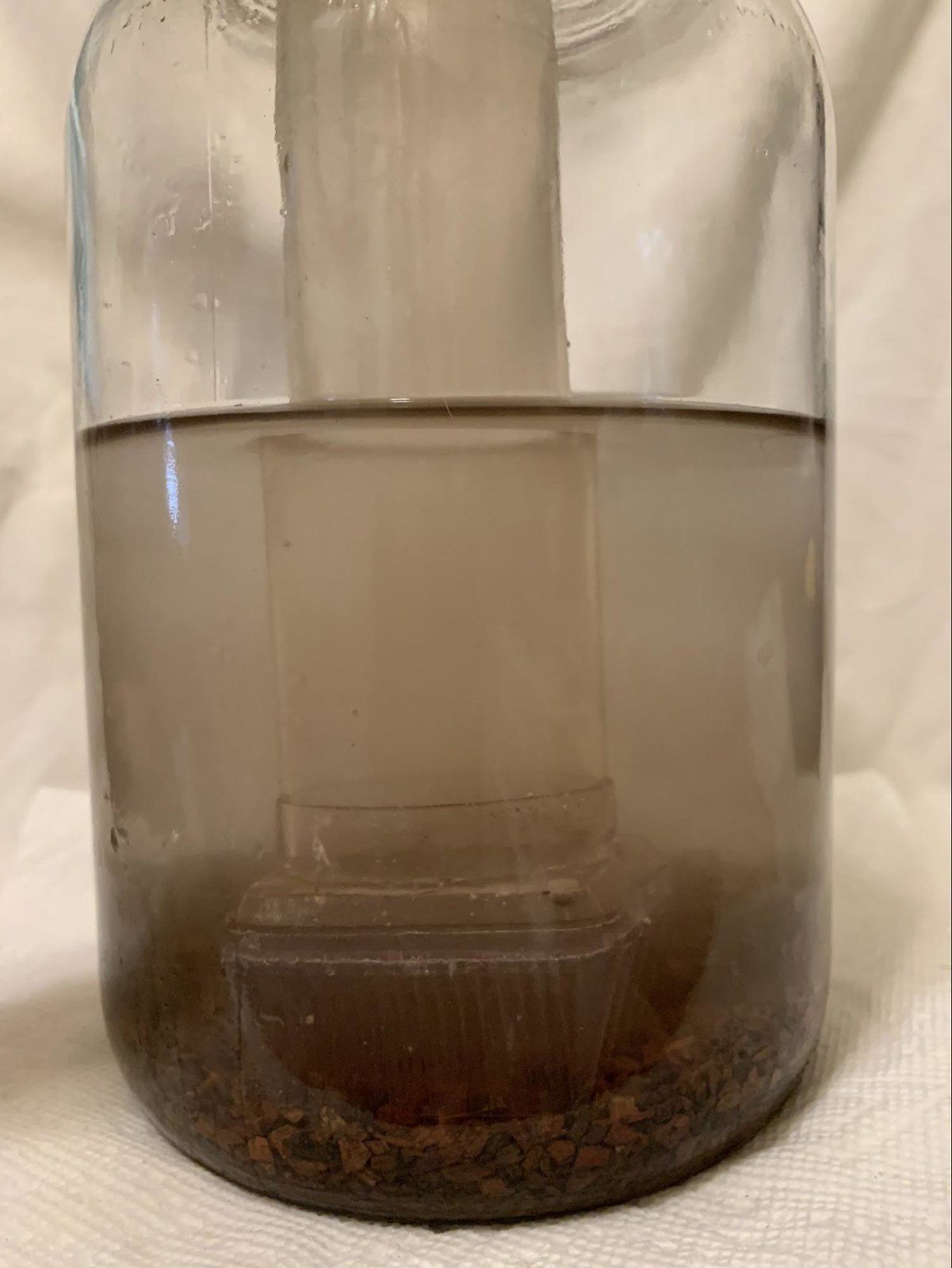
Our reading: the two aren’t far apart. Skim the top inch or so at each water change, the way PetMD’s “small amount of substrate at each spot” suggests, and don’t push the tube to the bottom of deep sand or plant roots.
The exception is a heavily stocked tank. Aquarium Science says if low oxygen in the substrate is a risk, clean it thoroughly at least once a month, and that better filtration and aeration are the easier long-term fix 4.
The filter: rinse it lightly, rarely
This is the job that does the most damage when you overdo it. The bacteria that handle your fish’s waste live on the filter media, and Aquarium Science calls cleaning or replacing media at every water change a serious mistake 3.
What it recommends instead 3:
- Clean only partially. Swish the media once or twice in a pail of water. In its tests this left significant bacteria behind in a newly established filter.
- Never rinse new media under running water. In testing this removed virtually all the beneficial bacteria.
- Clean when the flow slows, not on a calendar. It warns against a fixed schedule, especially a monthly thorough clean, which it links to cloudy water and ammonia spikes. (A reader reply on that page puts a moderately stocked tank at every two to four months and says a heavily stocked tank may clog within weeks. That is the author’s answer to one reader, not a tested figure.)
- Keep the brown gunk. It contains living organisms, and the film on it is what does the filtering.
PetMD agrees on the method: rinse the media in the waste-water bucket and replace it only if it is falling apart 1. Tank water is the safe default. Aquarium Science found that a pail of chlorinated water also left bacteria behind when swished lightly, but it says to avoid running water on newer media 3. We’d still use old tank water, because a chloraminated tap isn’t something we’d gamble on (our reading).
Avoid doing a big filter clean and a big water change on the same day in a young tank. If something goes wrong, you won’t know which one caused it.
Glass and decor
Algae on the glass is cosmetic. A scrub brush for glass or acrylic takes it off, and PetMD says acrylic tanks need softer sponges 1. Do the glass before the siphon so the loosened algae gets pulled out with the water. If it keeps coming back fast, our fish tank algae guide covers the causes.
For decor, a brush and a bucket of old tank water usually does it. Neither PetMD nor Aquarium Science says anything about soap or bleach for routine cleaning. Our reading: leave soap out of it entirely. Residue is hard to see and hard to rinse off, and the tank water is what you’d be rinsing it into.
After an illness, treat tools differently. Aquarium Co-Op says to disinfect reused nets and siphons with very hot tap water and chlorine, then dry them completely, and not to share them between tanks 5. Our ich guide explains why: the parasite can ride on equipment.
When to clean harder
- During an ich outbreak. UF/IFAS says cysts attach to debris and that a pet tank should be cleaned every other day 6, so the advice flips toward more frequent removal of surface debris. See our ich guide. Keep the filter alone (our reading).
- A heavily stocked tank, as above 4.
- A bad smell from the substrate, as above 1 4.
What not to do
- Don’t replace more than half the water in one go. PetMD’s limit is 50% 1.
- Don’t scrub the filter until it looks new. The dirt is part of the filter 3.
- Don’t clean everything on the same day in a new tank. One change at a time tells you what caused a problem (our reading).
- Don’t add conditioner to the tank before the water, which PetMD says to add to the bucket 1.
FAQ
How often should I clean a fish tank? PetMD gives 10% weekly or 25% every other week for water, and says to test at least weekly 1. Filter media can wait until the flow slows. Aquarium Science warns against a fixed schedule 3.
Do I have to remove the fish to clean the tank? No. PetMD says to leave them in unless the substrate smells like rotten eggs 1.
Should I vacuum the gravel every week? PetMD’s steps include siphoning the substrate each time 1. Aquarium Science says deep vacuuming has no health benefit and that removing the surface mulm is the part that’s fine 2.
Can I clean the filter under the tap? Aquarium Science says never to rinse new media under running water, since that removed virtually all the bacteria in its tests 3. PetMD uses the waste-water bucket 1.
How do I clean a tank after a sick fish? Disinfect nets and siphons with very hot water and chlorine, dry them fully and don’t share them 5. Leave the filter media alone.
Is cloudy water after cleaning normal? It can happen if you stir the substrate or scrub the filter hard. Our cloudy water guide covers the colors and causes.
How we got these numbers
We read the PetMD article, three Aquarium Science maintenance chapters, UF/IFAS’s ich fact sheet and Aquarium Co-Op’s ich page on October 20, 2026. PetMD’s piece is written by a fish veterinarian and dated May 7, 2026. Aquarium Science is one hobbyist’s site with undated pages, and its advice on the gravel is a minority view. The “skim the top” compromise and the ordering notes marked “our reading” are ours, not published rules.
All the numbers, with sources
| What | Value | Type | Source |
|---|---|---|---|
| PetMD (vet-written): routine water change | 10% weekly or 25% every other week | Stated by source | [1] |
| PetMD: most water to replace at once | 50% | Stated by source | [1] |
| PetMD: test the water at least | Once a week | Stated by source | [1] |
| Aquarium Science: tanks with enough biofiltration that tolerate weekly gravel vacuuming | Easily 80% | Stated by source | [2] |
| Aquarium Science: thorough substrate cleaning in a heavily stocked tank at risk of low oxygen | At least once a month | Stated by source | [4] |
Sources
- PetMD (2026). How To Clean a Fish Tank (by Jessie Sanders, DVM, DABVP Fish Practice; published May 7, 2026)
- Aquarium Science (aquariumscience.org, one hobbyist author) (n.d.). 18.3. Cleaning the Substrate
- Aquarium Science (aquariumscience.org, one hobbyist author) (n.d.). 18.4. Cleaning a Filter
- Aquarium Science (aquariumscience.org, one hobbyist author) (n.d.). 18.5. Heavy Stocked Maintenance
- Aquarium Co-Op (aquarium retailer) (n.d.). How to Treat Ich or White Spot Disease on Freshwater Fish
- UF/IFAS Extension; Francis-Floyd, Yanong and Pouder (n.d.). Ichthyophthirius multifiliis (White Spot) Infections in Fish (CIR920/FA006)