Betta Fish Care Guide: Tank Size, Heater, Food and Lifespan
Last reviewed · By Manel Vadillo
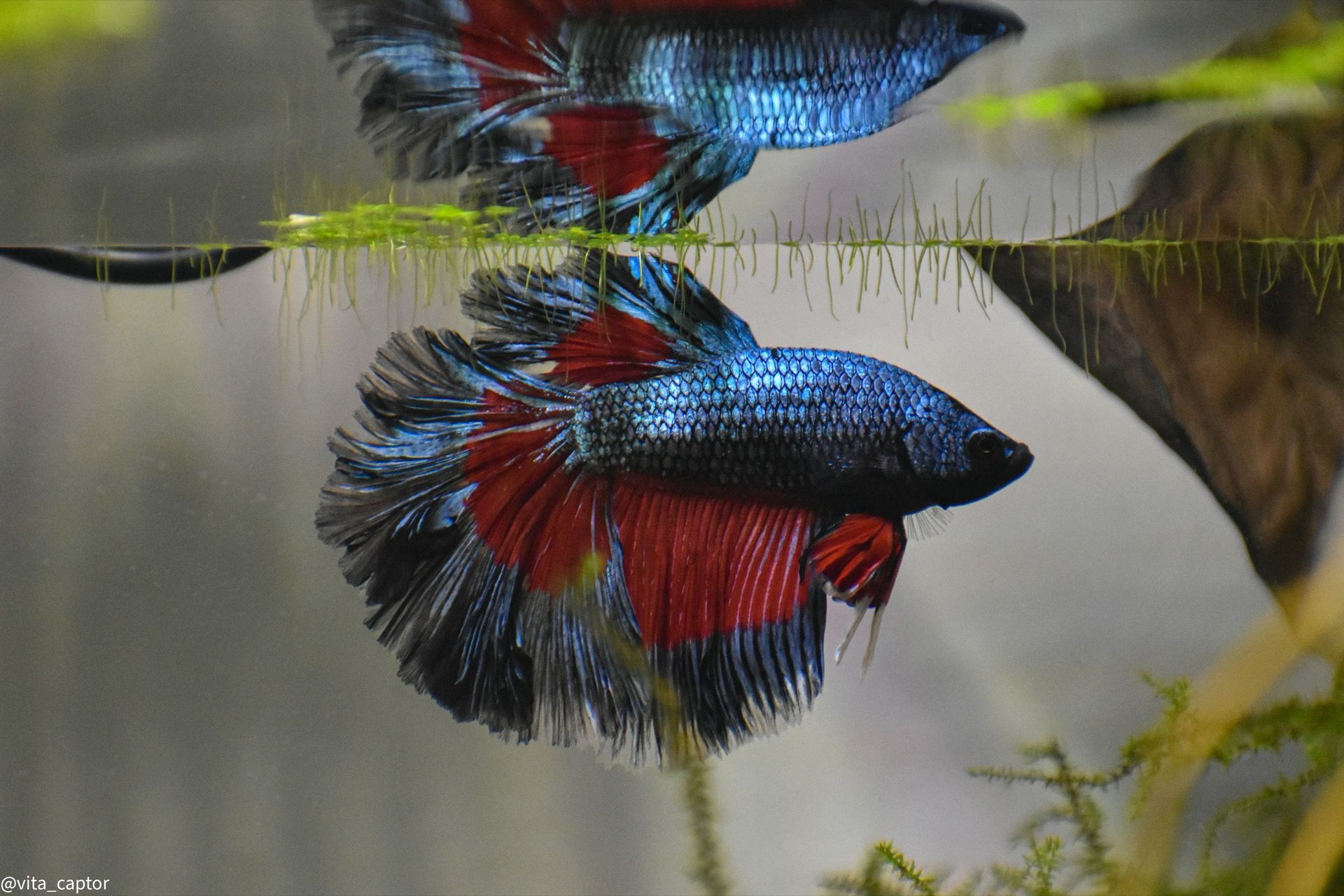
A betta's worst enemy is the cup it's sold in. It gets pitched as a fish that needs almost nothing, then spends a short life in a bowl on a desk. In a warm, filtered tank it can live years.
Quick answer
Give a betta at least 5 gallons, ideally 10, with a heater set around 78 °F, a gentle filter and a lid. Keep one male per tank. Feed a small amount once a day and test the water weekly. Expect 3 to 5 years if it stays warm, clean and out of a bowl.
How long do betta fish live?
Plan on 3 to 5 years in a properly set-up tank 2. Aqueon puts the average a bit lower, at 3 to 4 3.
Setup does most of the work. A betta in cool water becomes inactive and more prone to disease 3.
What size tank does a betta need?
Get at least 5 gallons, and 10 if you have the room. A veterinarian at the University of Illinois says a betta should ideally live in a 5 gallon glass or plastic tank or larger 1.
Guides differ on the floor. PetMD accepts 2.5 gallons as a minimum but says 10 is ideal, because bigger tanks hold temperature and water chemistry steadier 2. Seriously Fish asks for an 18 × 12 inch base for a single male, about 11 gallons, and doesn’t support keeping bettas in tiny aquariums or jars 5. We’d buy the 10.
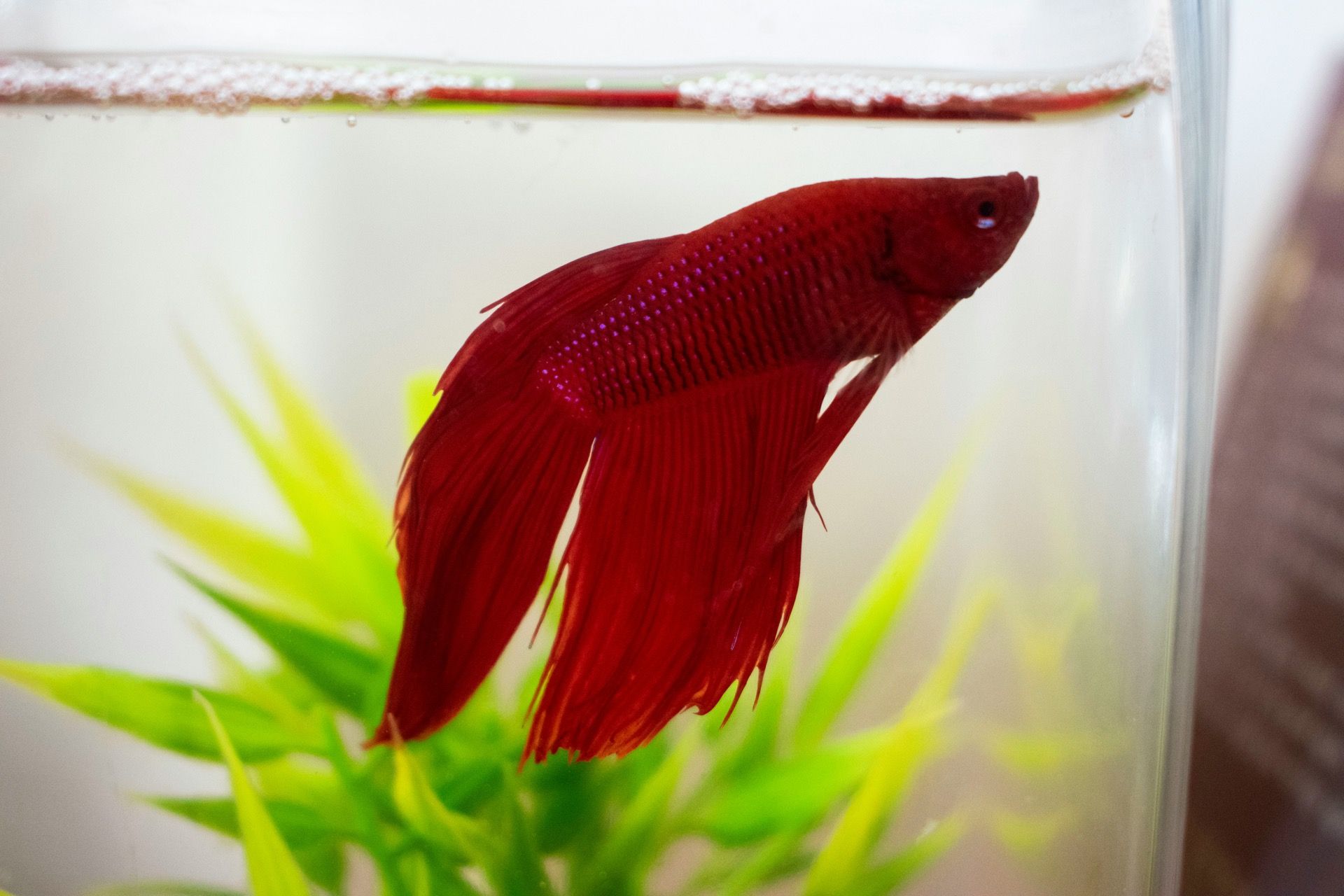
The bowl and the vase
The “bettas live in puddles” story has a grain of truth. They come from rice paddies, ditches, swamps and other still, shallow water, often low in oxygen 5. That’s why they can gulp air from the surface with a labyrinth organ, and why Aqueon says they can live in small aquariums without circulation 3.
It doesn’t make a bowl a good home. Wild paddies are large, planted and constantly refreshed, and a bowl is none of those. The Illinois vet says bettas shouldn’t live in bowls at all, because the water is too small for normal swimming and hiding 1.
The vase with a plant on top is worse. The same vet calls the claim that a betta can live off the plant roots false: plants give cover, not food 1.
Two details most guides skip. Keep a tight lid, since bettas jump, and don’t fill the tank to the brim. A betta needs a pocket of humid air at the surface 5. For stocking numbers in a 10 gallon, see our stocking guide.
Do betta fish need a heater?
Yes. Unlike a goldfish, which is fine at room temperature (goldfish care guide), a betta is tropical and needs a heater and a thermometer. Aim for about 78 °F. The Illinois vet gives 76 to 81 °F (24–27 °C) and points out that most homes run cooler 1. Temperatures for other fish are in our aquarium temperature chart.
Aquarium Co-op describes what happens without one: in a 67 to 69 °F room a betta gets lethargic and may get sick from the constant stress 4.
Other guides allow a wider range, 76 to 85 °F from Aqueon 3 and 72 to 86 °F from Seriously Fish 5. Steadiness matters more than hitting one number. Wattage depends on your tank and room, so use our heater size guide.
Water, filter and cycling
Use a sponge filter, or any filter with low, adjustable flow. Long fins and strong current don’t mix 4.
Treat tap water with a conditioner that handles chlorine and chloramine, and don’t use distilled water, which lacks minerals fish need 1.
Keep pH steady and close to your tap water’s, so frequent water changes don’t swing it. PetMD puts the comfortable range at 6.5 to 7.8 2.
A new tank has to be cycled before the fish goes in, and that’s as true for 5 gallons as for 55 2. Start with the fishless cycle calculator and our guide to telling when a tank is cycled.
Change about a fifth of the water every week and vacuum the gravel. Aqueon says 10% a week in a filtered tank, and never to swap all the water at once 3. PetMD says 15 to 25% per change 2. Our water change guide has the details.
What do bettas eat?
Bettas are carnivores. Use a pellet made for them as the staple, with frozen or freeze-dried bloodworms or brine shrimp as treats 1.
Feed once a day, a small amount, and pull what’s left. Overfeeding is the usual mistake, and a swollen belly means too much, with constipation and other problems after it 4.
How long should the meal last? Guides go from about one minute 4 to three to five 1. Start at one to two and see what the fish actually finishes.
Tankmates
One male per tank. Males are territorial and will fight and injure each other, often fatally 1.
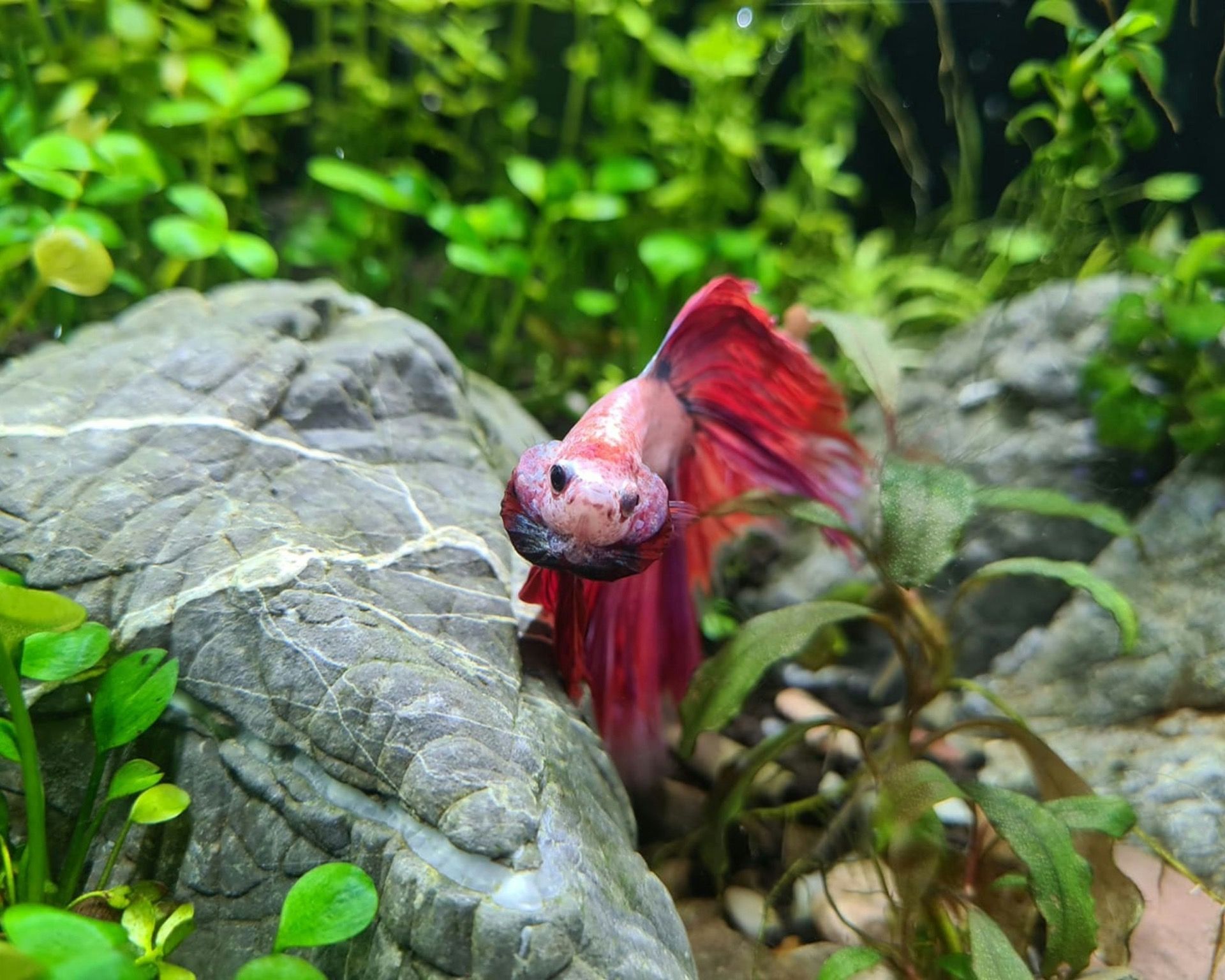
Alone is the safe default. Seriously Fish calls the betta not recommended for a standard community tank and best kept on its own 5.
If you want company, go bigger than 10 gallons, plant it heavily and pick calm fish. Aquarium Co-op suggests 10 to 20 gallons with cover 4, and Aqueon asks for at least 15 3.
- Often work, depending on the fish: corydoras, mystery snails, ghost shrimp and some small tetras or rasboras 2.
- Also on a vet’s list: African dwarf frogs, with a larger tank and stronger filtration to match 1.
- Avoid: tiger barbs and other fin-nippers, male gouramis and active fish like giant danios 3. PetMD also says to skip long-finned species the betta may spar with 2.
- Guppies are a split call. Aqueon lists livebearers as suitable 3, while Seriously Fish warns that a male may see trailing fins as rivals 5. We’d skip the fancy-tailed ones.
Female bettas and sororities
Skip the sorority your first time. A hobbyist-written guide on FishLore says a group of females needs at least four fish, a bare minimum of 10 gallons (15 or 20 preferred) and dense planting, and calls it a setup for intermediate or advanced keepers. It adds that these tanks can be a success or a complete failure 8.
Common betta problems
Fin rot
Fix the water first. “Fin rot” is the aquarist’s name for frayed, discolored or eroding fins, usually a bacterium or fungus attacking tissue that was already damaged. It’s tied to poor water quality, temperature swings or a tank that’s too cool, sharp decor, nippy tankmates and overcrowding 6.
The Merck Veterinary Manual doesn’t use the term, but it backs the water-first logic for bacterial outbreaks in aquarium fish in general: they’re frequently linked to poor water quality, marked temperature changes and other stress, and control starts with removing those causes 11.
Look for ragged edges, brown, red, black or white edging, clamped fins, hiding and sluggishness. For mild cases the vet-reviewed advice is small, frequent water changes every two to three days and removing anything sharp. Take activated carbon out of the filter before using any medication, and call a vet for anything beyond mild 6. Our fin rot guide covers how to tell rot from nipped fins and where the treatment advice splits.
A betta lying still at the bottom
Check the thermometer first, then the water. A cold tank slows a betta down and makes it lethargic 4.
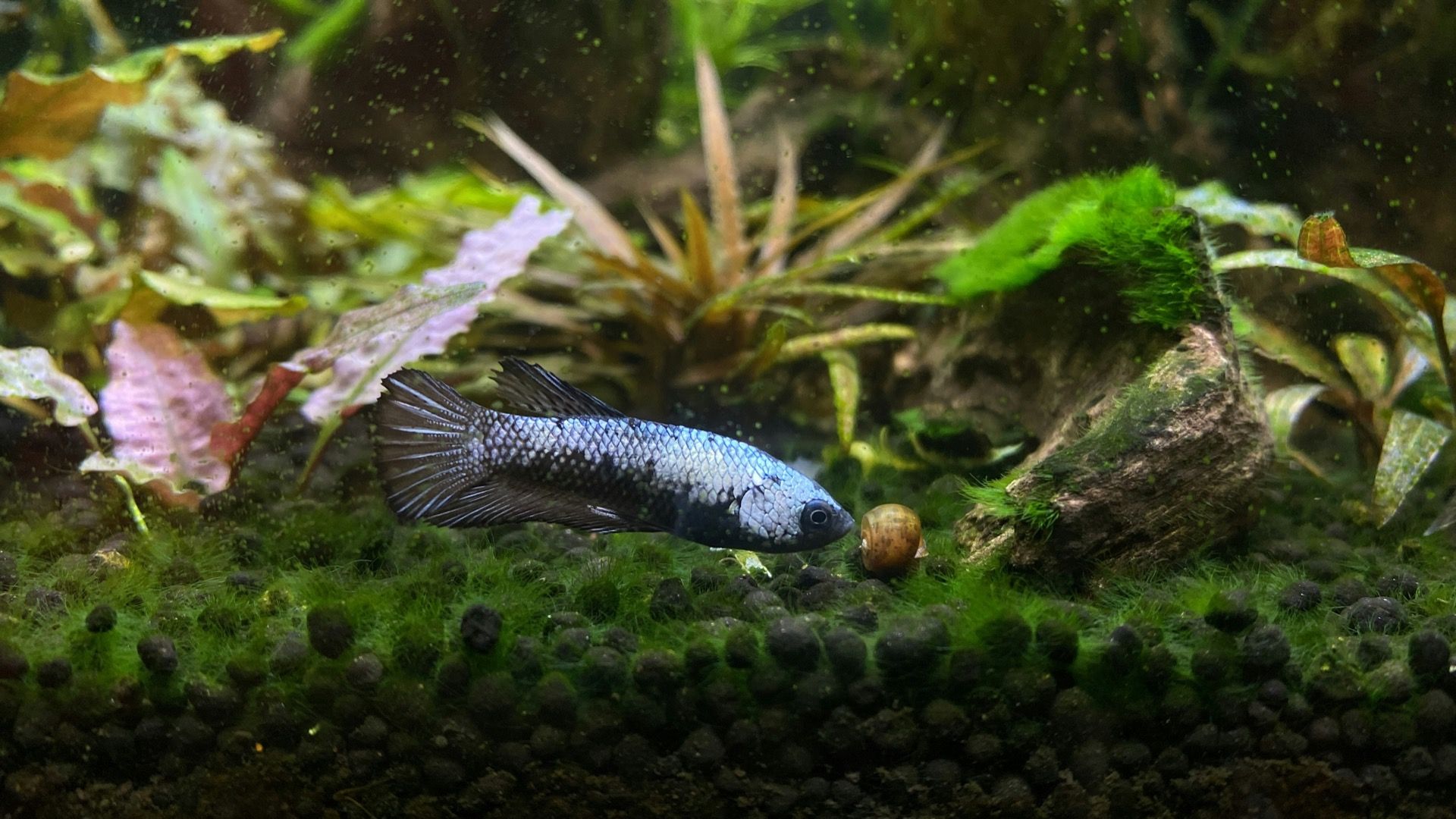
PetMD’s checklist for a healthy betta is bright color, intact fins, normal activity (not always hiding) and a good appetite 2. If one of those is off, test ammonia and nitrite and check the heater before anything else.
Bubble nest
A cluster of bubbles at the surface is a bubble nest, and it’s normal. Males build them at the surface 3. It’s natural behavior and usually a good sign, though not proof the fish is happy, and there’s no need to remove it 7.
What hobbyists report
Owners tell these stories better than a care sheet, but they aren’t evidence. Here are two FishLore threads, paraphrased. In neither did anyone confirm what was actually wrong.
- A 5 gallon betta in cold water 9. The owner’s tank had a heater, but the water was reportedly 60 to 70 °F and the cycle hadn’t been done properly. The betta went from energetic to very still, hung in the top corner, then lay on the bottom. A 50% water change seemed to help for a while. Other members pointed at the cold and suggested replacing the unreliable heater. The owner came back later to say the fish had died, with a bloated belly and raised scales, and a member called it dropsy.
- A 2.5 gallon betta that rested a lot 10. The owner kept the water at a steady 78 °F with zeros on ammonia and nitrite, yet the betta swam for a few minutes and then sat in a cave for ten. Replies ranged from “he’s still settling in” to “some bettas just rest a lot and like it warmer”. The fins were torn and clamped, and a water change plus a gravel clean got him spreading them again.
FAQ
Can a betta live in a bowl? It shouldn’t. Bowls are too small for normal swimming and hiding 1.
Do bettas need a filter? Not strictly, but without one you’ll be changing water far more often. Aqueon says about a third every 3 to 4 days in a small unfiltered container, against 10% a week with a filter 3. We’d use a low-flow filter.
Do bettas get lonely? No. They’re territorial, and in a small tank they may get bored instead 1.
Can I put two male bettas together? No. Males fight and injure each other, often fatally 1.
Can a betta live in tap water? Yes, with a conditioner that removes chlorine and chloramine 2.
How often should I feed a betta? Once a day, a small amount. PetMD allows once or twice 2.
All the numbers, with sources
| What | Value | Type | Source |
|---|---|---|---|
| Lifespan with proper care | 3–5 years | Stated by source | [2] |
| Tank size, University of Illinois vet clinic | 5 gal (19 L) or larger | Stated by source | [1] |
| Tank base, Seriously Fish (single male or pair) | 18 × 12 in (45 × 30 cm), about 11 gal (41 L) | Stated by source | [5] |
| Water temperature, University of Illinois vet clinic | 76–81 °F (24–27 °C) | Stated by source | [1] |
| Water change, PetMD | 15–25% per change | Stated by source | [2] |
| Males per tank, Aqueon | 1 (males are highly territorial toward each other) | Stated by source | [3] |
Sources
- University of Illinois College of Veterinary Medicine (2021). Your Betta Needs More Than a Bowl
- PetMD (vet reviewed, Maria Zayas, DVM) (2026). Betta Fish Care Sheet
- Aqueon (n.d.). Betta Care Guide
- Aquarium Co-Op (2026). Care Guide for Betta Fish: The Best Beginner Pet Fish
- Seriously Fish (2026). Betta splendens (Siamese Fighting Fish)
- Chewy (reviewed by Ivan Alfonso, DVM) (2025). Betta Fish Fin Rot: Symptoms, Causes, and Treatment
- Chewy (2026). Betta Fish Bubble Nest: What It Means and How To Care for It
- FishLore Aquarium Forum (2017). Betta Sororities Starter Guide + Tips and Tricks (hobbyist-written article)
- FishLore Aquarium Forum (n.d.). Betta Fish Ill, Acting Different, Lethargic (forum thread, hobbyist experience)
- FishLore Aquarium Forum (n.d.). Betta is acting lethargic (forum thread, hobbyist experience)
- Merck Veterinary Manual (Barbara D. Petty, Ruth Francis-Floyd, Roy P. E. Yanong, University of Florida) (2024). Bacterial Diseases of Fish