Fin Rot in Fish: How to Spot It, What Causes It and What Treatments Exist
Last reviewed · By Manel Vadillo
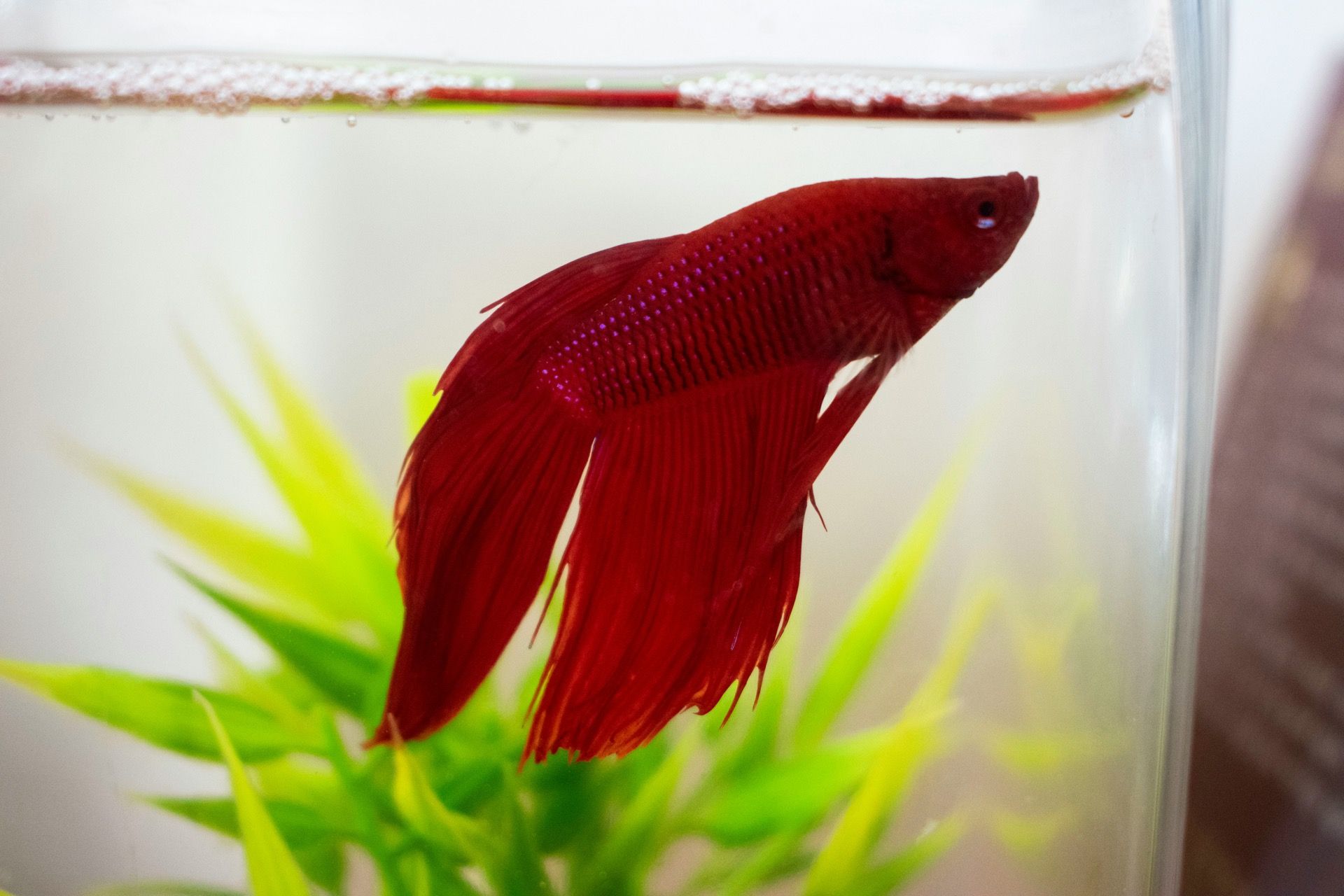
Fins that fray, shorten and turn white at the edges are the classic sign. But torn fins have other causes, and the treatment advice for the real thing is split. Water quality is the one point everyone agrees on.
Quick answer
Fin rot is a bacterial infection, usually gram-negative bacteria, that starts at the fin edges and eats inward. Merck says outbreaks follow poor water, stress and handling. Fix the water and the stressor first. Treatments disagree: salt, antibiotics in the water, or antibiotics in food. Merck wants lab testing before any antibiotic.
What fin rot is, and what it isn’t
Aquarium Co-Op describes three stages. First the edges of the fins or tail change color, white, red or black depending on the fish. Then the edges look frayed and uneven as the dying tissue falls off. In the last stage the whole fin or tail is gone and the infection reaches the body. A fish may also turn listless and stop eating 4.
Aquarium Science, the site of one hobbyist author, says it is most often gram-negative bacteria such as columnaris and Aeromonas 5. Merck has no section called fin rot. It does list ragged fins among the signs of Aeromonas, which it calls the most common bacterial infection of freshwater aquarium fish 2. We treat “fin rot” below as the common name for that kind of infection.
Fin rot or torn fins?
Not every damaged fin is fin rot. A FishLore member who answers a lot of questions said the bacterial disease is less common than people assume and often misidentified 6. That’s one forum opinion, but the signs below fit it.
| What you see | It points to | Source |
|---|---|---|
| Edges with white (or red, or black) discoloration, damage creeping inward | Fin rot | Co-Op 4, Aquarium Science 5 |
| Ragged or bitten fins with no white edge | Nipping or aggression | Aquarium Science 5 |
| A fish whose fins were always uneven | Hard to judge | Co-Op 4 |
Look at the tank mates before you look at the fish. If something is nipping, you have an aggression problem first, and Co-Op lists nipping from other fish as one cause of fin rot 4.
Why it starts
Merck says bacterial outbreaks in aquarium fish are tied to poor water quality, organic loading, handling and transport, marked temperature changes, low oxygen and other stress 1. Co-Op’s list for fin rot adds dirty water, nipping, an overly strong filter, sharp decor and the wrong temperature 4.
So the cause is almost never “bacteria” alone. The bacteria are around anyway. What changes is the fish’s condition.
First steps
- Test the water. Ammonia and nitrite should read zero. If they don’t, see our nitrite guide and the water change guide. Co-Op’s advice is to find out why the fish got sick, because fin rot comes back unless you remove the cause 4.
- Remove the stressor. A nipper, a filter flow that pushes a long-finned fish around, rough decor, water that’s too cool.
- Clean the tank. Co-Op says to remove as much waste as possible before medicating, since some medications mean holding off on water changes 4.
- Keep the oxygen up. Co-Op notes medication can make water harder to breathe in, so add an air stone or sponge filter 4.
Merck’s position on control is the same: it is based on removing predisposing factors 1.
Treatment: the sources disagree
Two of these sources sell products. Co-Op sells salt and aquarium medication, so weigh its advice with that in mind. We give no doses here. The labels and the sources below differ, and an antibiotic dose is the wrong thing to copy from an article.
| Approach | What the sources say | The catch |
|---|---|---|
| Clean water only | Merck: remove the predisposing factors 1. A FishLore member: pristine water is the best treatment, ideally through big, frequent changes 6. | Slow if the infection is advanced. |
| Aquarium salt | Co-Op: a fallback if you can’t buy erythromycin, but generally slower 4. FishLore posters used it, one of them alongside daily water changes 6. | Not safe for every fish or plant (see below). |
| Antibiotic in the water | Co-Op recommends erythromycin, a broad-spectrum antibiotic, and methylene blue if a fungal infection follows 4. | Aquarium Science says antibiotics only work mixed into food 5. |
| Antibiotic in food | Aquarium Science: medicated food for all fish in the tank. The same author calls it an emergency when more than one fish is affected 5. | Our sources don’t say how well this works. The method comes from a single hobbyist site, and we give no feeding duration. |
| Herbal “natural” remedies | Aquarium Science says they did nothing in one case it describes 5. A FishLore poster said the same of one product 6. | Two anecdotes, not a test. |
Merck pushes the other way on all the antibiotic rows. It says to test bacteria for sensitivity before using antimicrobials 1, and that rapidly switching drugs or “shotgunning” many at once is dangerous and can breed resistant bacteria 2. It strongly discourages prophylactic medication without diagnostic testing 3. In practice a home keeper can’t get a culture done. That gap is why the advice online is so inconsistent.
Salt: when not to use it
The salt route comes with warnings from the hobbyists themselves. For doses in grams and what the sources say about which fish tolerate it, see our aquarium salt dose chart.
- Catfish. A FishLore poster said it isn’t a good idea to treat catfish with salt, and named otocinclus and corydoras 6.
- Evaporation. Water leaves the tank and salt doesn’t, so the concentration creeps up. A member advised topping up with fresh water now and then 6.
- Long courses. One poster said salt is meant as a quick remedy, not long term, and worried about internal damage 6. We found no study backing or refuting that.
- Plants. The original poster’s plant survived the salt 6, but we have no source on how plants handle it.
Merck mentions salt as a tool against some parasitic protozoa in freshwater systems 3. That isn’t about fin rot, and we won’t turn it into a fin rot dose.
What we’d do
This is our reading, not a published protocol.
Start with the water and the cause, because every source agrees on that and it costs nothing. Give it a few days. If the fins keep shrinking, the infection is spreading or the fish stops eating, that’s when you decide between salt and antibiotics. Check the species first. In the FishLore thread, salt is what the betta’s owner used. For a tank with catfish or shrimp, we’d move the sick fish to a bare hospital tank with its own heater and air, and treat there. Don’t medicate a whole display tank by habit.
If an antibiotic is the route, ask a vet who treats fish. Merck’s guidance requires it, and our sources don’t give enough to pick a drug.
Signs it’s getting better
Co-Op’s list: the rot hasn’t progressed, no new symptoms, appetite and energy returning, and fin regrowth beginning, sometimes in a different color 4.
Keeping it from coming back
Co-Op suggests regular water changes, not overfeeding, not overcrowding and some live plants to absorb waste. It also suggests a stable temperature with a heater, gentler flow and removing aggressive tank mates 4. Merck recommends at least 30 days of quarantine for new pet fish 3. Co-Op also says to look at your fish once a day when you feed 4.
What hobbyists report
On FishLore, a new owner had a half-moon betta with recurring fin rot. Tetras in a 10 gallon had bitten its fins, and the damage never fully healed. Later a driftwood piece dropped the pH from 7.8 to 6.8 in two days, and the fins looked shredded. The owner moved the betta to a 3 gallon bare hospital tank and used salt with a 50% change every day, tapering the salt over the course of the treatment. Fins began to grow back. Then a single otocinclus went in. The next morning the fins were shredded again, and the tank tested high for ammonia. Members said bettas handle large changes well, that the bacterial disease is less common than assumed, and that small volumes make medication errors easy. One suggested trying the clean water routine before any dose 6.
FAQ
Is fin rot contagious? Aquarium Science says that if more than one fish has a bacterial disease, you have to treat the whole tank 5. Merck lists crowding and stress among the triggers for outbreaks 1.
Will fins grow back? Co-Op lists regrowth as a sign of recovery 4. A FishLore poster said in their experience fins grew back slowly or not much after fin rot, and that a vitamin supplement seemed to help 6. That is one anecdote.
Can I just do water changes? Merck and a FishLore member both put water and stress first 1 6. Whether that is enough for an advanced case, our sources don’t say.
Does MelaFix work? Aquarium Science says it did nothing in one reported case 5. A FishLore poster said the same of a related product 6. We found no test showing either way.
Is it fin rot or fin nipping? White edges suggest fin rot. Bitten fins without a white edge suggest nipping, according to Aquarium Science 5.
All the numbers, with sources
| What | Value | Type | Source |
|---|---|---|---|
| Aquarium Co-Op: stages of fin rot, from edge color change to the body | 3 stages | Stated by source | [4] |
| Merck: minimum quarantine for new pet fish | 30 days | Stated by source | [3] |
Sources
- Merck Veterinary Manual (Exotic and Laboratory Animals; University of Florida) (n.d.). Bacterial Diseases of Fish
- Merck Veterinary Manual (n.d.). Disorders and Diseases of Fish (Pet Owner Version)
- Merck Veterinary Manual (n.d.). Management of Aquarium Fish
- Aquarium Co-Op (fish and aquarium products retailer) (n.d.). 5 Quick and Easy Steps for Treating Fin Rot in Aquarium Fish
- Aquarium Science (aquariumscience.org, one hobbyist author) (n.d.). 10.3.4. Fin Rot
- FishLore Aquarium Forum (n.d.). Fin rot 100% water change? (forum thread, hobbyist experience)