Aquarium pH: What's Fine, When It Matters and When to Leave It Alone
Last reviewed · By Manel Vadillo
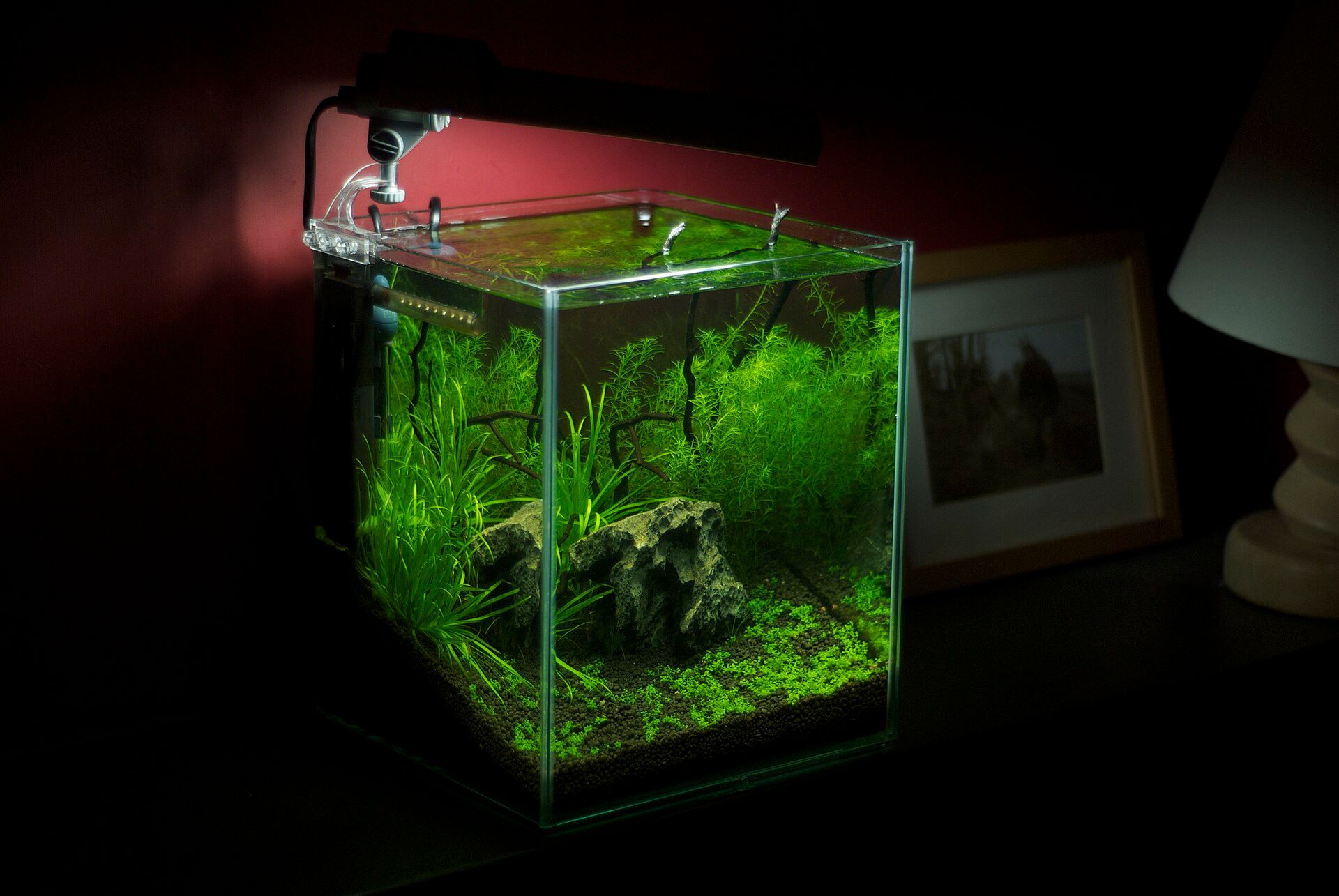
pH is the number new keepers worry about most and need to act on least. Most tap water already falls inside a range that common aquarium fish handle. What deserves attention is a pH that keeps sliding down and the combination of a high pH with ammonia.
Quick answer
For most community fish, leave pH alone and pick fish that suit your tap water. Merck's freshwater range is 6.5 to 9.0, and Aquarium Science says 6.5 to 8.5. Watch two situations instead: a pH that keeps falling, which usually means used-up alkalinity, and a pH above 8 while ammonia is present.
What pH and KH are telling you
pH is a measure of how acidic the water is. It’s logarithmic, so each whole number is a tenfold change: water at 5.0 is ten times more acidic than water at 6.0 3. Aquarium Science adds that pH test kits aren’t very accurate, so a difference of a tenth between two readings means little 3.
KH, or alkalinity, is the water’s ability to resist pH change. It matters more than the pH reading, because it decides whether the pH holds. Merck gives the freshwater reference for total alkalinity as above 100 mg/L as calcium carbonate, and for total hardness as above 20 mg/L 1. Hobby kits usually report KH in degrees (dKH). One degree is about 17.9 mg/L, so Merck’s 100 mg/L is about 5.6 dKH. That conversion is ours, from the molecular weights.
Where the sources draw the line
The reference ranges overlap in a broad middle. Merck puts the freshwater range at 6.5 to 9.0 1, Aquarium Science at 6.5 to 8.5 3, and the EPA’s guideline for drinking water is also 6.5 to 8.5, set for taste and pipe corrosion rather than fish 5. If your tap sits in that band, you start inside the range every source accepts.
The species numbers are narrower and don’t all agree with each other. Neon tetras list 4.0 to 7.5 and guppies 7.0 to 8.5, which don’t overlap at all 6 11. That’s a stocking question more than a chemistry one: these two don’t want the same water.
Keepers argue about how strict to be. In a FishLore thread about an 8.0 tap, one member said angelfish prefer 6 to 7 and might need RO water. Others said angelfish are fine at 8.0 and that breeding is the only reason to go lower. One said their tap pH swings between 7.8 and 8.2 and their angelfish do great 16. Aquarium Science takes the same relaxed side 3. We’d say tank-bred fish usually adapt, and wild-caught or delicate species are less forgiving. That’s our reading.
When pH really matters
Two situations deserve attention.
A pH that keeps falling
Filter bacteria use up alkalinity as they work. Merck says an alkalinity of 50 mg/L or less inhibits the biofilter and that buffer should be added to get it to at least 100 mg/L 2. Our nitrogen cycle guide explains the acid chemistry and how much alkalinity each mg of ammonia uses up. SRAC puts the best pH for the bacteria at 6.8 to 7.2 4, and our cycle time guide covers why a pH below 7.0 stalls many cycles.
The extreme case is old tank syndrome. Merck ties it to small, infrequent water changes and topping off, says the pH can fall gradually or suddenly, and says a rapid fall can kill the fish 2. Its advice for a tank in that state is daily small water changes to avoid pH shock, then regular large ones afterward 2. Our water change guide covers the routine.
Aquarium Science adds that below a pH of about 6.0 the cycle stops and nitrite becomes much more toxic 3.
A high pH with ammonia
Ammonia exists in two forms. The un-ionized form is the toxic one, and a higher pH shifts more of it into that form. Merck flags ammonia toxicity at un-ionized ammonia above 1 mg/L with a pH above 8 14. Our ammonia guide notes that 0.05 mg/L already damages gills. The EPA’s ammonia criteria are stated at pH 7 and 20 °C because pH and temperature change how toxic a given reading is 15. Aquarium Science advises against going above about 8.5 for the same reason 3.
In a cycled tank that reads zero ammonia, a pH of 8 is fine. In a new tank or a fish-in cycle, the same ammonia reading is more dangerous at 8.2 than at 7.0. Our fish-in cycling guide covers what to do, and our nitrogen cycle guide explains why kits read the total.
Sudden swings
Here the sources split. Aquarium Science says pH swings are harmless, calls a swing from 6.5 to 8.0 in ten hours common in aquariums, and blames shifting carbon dioxide levels 3. Merck says a dip should match the tank’s pH and temperature, and that an old tank should be corrected with small daily changes to avoid pH shock 2. FishLore members often say a stable pH beats a perfect one 16.
Practical points that don’t depend on who is right:
- Test your tap after it sits. In the FishLore thread, a keeper left tap water out overnight and it dropped from 8.0 to 7.2. A member said municipal tap water’s pH typically drops once it leaves the pipes and meets air 16. That sat-out number is closer to what your tank will read.
- Match the change water to the tank. If your tank holds a different pH from your tap, large changes move it. Smaller or more frequent changes, or buffering both to the same KH, soften the jump. A SRAC start-up sheet makes the same point for a new system: pH, alkalinity and hardness should match the requirements of the incoming stock 4.
- Don’t chase the number. Every product that shifts pH also shifts something else.
If you do need to move it
Our first answer is to choose fish that suit your water. If that isn’t an option, here’s what the sources say.
Raising pH or KH. Aquarium Science’s preferred fix is a bag of crushed coral, aragonite or crushed shell in the filter. It says this buffers to roughly 7.6 to 7.9, takes days or weeks to work, and typically stops working after three to six months as it coats over. It warns that crushed coral can add phosphate and feed algae 12 13. Baking soda also works, if you add a little and wait. Aquarium Science’s rule: add some, wait two days, and stop once you’re above 7.5 12. SRAC’s figure for raising alkalinity by 10 mg/L is 53 g of baking soda per 3,785 L 4, which scales to about 0.5 g in 10 gallons (38 L). That scaling is ours.
In a thread on a new tank with zero KH, the owner added baking soda and Epsom salt together to raise hardness. The water turned cloudy, pH rose to 7.2 and general hardness didn’t budge. Members told them baking soda wasn’t ideal and crushed coral was safer. A member explained that Epsom salt raises GH and baking soda raises KH, so they do different jobs 17.
Lowering pH. Aquarium Science says water with a pH above 7.5 usually has a lot of KH, which resists change, and that the weak acids from driftwood and leaves don’t lower high-KH water. The only effective routes it lists are RO water, rainwater or a strong-acid treatment 18. It also says commercial acid buffers don’t hold a pH in tanks with any real KH, and that the phosphate type feeds algae 12. We wouldn’t use strong acids at home, and we haven’t seen a safe home method that beats choosing different fish. If you blend in RO water, mix it with tap rather than replacing the tap entirely. Merck lists use of distilled water as a cause of sudden death from lack of minerals 14. One FishLore keeper with a pH 8.2, very hard tap water said they cut it with RO for non-hardwater fish, and that the hardness mattered more than the pH 16.
What hobbyists report
A new keeper planning a 75 gallon tank with angelfish, corydoras and a pleco asked whether to buy an RO system for an 8.0 tap. Answers ranged from “pH doesn’t matter, keep it steady” to “you’ll struggle with angels unless you go RO.” The owner let a cup of tap sit overnight, read 7.2, tested KH at 7 and GH at 11 degrees, and said that settled their fish list. A member’s rule of thumb in that thread: keep KH at 4 degrees or higher so the pH holds 16.
In a separate thread, a first-time owner lost six fish within three hours in a 10 gallon with a pH of 6.8 and zero KH and GH. Members blamed chloramine, soft water, ammonia or temperature. One cautioned against chasing pH with additives: if the pet store uses the same city water, its fish live in the same pH 17. The owner later concluded chloramine was the cause. We cover that in our chlorine and chloramine guide.
FAQ
What pH should my tank be? Whatever your tap makes, as long as it’s inside the 6.5 to 8.5 band, and whatever suits the fish you keep 1 3. Check the species range before you buy.
Does driftwood lower pH? Only a little, and mostly in soft water. Aquarium Science says tannic acid is ineffective in high-KH water 18. A FishLore member said botanicals only help when KH is under about 6 16.
Should I use pH up or pH down products? We’d skip them. Aquarium Science argues they’re unnecessary and that some don’t buffer 12. Hobbyists in the threads above prefer crushed coral for raising KH 17.
Why does my pH drop between water changes? The filter bacteria use up alkalinity, and low KH water can’t hold the pH. Merck says at 50 mg/L alkalinity or less the biofilter is inhibited 2. Test KH and consider a small change in routine, not a product.
Is pH 8 bad for fish? Not for fish that tolerate it, and not in a cycled tank with zero ammonia. It matters when ammonia is present 14.
All the numbers, with sources
| What | Value | Type | Source |
|---|---|---|---|
| Merck: freshwater reference range for pH | 6.5 to 9.0 | Stated by source | [1] |
| Merck: reference for total alkalinity (carbonate) in freshwater | Above 100 mg/L as CaCO3 | Stated by source | [1] |
| Merck: alkalinity that inhibits the biofilter | 50 mg/L as CaCO3 or less (add buffer to reach at least 100) | Stated by source | [2] |
| Alkalinity in dKH (our conversion) | 100 mg/L as CaCO3 is about 5.6 dKH | Our calculation | [2] |
| Aquarium Science: pH where it says fish typically do well | 6.5 to 8.5 | Stated by source | [3] |
| SRAC: best pH for the filter bacteria during start-up | 6.8 to 7.2 | Stated by source | [4] |
| SRAC: baking soda to raise alkalinity by 10 mg/L | 53 g per 3,785 L (about 0.5 g per 10 gal) | Stated by source | [4] |
| EPA: tap water guideline for pH (taste and corrosion) | 6.5 to 8.5 | Stated by source | [5] |
| Merck: ammonia toxicity flagged when un-ionized ammonia is above 1 mg/L and | pH above 8 | Stated by source | [14] |
| Aquarium Science: crushed coral buffers to | About 7.6 to 7.9, lasts 3 to 6 months | Stated by source | [13] |
Sources
- Merck Veterinary Manual (2026). Table: “Normal” Reference Ranges for Routine Water Quality Analysis
- Merck Veterinary Manual (last updated June 2026) (2026). Management of Aquarium Fish (new tank syndrome, old tank syndrome)
- Aquarium Science (aquariumscience.org, one hobbyist author) (n.d.). 4.4. Aquarium pH
- Southern Regional Aquaculture Center (2012). How to Start a Biofilter (SRAC Publication No. 4502; aquaculture)
- U.S. Environmental Protection Agency (n.d.). Secondary Drinking Water Standards: Guidance for Nuisance Chemicals
- Seriously Fish (n.d.). Paracheirodon innesi (neon tetra), quick facts
- Seriously Fish (n.d.). Pterophyllum scalare (angelfish), quick facts
- Seriously Fish (n.d.). Betta splendens, quick facts
- Seriously Fish (n.d.). Danio rerio (zebra danio), quick facts
- Seriously Fish (n.d.). Corydoras aeneus (bronze corydoras), quick facts
- Seriously Fish (n.d.). Poecilia reticulata (guppy), quick facts
- Aquarium Science (aquariumscience.org, one hobbyist author) (n.d.). 4.4.2. Buffering the Water
- Aquarium Science (aquariumscience.org, one hobbyist author) (n.d.). 4.4.5. Raising pH
- Merck Veterinary Manual (last updated June 2026) (2026). Environmental Diseases of Aquatic Animals in Aquatic Systems
- U.S. Environmental Protection Agency (2013). Aquatic Life Ambient Water Quality Criteria for Ammonia, Freshwater (2013), fact sheet
- FishLore Aquarium Forum (n.d.). Tap Water Ph Is 8.0 - Should I Do Something To Reduce It? (forum thread, hobbyist experience)
- FishLore Aquarium Forum (n.d.). New fish tank, 6 fish died within 3 hours (forum thread, hobbyist experience)
- Aquarium Science (aquariumscience.org, one hobbyist author) (n.d.). 4.4.4. Dropping pH