Cycling a Tank With Fish in It: How to Keep Them Alive While It Cycles
Last reviewed · By Manel Vadillo
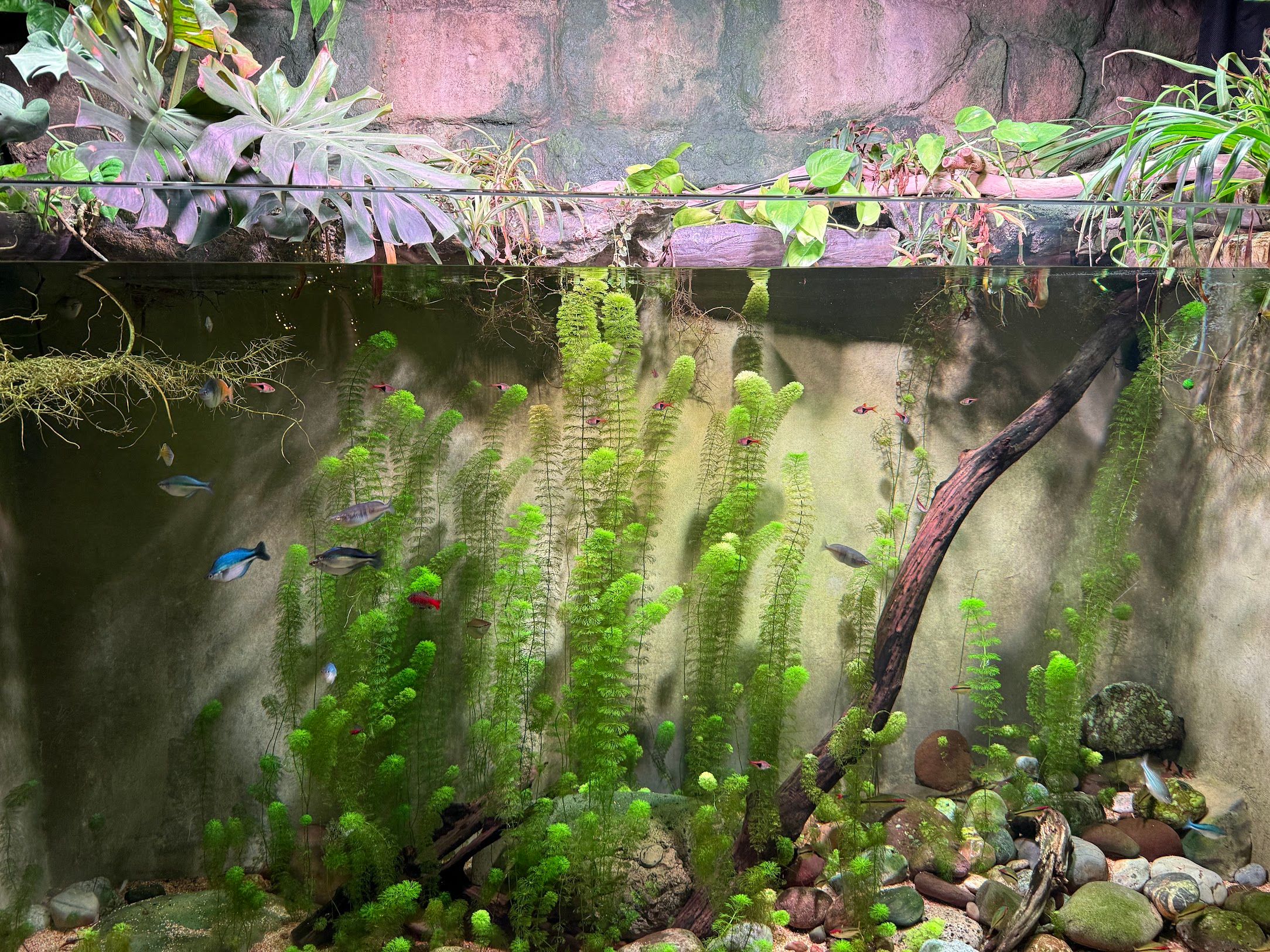
Many tanks get cycled with the fish already inside, often because the fish came home first. It can work, if you treat the first month like a job: few fish, little food and a test every day.
Quick answer
Keep the fish few and hardy, feed lightly, and test ammonia and nitrite every day or two. Change part of the water whenever either reads above 0.2 ppm, as Aquarium Co-Op advises. Expect four to six weeks, sometimes longer. It's done when both stay at zero on normal feeding for a week and nitrate shows.
Fish-in or fishless?
If the fish aren’t bought yet, cycle without them. It’s easier on the animals and the tank, and our fishless cycle guide and calculator do the math. Aquarium Science, a hobbyist site, goes further and says it doesn’t recommend fish-in cycling at all. Its list of reasons: it usually takes longer, there’s a small chance of harming or killing the fish (especially if a beginner overstocks or overfeeds), the water often isn’t clear at the end, and you can’t add many more fish afterward 4.
If you’re still setting the tank up, our setup guide puts the whole sequence in order. If the fish are already home, the question is moot. Aquarium Co-Op calls fish-in cycling the most common approach for beginners and experts alike, because few people can stare at an empty tank for weeks 3. The rest of this page is how to do it with the fewest losses.
What the sources agree on
Stocking. Merck: add fish slowly 1. Aquarium Co-Op: a few hardy fish, about 1 small fish per 10 gal 3. Aquarium Science: stock very lightly 4.
Feeding. Merck warns that beginners overstock and overfeed 1. Co-Op: very light, ramped up over 4 to 6 weeks 3. Aquarium Science: very light, no more than the fish eat in one minute, once a day 4.
Testing. Merck: daily ammonia and nitrite 1. Co-Op: every day or two at first 3. Aquarium Science: test enough to protect the fish, but “don’t obsess” 4.
Water changes. Merck: frequent 1. Co-Op: a partial change above 0.2 ppm ammonia or nitrite 3. Aquarium Science: none in the simple version, 50% when the ammonia monitor hits its alarm in the careful one 4.
Done when. Merck: ammonia and nitrite have peaked and dropped, then nitrate rises; about 6 weeks 1. Co-Op: normal feeding for a week with both at zero and nitrate above zero 3. Aquarium Science: ammonia 0.25 ppm or less and nitrite zero, or when the water clears 4.
What they share: few fish, little food, regular tests. On everything else they differ.
How many fish and how much food
Aquarium Co-Op’s rule of thumb is one small fish per 10 gallons to start, picking the hardiest species on your eventual list 3. In a 20 gallon tank that’s two. Our stocking guide for 10 and 20 gallon tanks has the final numbers. During the cycle, stay well under them.
Feed lightly at first and increase over four to six weeks. Co-Op’s reasoning is that the bacteria feed on fish waste and there aren’t many yet, so you shouldn’t make more waste than they can handle 3. Aquarium Science measures food in the volume of the fish’s own eyes: one eye’s worth of pellets per fish every other day for two weeks, then daily for two weeks, then two eyes’ worth a day. It also says to feed no more than the fish eat in a minute, once a day 4. It’s the stingiest plan we found, and we’d treat it as a floor you can adjust upward while ammonia stays at zero.
Don’t expect a big tank at the end. Aquarium Science points out that a few fish don’t grow many bacteria, so you can’t add much afterward and have to stock up slowly 4. Co-Op says the same: add fish gradually, with time between additions, so the bacteria keep up 3.
The daily routine
Test once a day, at the same time, before you feed. Co-Op’s trigger for acting is any ammonia or nitrite above 0.2 ppm 3. Merck asks for daily readings and frequent water changes until the biofilter is running 1.
- Ammonia and nitrite both read 0Keep feeding lightly. Test again tomorrow.
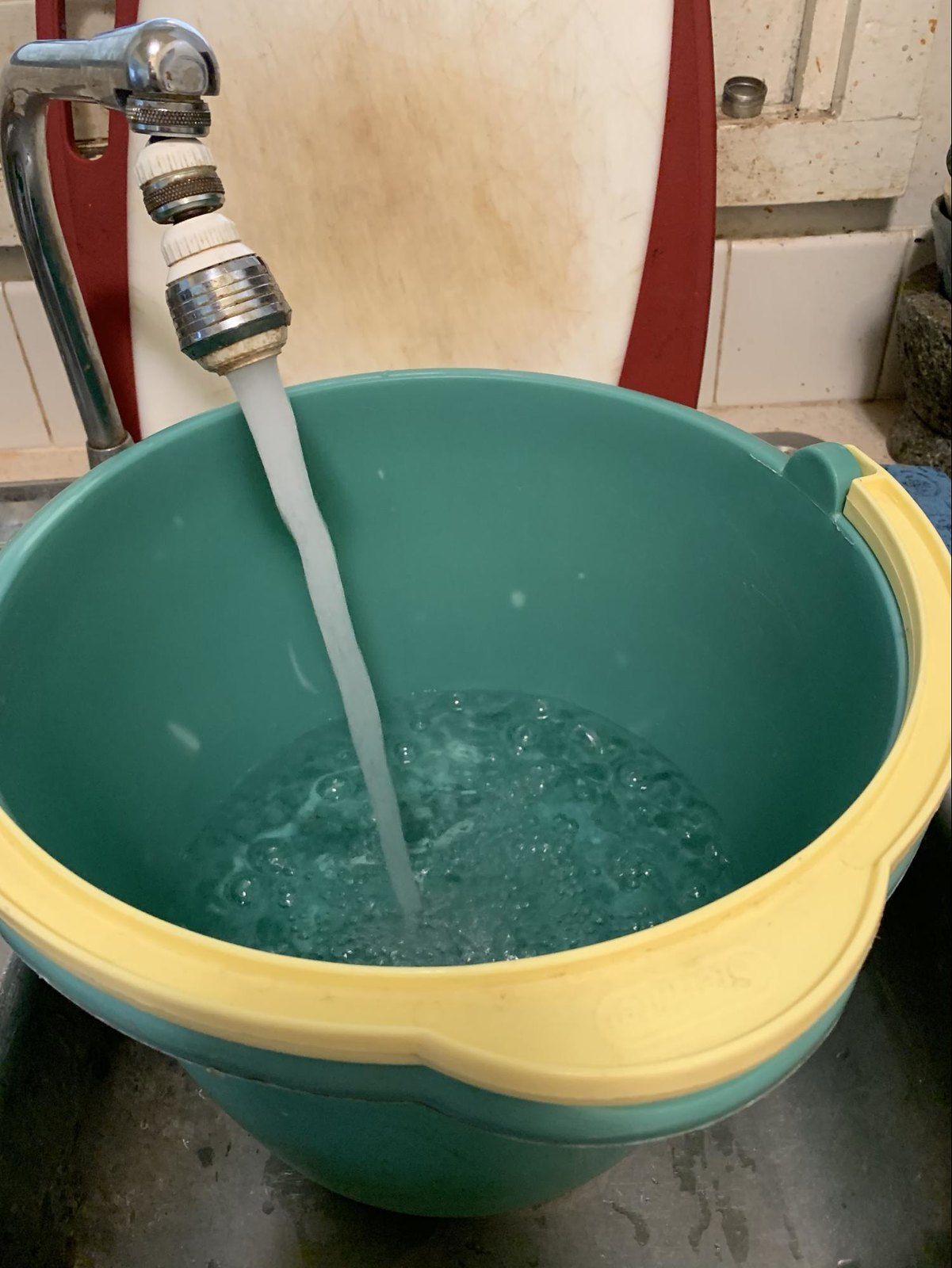
- Ammonia or nitrite reads above 0.2 ppmPartial water change with conditioned water. Skip or cut the next feeding. [3]
- Fish at the surface, clamped fins, or a reading at the top of the kitLarge water change right away, add air, and retest in an hour. Bigger beats smaller here. [ours]
- Nitrate climbs above 40 ppmWater change. Normal late in the cycle. [3]
Two units to watch. Co-Op’s 0.2 ppm is a test-strip or kit reading. Aquarium Science’s alarm is 0.2 ppm of free ammonia on a wall-mounted monitor card, with an alert at 0.05 ppm and a 50% change at the alarm. That’s a different measurement from the total ammonia your liquid kit reads 4. Our nitrogen cycle guide explains why the two numbers aren’t interchangeable.
For the nitrite end of this, see our guide to high nitrite. For the later nitrate rise, see safe nitrate levels.
Water changes: frequent or hands-off
This is the main split. Merck and Co-Op both want frequent changes 1 3. So do the FishLore members who’ve done it. One said that until the tank cycles, “you are the beneficial bacteria,” meaning you remove the toxins yourself 8. Aquarium Science’s simple plan is the opposite. Feed lightly, leave the water alone even if it gets cloudy, and don’t touch the filter. It says the tank cycles in six to eight weeks and calls it what people did fifty years ago 4.
Our view: in a small tank there’s little water to dilute a spike, so the hands-off plan leaves you no margin if the numbers jump. We’d test daily and change water on Co-Op’s trigger. If your readings stay at zero for days, you can change less. If you take the hands-off route, the daily test is how you find out you were wrong in time. These are our views. Aquarium Science and Merck are both reasonable authorities here and they disagree.
One catch with frequent changes: they can slow the cycle. A FishLore member who had done a 14-week fish-in cycle said keeping ammonia and nitrite low with water changes means the bacteria colony grows more slowly than it would if left to run, because the stuff the bacteria need is the stuff that’s toxic to the fish 7. That’s the price of keeping the fish alive.
Conditioner and “detoxifiers”
You need a dechlorinator anyway. Merck lists zero chlorine and chloramine as the target for tap-fed tanks 2. Seachem says Prime can be used during cycling to ease ammonia and nitrite toxicity, that it binds them so the filter can keep using them, and that up to 5 times the normal dose can go in for a nitrite emergency 6.
Aquarium Science disagrees. It calls ammonia detoxifiers such as Prime ineffective, and says its own tests found Prime plus Seachem Stability made cycling take about 15 days longer on average 4. We couldn’t find the data behind that claim. FishLore members also split. One said Prime locks ammonia and nitrite for 48 hours and cuts the need for water changes. Another replied that during a fish-in cycle frequent changes aren’t optional even with Prime 7.
Our take: use the conditioner you’d use anyway, treat any binding as a short bridge and keep changing water.
Speed it up with seeded media
Co-Op says the biggest speed-up is adding bacteria from the start: used filter media or substrate from an established tank, or live bacteria you buy 3. Aquarium Science also uses mature filter media and recommends washing and squeezing a little into the new tank 4. Our guide to cycle times shows what seeding does to the timeline: days instead of weeks, per its sources. The same page notes that adding fish alone doesn’t speed an unseeded cycle up.
One workaround is worth knowing about. Aquarium Science describes cycling a sponge filter separately in a bucket or milk jug with small ammonia additions, then moving it to the main tank as a second filter, so you can carry more fish sooner 5. It’s one author’s method, and the one reader example on the page took 12 days and four weeks for two sponges. We haven’t seen it tested elsewhere.
Don’t clean the filter during the cycle. Aquarium Science says the brown gunk in it is the bacteria 4, and a FishLore member told an owner in week eight to leave the filter alone until the tank has settled 7.
Plants are the other point on which sources split. Co-Op’s favorite approach is cycling with plants, which take up ammonia and nitrate 3. Aquarium Science says plants added during a fish-in cycle remove the ammonia and nitrite the bacteria need, and prevent the tank from cycling 4. Our guess is that both are true. Plants take the edge off the numbers and may keep the bacteria population small. Plan for either outcome and keep testing.
Getting through the nitrite stage
Nitrite is the part that tests your patience. In a FishLore thread, an owner on a fish-in cycle was stuck on nitrite while ammonia read zero and nitrate was rising. Members told them it was normal. One said the nitrite bacteria needed another week or two to build up, that their longest fish-in cycle ran 14 weeks, and that 78 °F suits both the bacteria and most fish while the pH is best kept around 6.8 to 7.2 or higher. The owner’s tap water carried ammonia too, which kept feeding the nitrite stage with every change 7. Aquarium Science says nitrite sometimes never shows up in a fish-in cycle, because the cycle can skip it 4.
If nitrite stays high, our nitrite guide walks through the options, including how salt fits in.
When is it done?
Not by the 24-hour dose test in our guide to telling if a tank is cycled. That test needs a big dose of ammonia, and you won’t give one to a tank with fish. Aquarium Co-Op’s rule is the practical substitute: ammonia and nitrite at zero while you feed the fish normally for a week, with nitrate reading above zero 3. That’s looser than our fishless rule, since the fish aren’t loading the filter as hard as a full ammonia dose, so don’t read a pass as proof the filter can take a full stocking. It means it can take the current fish. Add the next fish slowly 3.
FAQ
How long does a fish-in cycle take? Aquarium Co-Op ramps feeding over four to six weeks 3, and Merck says about six 1. Aquarium Science says as little as 14 days and typically four to six weeks 4. One FishLore member has had one take 14 weeks 7. Our cycle time guide has the rest.
Can I do a fishless cycle with fish already in? In our view, no. The ammonia doses that feed the bacteria are far too high for fish. Our fishless cycle guide is for empty tanks.
How many water changes should I do? As many as the daily test calls for. Co-Op’s trigger is any reading above 0.2 ppm of ammonia or nitrite 3.
Should I add bottled bacteria? Co-Op says live nitrifying bacteria can speed things up 3. Aquarium Science says it tested several and none worked, and that claim isn’t backed by data we could find 4. Used filter media from a running tank is the option both sources like.
When can I add more fish? When the tank passes Co-Op’s one-week check, and one or two at a time, with time between them 3. Our guide on acclimating fish covers the release.
All the numbers, with sources
| What | Value | Type | Source |
|---|---|---|---|
| Aquarium Co-Op: fish to start with | 1 small fish per 10 gal (38 L), hardiest species on your list | Stated by source | [3] |
| Aquarium Co-Op: test | Every day or two at first | Stated by source | [3] |
| Aquarium Co-Op: do a partial water change when ammonia or nitrite is above | 0.2 ppm | Stated by source | [3] |
| Aquarium Co-Op: ramp feeding up over | 4 to 6 weeks | Stated by source | [3] |
| Aquarium Co-Op: cycle is complete when ammonia and nitrite stay at zero while feeding normally for | 1 week, with nitrate above zero | Stated by source | [3] |
| Merck: time for a new biofilter to establish | About 6 weeks | Stated by source | [1] |
| Aquarium Science: typical fish-in cycle | 4 to 6 weeks, as little as 14 days | Stated by source | [4] |
| Aquarium Science: free ammonia alarm on a wall monitor, triggers a 50% change | 0.2 ppm (alert at 0.05 ppm) | Stated by source | [4] |
| A FishLore member's longest fish-in cycle | 14 weeks | Stated by source | [7] |
| Seachem: Prime dose for emergency nitrite | Up to 5 times normal | Stated by source | [6] |
Sources
- Merck Veterinary Manual (University of Florida; last updated June 2026) (2026). Environmental Diseases of Aquatic Animals in Aquatic Systems
- Merck Veterinary Manual (2026). Table: “Normal” Reference Ranges for Routine Water Quality Analysis
- Aquarium Co-Op (fish and aquarium products retailer) (n.d.). Freshwater Fish Tank Cycling: How to Prepare for New Fish
- Aquarium Science (aquariumscience.org, one hobbyist author) (n.d.). 2.5. Aquarium Fish-in Cycling
- Aquarium Science (aquariumscience.org, one hobbyist author) (n.d.). 2.5.2. Rapid Fish-in Cycling
- Seachem Laboratories (maker of the product) (n.d.). Prime (product page, directions and FAQ)
- FishLore Aquarium Forum (2022). Fish-in Cycle stuck on Nitrite (forum thread, hobbyist experience)
- FishLore Aquarium Forum (n.d.). Nitrite still high after multiple 50% wc (forum thread, hobbyist experience)