How to Acclimate Fish to a New Tank: Float, Drip or Just Net Them?
Last reviewed · By Manel Vadillo
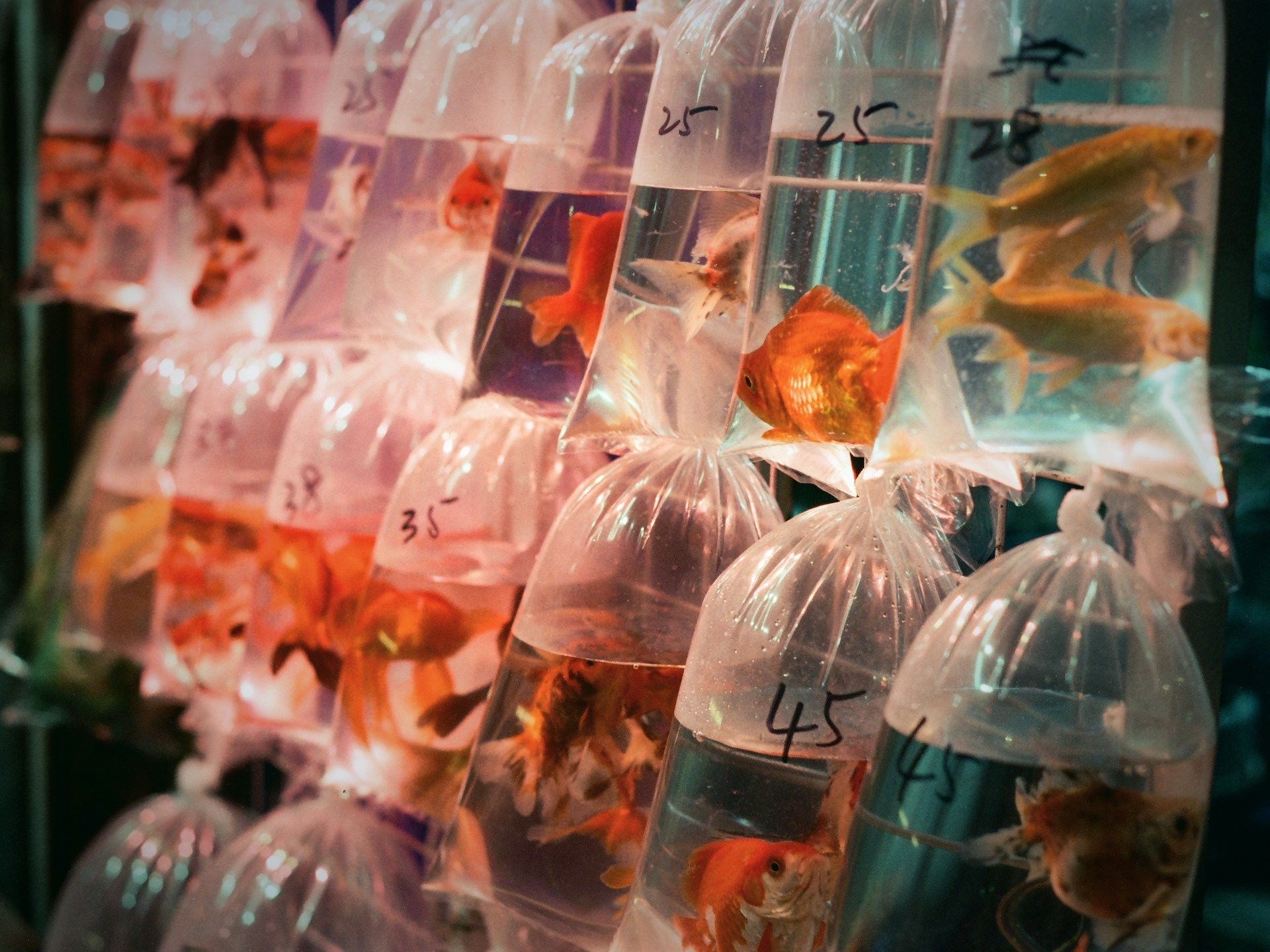
A common rule of thumb is to float the bag, then let the fish go. The sources disagree on how much more you need to do, and on whether to float at all. They agree on a few things that matter more than the method.
Quick answer
Net the fish out and leave the bag water behind. Merck, Aquarium Co-Op and FishLore also float the sealed bag 10 to 30 minutes; Aquarium Science says not to. They split on adding tank water to the bag: FishLore says an hour of it, Co-Op says skip it for shipped fish. Test your tank for ammonia, nitrite and chlorine first.
What acclimation can and can’t fix
Acclimation deals with two things: the temperature gap between the bag and the tank, and, in some methods, the gap in water chemistry. It does nothing about the tank itself. A tank that hasn’t cycled, tap water with chloramine, or a fish that arrived sick will kill fish however carefully they’re floated. Merck’s advice on disease is quarantine, with 30 days as the minimum 2.
Check the tank before you check the method. Merck says to test the water, including chlorine and pH, before adding fish 1, and that no chlorine or chloramine should be detectable when animals are present 8. Our guides on chlorine and chloramine and telling when a tank is cycled cover that part.
Prepare the tank
- Add air. Aquarium Science says shipped fish may have blood with a reduced ability to carry oxygen, and recommends extra air stones in the receiving tank, set up well before the fish arrive 5.
- Rearrange the decor and dim the lights. Merck suggests moving decorations while the bag floats to break up territories, and releasing new fish with the tank and room lights off, since most fish go into a rest mode within a few minutes. Turn the lights back on after several minutes 1.
- Know your numbers. FishLore suggests asking the store to test its tank water for pH, ammonia, nitrite and nitrate, then testing yours to see how far apart they are 4.
The methods, side by side
| Method | What you do | Who recommends it |
|---|---|---|
| Float, then net | Float the sealed bag, then net the fish out and discard the bag water | Merck: 20 to 30 minutes 1. Co-Op: 10 to 15 minutes 3 |
| Catch cup | Pour fish and some bag water into a cup, double it with tank water after 15 minutes, again after 10, then net | Aquarium Co-Op, for small animals 3 |
| Float or bucket, add tank water | Remove 25% of the bag water, replace it with tank water, add about a cup every 10 minutes for about an hour, then net | FishLore 4 |
| Drip | A slow siphon from the tank into the bag or bucket, one drip every 1 to 2 seconds, about an hour | FishLore, mainly for sensitive animals such as saltwater fish and invertebrates 4 |
| Cut, pour, plop | Open the bag, pour fish and water into a net over a bucket, put the net in the tank | Co-Op, for shipped fish, after floating the sealed bag 10 to 15 minutes 3. Aquarium Science, with no float, all in seconds, and says the method hardly matters for fish from a nearby store 5 |
The argument
The four sources agree on one firm point: never pour the bag water into your tank. Merck says so directly 1, FishLore says it risks bringing in parasites and disease 4, and Aquarium Science says the water can carry thousands of pathogens 5. Co-Op’s method also leaves the bag water behind 3.
They don’t agree on floating. Merck, FishLore and Co-Op float the sealed bag to match temperature 1 4 3. Aquarium Science says not to: fish meet fast temperature changes in the wild, and floating mostly stresses fish in a bag where the oxygen may be running out 5.
They split on whether to mix tank water into the bag. FishLore says floating alone only fixes temperature, and that water chemistry matters just as much, so you should add tank water gradually 4. Aquarium Science calls that a myth for fish from a nearby store and says the exact method isn’t important. For fish that spent a day or two in a shipping bag, it argues slow mixing can hurt them 5.
Its reasoning, in short: in a sealed bag, fish release carbon dioxide and ammonia. The carbon dioxide lowers the pH, and a low pH keeps most of the ammonia in the harmless form. Mix in high-pH tank water and the ammonia turns toxic. Aquarium Science says water at pH 6.0 holds only 10% of the toxic ammonia gas of water at pH 7.0, and puts the jump from 6.0 to 8.0 at a factor of about 100 5. Aquarium Co-Op gives the same explanation for shipped fish: opening the bag lets carbon dioxide escape, the pH rises quickly, and the ammonia burns the gills. Its answer is to float for 10 to 15 minutes, pour out the bag water and net the fish in 3.
Our reading:
- Fish shipped to you: net them and discard the bag water, as Co-Op and Aquarium Science both say. Co-Op floats the bag first and Aquarium Science doesn’t. Shipped fish can arrive much colder than your tank, so float the sealed bag until the temperatures are close, then net the fish.
- Fish from a local store: float for temperature and net them out. Merck’s method is that and no more 1. If your tap water and the store’s differ a lot, a gradual method is reasonable, and FishLore’s tests are how you find out.
- Small, delicate animals such as shrimp: use Co-Op’s catch cup, but keep it short 3. Aquarium Science quotes a keeper whose shrimp convulsed and died during a slow add-water method, though that’s one story 5.
On the way home
FishLore says to go straight home from the store so ammonia doesn’t build up in the bag 4. Bags that are meant to breathe get their own rule from Aquarium Co-Op: a breather bag sits on the lid for 30 to 60 minutes instead of floating 3. Aquarium Science is blunter. It says breather bags can’t exchange enough gas to matter and you should treat them like any other bag 5. We couldn’t find a test either way, so we’d follow the seller’s instructions for the bag you got.
Moving fish between your own tanks
Merck’s advice for dips is that the pH and temperature of the dip water should match the tank 2. By extension, and this is our inference, since Merck is talking about dips, the same logic applies when you upgrade. One veteran FishLore member said they use at least half old tank water and the rest fresh, dechlorinated water, so the fish feel like they’ve had a 50% water change 7. Moving the filter media across carries the bacteria, and our setup guide explains why the new tank still needs testing before fish go in.
Releasing them
Net the fish and lower the net into the tank so they swim out, as Co-Op describes. Any fish that died in the bag stay in the net 3. Merck says new arrivals are often chased by residents, especially freshwater cichlids and other fish larger than 3 inches, and suggests feeding the tank at the same moment as a distraction 1. Our cycling guide for fish-in tanks covers feeding in the first weeks.
What hobbyists report
Six fish, three hours. On FishLore, a new owner floated the bag and added tank water to it twice, then released two glofish, two guppies and two neon tetras into a new 10 gallon. All died within three hours. Members discussed temperature, soft water and ammonia. The owner later concluded the cause was chloramine in the tap water 6. In our reading, probably no acclimation method would have saved those fish.
Upgrading to a bigger tank. An owner moved four tetras from a 5 gallon to a 9 gallon with all-new tap water. The fish died over several hours. A veteran member recommended using at least half old tank water when upgrading, so the fish feel like they’ve had a 50% water change, and asked how often the old tank was changed. If it wasn’t often, fresh water would be too different. Another member suggested checking the temperature 7.
FAQ
Do I have to acclimate fish? Merck says floating avoids temperature shock 1. Aquarium Science says slow chemistry acclimation is a myth for most freshwater fish 5. Everyone agrees on not pouring bag water in. Floating to match temperature is where they split: Merck, FishLore and Co-Op float, and Aquarium Science says not to.
How long should I float the bag? Merck says 20 to 30 minutes 1 and Co-Op says 10 to 15 3. A breather bag goes on the lid for 30 to 60 minutes, per Co-Op 3. Aquarium Science says there’s no need to float 5.
Should I use the drip method? FishLore recommends it mainly for saltwater fish and invertebrates, and says about an hour is fine for most freshwater fish 4. For shipped fish, Co-Op and Aquarium Science argue against slow methods 3 5.
What about quarantine? Merck recommends at least 30 days for new fish 2. See our setup guide for the basic quarantine kit.
Should I add the store’s water to my tank? No. Merck, FishLore and Aquarium Science all say not to 1 4 5.
All the numbers, with sources
| What | Value | Type | Source |
|---|---|---|---|
| Merck: float the bag to equalize temperature | 20 to 30 minutes | Stated by source | [1] |
| Aquarium Co-Op: float a sealed bag (breather bag on the lid) | 10 to 15 minutes (30 to 60 minutes) | Stated by source | [3] |
| Aquarium Co-Op: catch cup, double the water, wait | 15 minutes, then 10 minutes, then net | Stated by source | [3] |
| FishLore: replace part of the bag water, then add tank water every 10 minutes | 25% first, about a cup each time, for about an hour | Stated by source | [4] |
| FishLore: drip rate and time for most freshwater fish | A drip every 1 to 2 seconds, about an hour | Stated by source | [4] |
| Merck: minimum quarantine for new pet fish | 30 days | Stated by source | [2] |
Sources
- Merck Veterinary Manual (University of Florida; last updated April 2026) (2026). Providing a Home for Fish (Pet Owner Version): Adding Fish
- Merck Veterinary Manual (last updated June 2026) (2026). Management of Aquarium Fish (quarantine, dips)
- Aquarium Co-Op (fish and aquarium products retailer) (n.d.). How to acclimate new aquarium fish
- FishLore (forum site; page updated August 2019) (2019). Acclimating Fish to Your Aquarium
- Aquarium Science (aquariumscience.org, one hobbyist author) (n.d.). 4.9. Un-bagging Fish for the Aquarium
- FishLore Aquarium Forum (n.d.). New fish tank, 6 fish died within 3 hours (forum thread, hobbyist experience)
- FishLore Aquarium Forum (n.d.). Upgraded our tank and all of our fish died (forum thread, hobbyist experience)
- Merck Veterinary Manual (last updated June 2026) (2026). Environmental Diseases of Aquatic Animals in Aquatic Systems