High Ammonia in a Fish Tank: Find the Cause, Then Fix It
Last reviewed · By Manel Vadillo
A positive ammonia test is scary, and the usual reflex is to change a lot of water. Sometimes that makes it worse, because the tap can be the source. Work through it in order: how toxic the reading really is, the tap water, then the tank.
Quick answer
Change at least half the water with conditioned water, cut or stop feeding, and test again the next day. Check your tap water for ammonia first, because chloramine releases ammonia when it's dechlorinated and every water change can add some. How dangerous a reading is depends mostly on pH. A healthy, cycled tank reads zero.
How worried should you be?
Your kit almost certainly reports total ammonia nitrogen (TAN): the toxic gas (NH3) plus the much less harmful ammonium ion (NH4+) 1. How much of it is gas depends on the water. The higher the pH and the temperature, the bigger the share, and pH matters more than temperature 1.
| pH | 68 °F (20 °C) | 75 °F (24 °C) | 82 °F (28 °C) |
|---|---|---|---|
| 7.0 | 0.4% | 0.5% | 0.7% |
| 8.0 | 3.8% | 5.0% | 6.6% |
| 8.4 | 9.1% | 11.6% | 15.0% |
Share of total ammonia that is the toxic gas, from Boyd’s 1982 table 3. The source lists °C; we converted and rounded the °F.
Multiply your reading by the percentage and you have the gas. One ppm of total ammonia at pH 7.0 and 75 °F is about 0.005 ppm of gas. The Merck Veterinary Manual calls 0.05 mg/L harmful, since gill damage shows up above that 1. The same reading at pH 8.0 lands right on 0.05. At pH 8.4 and 82 °F it’s about 0.15. That’s our arithmetic on the table, not a measurement, and kits don’t all use the same units (see the unit trap).
Merck’s rule of thumb for home tanks: a reading of 1.0 isn’t a huge worry unless pH is above 8.5 1. Its reference range for a healthy freshwater system is still zero 1. So any reading above zero means something is off, and pH tells you how fast to move. The gas is lethal to many fish at 2 mg/L 1.
For scale only: EPA’s 2013 criteria for rivers and lakes allow a 30-day average of 1.9 mg TAN/L at pH 7 and 68 °F, and 17 for a one-hour average 2. Those protect wild water, mussels and snails included. They aren’t a safe level for a tank.
Step 1: Test your tap water
This is the cause people miss. Chloramine is chlorine stabilized with ammonia. When a conditioner strips the chlorine, the ammonia is released into your tank, and repeated water changes can stack it up 1. A new or damaged filter can’t keep pace. Merck’s fix is a conditioner that also binds the ammonia 1. Seachem says Prime does that: it removes the chlorine, then binds the ammonia until the filter can use it, and it won’t halt cycling 4.
So test a cup of tap water straight from the faucet. A reading means your water changes add ammonia directly. No reading doesn’t clear the tap, since chloramine only releases its ammonia when you condition the water, and your water utility can tell you whether it uses chloramine. Don’t test the conditioned cup right away. Seachem says binders like Prime can give a false positive on liquid kits, and to wait 24 hours or use a kit they don’t affect 4.
Step 2: Change water and cut the food
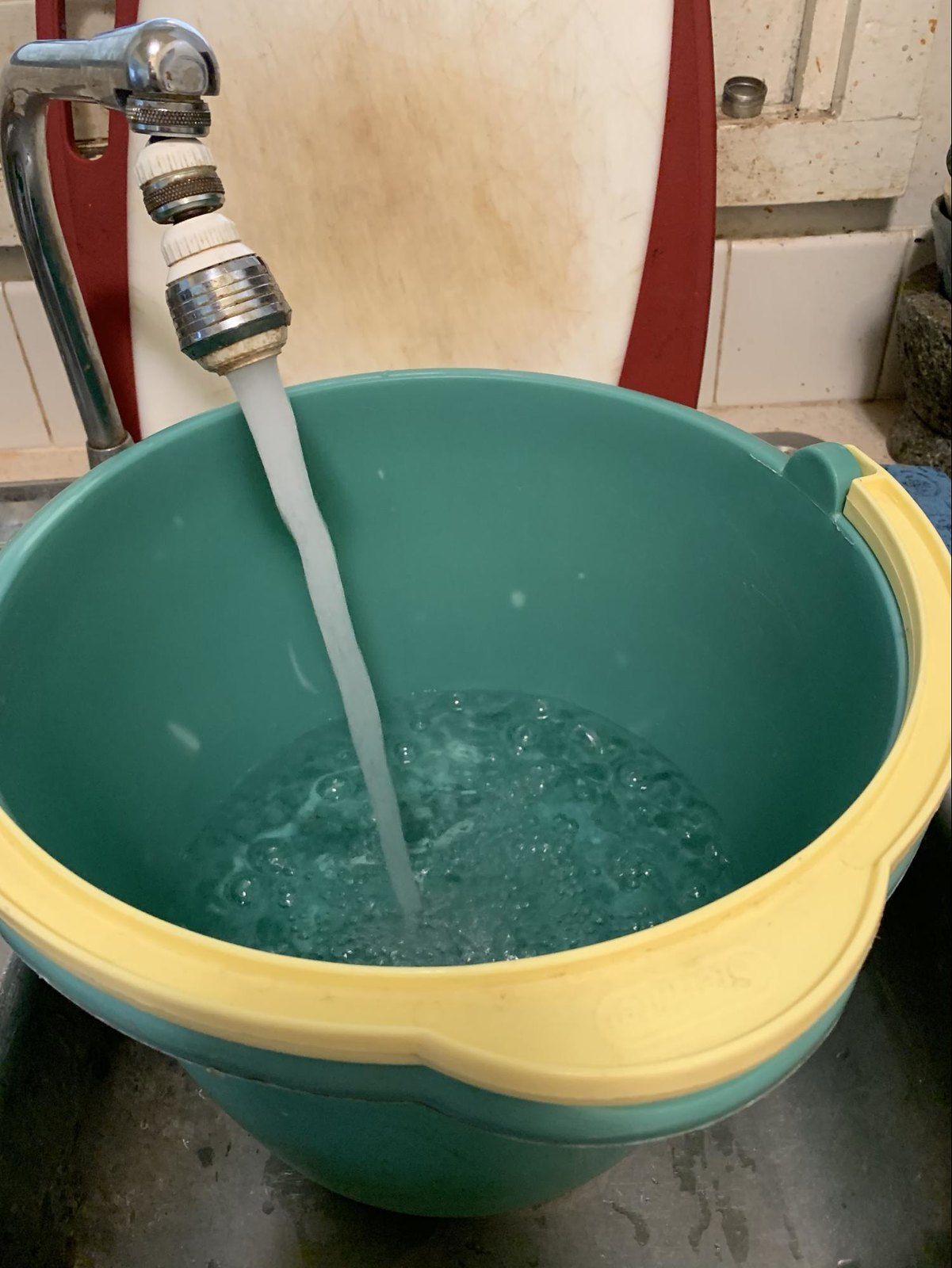
Merck’s advice: if you can, change at least half the water as soon as you detect high ammonia, with treated water, and feed little or nothing until it’s sorted 1. One exception. If total ammonia is over 5 mg/L and the water is acidic (pH under 7), Merck says to move the fish to clean water matched for pH and temperature. A big change can raise pH quickly and shift ammonium into the toxic gas 1.
A conditioner is a bridge, not a repair. Seachem says Prime binds ammonia for up to 48 hours and then releases it unless you dose again 4. Aquarium Science disagrees, saying a test with Seachem’s own recommended method showed Prime didn’t detoxify ammonia even briefly 5. We’d rely on water changes and fixing the source, and use a conditioner for the chloramine.
Will a big change wipe out your bacteria? Caudata’s administrator answered that on a thread: the bacteria live in a biofilm on surfaces, so a 50% change won’t remove them 7. Our nitrogen cycle guide explains why.
Step 3: Find why it went up
- Ammonia or chloramine in the tap. Ammonia comes back after every water change, and the cup test above is positive 1. Use a conditioner that binds ammonia 1.
- A new tank that isn’t cycled. The tank is weeks old, ammonia comes first, then nitrite, and there’s no nitrate yet 1. Keep testing and changing water, and see how long to cycle.
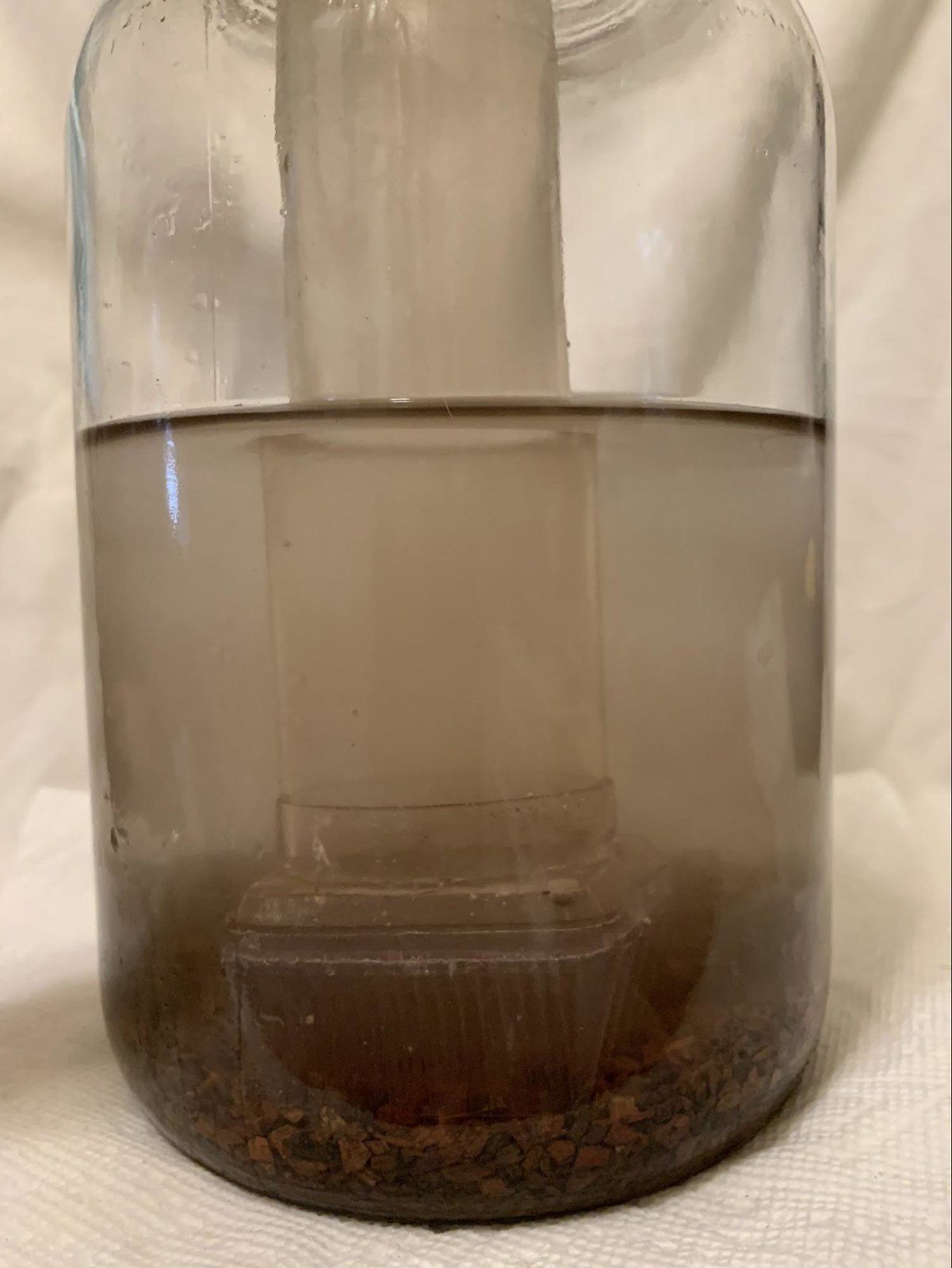
- Filter media cleaned or replaced. The spike comes soon after maintenance 5,7. Stop cleaning media until the flow actually slows 5.
- Medication or antimicrobials. The spike follows treatment, and antimicrobials can damage the bacterial bed 1. Test daily and keep changing water.
- Overfeeding, dead fish, dying plants, overstocking. Look for food on the bottom, a missing fish or rotting leaves 1,5. Remove it and feed less.
- A sagging pH in an old tank. pH has been drifting down 1. Merck says about six weeks for the filter to recover 1. If pH is under 7 and ammonia is high, don’t do one big water change, because raising the pH makes more of the ammonia toxic. Merck’s aquarium management page advises small daily water changes to avoid pH shock and ammonia toxicosis, or moving the fish to clean water matched for pH and temperature, plus a conditioner that binds ammonia.
- A bad test. Distilled water reads above zero, and many kits show 0.25 ppm there 5. Test distilled water, or try a second kit. Conditioners can also make liquid kits read high 4.
Is the tank new? Ammonia is normal then. Merck describes new tank syndrome as ammonia rising in the first two to three weeks, before the filter’s bacteria have grown, and says beginners tend to overstock and overfeed 1. Don’t wait it out with fish inside. Our fishless cycle guide and calculator are the safer route, and is my tank cycled? tells you when you’re done.
What hobbyists report
Two forum threads, paraphrased. Neither is evidence, but both show how it usually goes.
- A 5.5 gallon tank that spiked for a week 6. Readings were 0.25 to 0.50 ammonia, no nitrite, nitrate 5, pH 7.6 and 78 °F. The owner changed 30% a day, and the fish were breathing a little hard. A member asked whether the tap water had been tested. It had ammonia, and the owner’s other tanks turned out to be affected too. Members said to dose a conditioner that binds ammonia, change less, and not worry about 1 ppm from the tap, since a cycled filter should clear it within a day. The owner later reported the tanks were back in the clear.
- A 20 gallon axolotl tank after maintenance 7. In May 2019 the owner removed the animal for a week, changed half the water and replaced all the filter media. After the axolotl went back the water turned cloudy, with 1 ppm ammonia, 0.25 nitrite and high nitrate. The administrator said to look for decaying matter and to check whether the tap used chloramine. The owner’s research suggested the city used chlorine. The thread ends without an outcome.
When it’s an emergency
Merck lists lethargy and poor appetite for ammonia exposure, and spinning, disorientation or convulsions for acute toxicity 1. Fish gasping at the surface is a different clue. It can mean ammonia, nitrite or low oxygen, and our guide to fish gasping at the surface sorts them out.
FAQ
Is 0.25 ppm ammonia bad? It means something is feeding the tank or the filter is behind, so find the cause. At pH 7.0 and 75 °F it works out to roughly 0.001 ppm of toxic gas by our arithmetic from the table 3, well under Merck’s 0.05 line 1. Many kits also read 0.25 in distilled water, so check the kit 5.
Why does ammonia show up after a water change? Chloramine releases ammonia when the chlorine is removed, and some supplies carry ammonia directly 1. Test the tap.
Does Prime remove ammonia? Seachem says it doesn’t remove it. It binds it for up to 48 hours 4. Aquarium Science says its test found no effect 5.
Should I feed while ammonia is high? Merck says to stop feeding or cut it back until the problem is corrected 1.
Does a water change remove the good bacteria? No. They live in a biofilm on surfaces 7.
Are ammonia and ammonium the same? No. Ammonium is far less toxic, and most test kits can’t tell them apart 1.
All the numbers, with sources
| What | Value | Type | Source |
|---|---|---|---|
| Water change for high ammonia, Merck Vet Manual | 50% or more, as soon as it's detected | Stated by source | [1] |
| Reference range, freshwater, total ammonia nitrogen | 0 mg/L | Stated by source | [1] |
| Toxic gas (NH3) that damages gills | 0.05 mg/L | Stated by source | [1] |
| Toxic gas (NH3) lethal to many fish | 2 mg/L | Stated by source | [1] |
| Share of total ammonia that is toxic gas at pH 7.0, 75 °F (24 °C) | 0.5% | Stated by source | [3] |
| Same, at pH 8.0 and 75 °F (24 °C) | 5.0% | Stated by source | [3] |
| Same, at pH 8.4 and 82 °F (28 °C) | 15.0% | Stated by source | [3] |
| 1 ppm total ammonia at pH 8.0 and 75 °F, as toxic gas | about 0.05 mg/L | Our calculation | [3] |
| How long Prime binds ammonia, per Seachem | up to 48 hours | Stated by source | [4] |
| EPA acute criterion for rivers and lakes, pH 7 and 68 °F (20 °C) | 17 mg TAN/L, 1-hour average | Stated by source | [2] |
| EPA chronic criterion for rivers and lakes, same conditions | 1.9 mg TAN/L, 30-day average | Stated by source | [2] |
Sources
- Merck Veterinary Manual (University of Florida; peer reviewed, Michigan State University) (2026). Environmental Diseases in Aquatic Systems
- U.S. Environmental Protection Agency (2013). Aquatic Life Ambient Water Quality Criteria for Ammonia - Freshwater (2013) Fact Sheet
- NSW Department of Primary Industries (2025). Monitoring ammonia (table from Boyd 1982, Water quality management for pond fish culture)
- Seachem Laboratories (2026). Prime (product page and directions)
- Aquarium Science (aquariumscience.org) (2026). 5.2.3. High Ammonia (spikes in an established aquarium)
- FishLore Aquarium Forum (2019). So Confused - Established Tank With Ammonia Spike (forum thread, hobbyist experience)
- Caudata.org (2019). How to fix an ammonia spike in an established aquarium (forum thread, hobbyist experience)