Fish Gasping at the Surface: What It Means and What to Do Tonight
Last reviewed · By Manel Vadillo
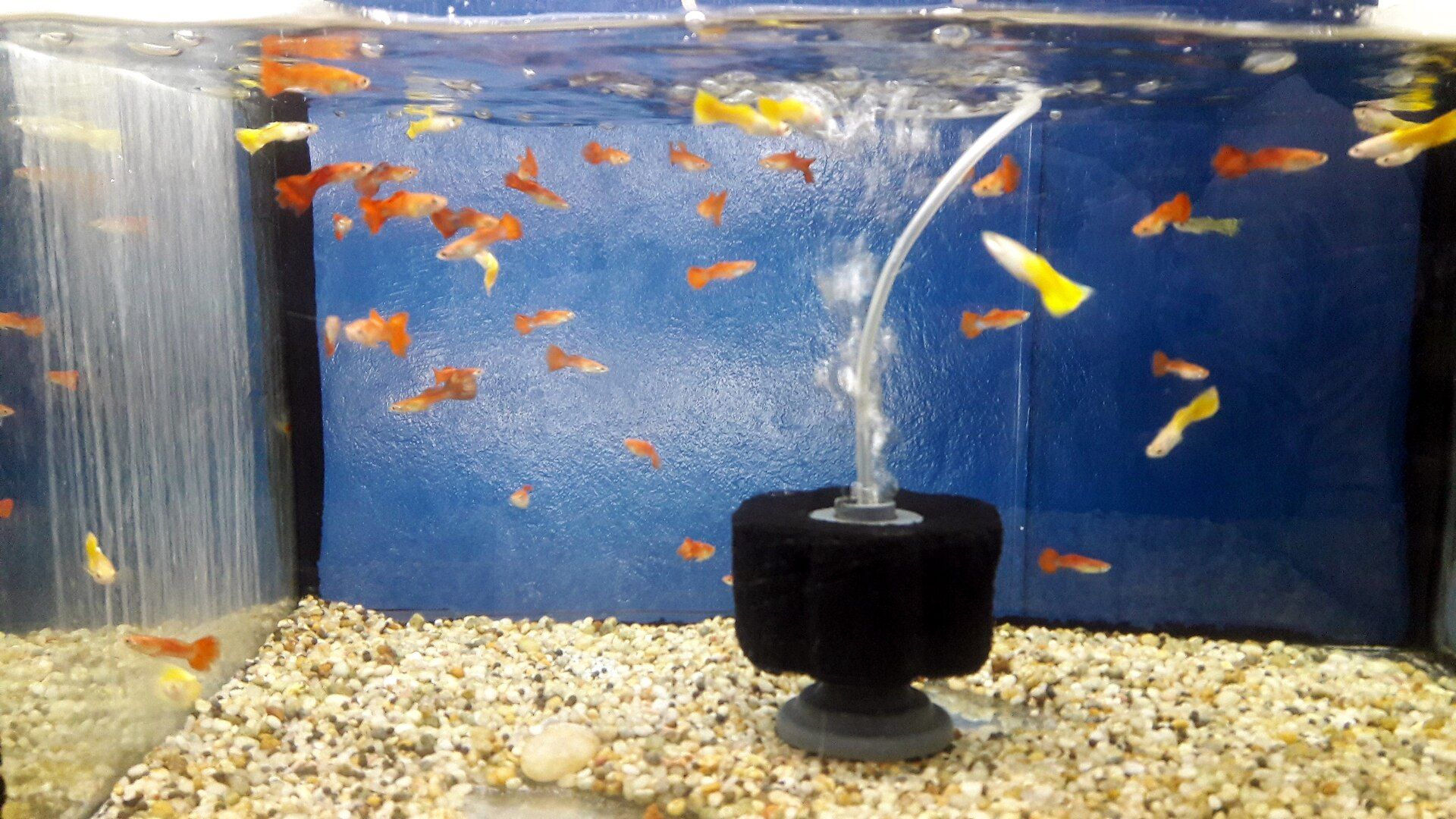
Fish hanging at the top and working their mouths looks like an emergency, and sometimes it is. Sometimes it's a betta doing what bettas do. Sort out the species first, then run through the usual suspects in order.
Quick answer
Add surface movement now with an air stone, or point the filter outflow at the surface, then test ammonia and nitrite and check the temperature. Low oxygen, nitrite and gill disease all cause this. Bettas and corydoras gulp air as normal behavior, so check the species before you panic.
Is it normal for this fish?
Bettas come from still, slow water, such as rice paddies and ditches, that can hold little oxygen. They have a labyrinth organ that lets them take some air at the surface 4. A betta that rises now and then for a gulp is fine. Seriously Fish also says not to fill the tank to the brim, because the fish needs a layer of humid air above the water 4.
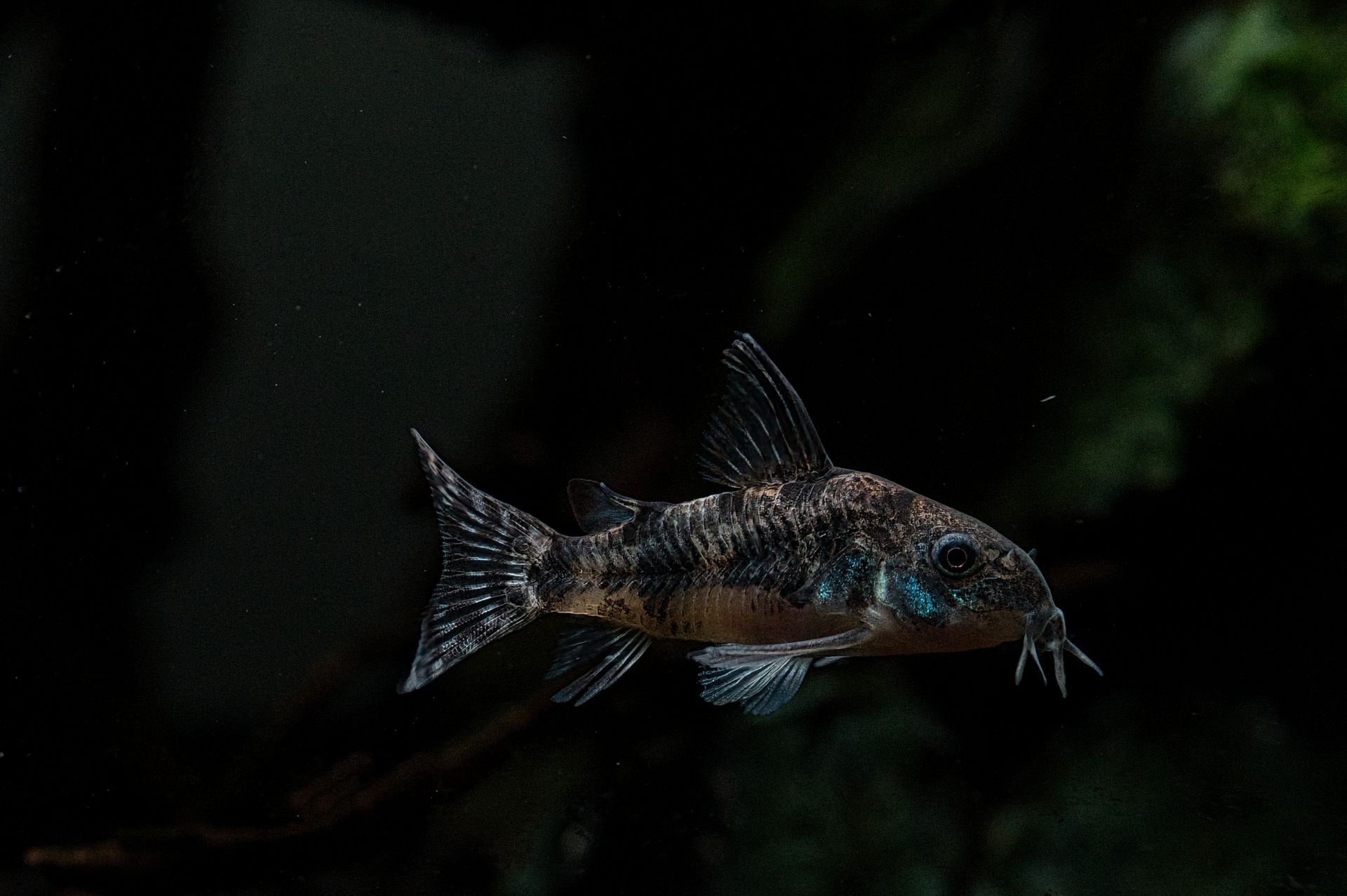
Corydoras gulp air too, but they do it a different way, absorbing the oxygen through the hindgut. Practical Fishkeeping reports anywhere from about 1 to 45 breaths an hour, more during and after feeding, and says the habit shows up at every oxygen level 3. A cory dashing up and back down is normal.
Everything else is different. If a tetra, a livebearer or a goldfish is at the surface, it’s missing something. Merck lists “piping” at the surface among the signs of low oxygen, notes large fish are hit before small ones, and adds flared, dark gills 1. Constant, rapid breathing in a betta or cory, or several species at the top at once, is a problem too. That last part is our judgment, not a sourced rule.
The four usual causes
Merck’s short list of what looks like this is low dissolved oxygen, high nitrite and gill disease 1. We’d add ammonia, which isn’t on that list but damages the same gills.
Low oxygen. The whole tank is at the surface, and large fish go first 1. It’s worse early in the morning 2, or when the filter or power is off or the water is warm. Check the filter, the air and the thermometer, then add surface movement (see below).
Nitrite. Fish pipe at the surface, and gills and blood turn dark brown, though that’s hard to see 1. Test for nitrite. Any reading above zero counts. Change water: Merck says that can correct nitrite toxicity rapidly 1.
Ammonia. Fish crowd near the inlet and go lethargic 5, and the gas damages gills above 0.05 mg/L 1. Test ammonia and pH, then follow our high ammonia guide.
Gill disease or parasites 1. Tests and oxygen check out, but breathing stays fast (that’s elimination, not a sourced sign). Look at the gills and see a fish vet if unsure. We don’t cover treatments.
Two more worth ruling out. Chlorine and chloramine: Merck says adverse effects start at 0.02 mg/L and mortality at 0.04, and that none should be detected while animals are present 1. Test for both free and total chlorine, since chloramine can read negative on free chlorine. And carbon dioxide, which only matters if you inject it: Merck links more than 40 mg/L to lethargy at the surface 1.
Nitrite in plain numbers
Merck flags nitrite above 0.1 mg/L (as NO2) as toxic. It also says most kits read nitrite-nitrogen, so multiply the reading by 3.3 to get NO2 1. By that math, 0.1 mg/L of NO2 shows on a nitrogen kit as about 0.03. Any reading above zero in a tank with fish at the surface is worth acting on. Nitrite changes blood into a form that can’t release oxygen to the tissues, so the fish can suffocate in water full of oxygen 1.
Why heat makes it worse
Warm water holds less oxygen. Merck says temperature is the biggest of the three factors that set the limit, ahead of salinity and altitude 1. California’s Water Resources Control Board gives the numbers for fresh water at normal pressure 2.
| Water temperature | Oxygen at 100% saturation |
|---|---|
| 68 °F (20 °C) | 9.1 mg/L |
| 75 °F (24 °C) | 8.4 mg/L |
| 79 °F (26 °C) | 8.1 mg/L |
| 82 °F (28 °C) | 7.8 mg/L |
| 86 °F (30 °C) | 7.6 mg/L |
°F converted and rounded by us from the source’s °C 2.
Even at 86 °F, saturated water holds more than the 5 mg/L Merck calls the line for most fish 1. So heat alone rarely empties a tank. What it does is shrink the margin. Respiration pulls oxygen down at night, and so does the bacteria breaking down dead material 2. Our reading: a warm, crowded, heavily planted tank with food rotting in it can run short before dawn, since oxygen is usually lowest early morning 2.
What to do right now
- Move the surface. Oxygen enters at the surface, mostly through turbulence 2. Add an air stone, or aim the filter outflow so it ripples the water. Several members of a FishLore thread call an air stone a quick fix or say it can’t hurt 7.
- Check the equipment. Is the filter running? One member in the thread says they once forgot to turn theirs back on after a water change 6.
- Test. Ammonia, nitrite and pH, and read the thermometer.
- Change water if anything is off. Use conditioned water at a similar temperature. Merck advises changing at least 50% for high ammonia 1, and says a water change can quickly fix nitrite 1. Be careful if your tap pH swings (below).
- Stop feeding until it settles, and take out anything dead or rotting.
If the fish keep gasping after the air, the test results and the water change, look at the gills and talk to a fish vet. Don’t guess at medications.
What hobbyists report
Two FishLore threads, paraphrased. Both ended badly, and neither found a clear answer.
- A 55 gallon after a big water change 6. The owner changed more than 75% of the water to clear an algae bloom, and the next day the two large acaras and an algae eater hung at the surface. Ammonia was barely off zero and nitrite read zero, but the pH test had gone to about 6.0. The tap water started near 7.2 and settled much lower. The owner added an air stone and a little buffer, and within days the fish stopped hanging at the surface. They then got ich, and all of them died, with the owner suspecting the copper treatment. Members said to stay away from buffers and to test the tap pH after letting it sit a day. The owner noticed that their other tanks had air stones and this one hadn’t.
- A single platy at the surface for two weeks 7. Readings were at or near zero, the filter was strong and the gills looked normal. Members suggested an air stone, checking the filter and the gills, and double-checking the test kit, and one said constipation can look the same. The owner doubted their old kit. The platy died.
The first thread shows that gasping after a big change can be a pH problem as much as an oxygen one. The owner added the air stone and the buffer together, so we can’t say which helped. The second shows how often the cause stays unknown.
FAQ
Is a betta at the surface a problem? Not by itself. It has a labyrinth organ and takes air from the surface 4. Worry if it’s constant, rapid or paired with lethargy or ragged fins.
Will an air stone fix gasping fish? If low oxygen is the cause, it helps. It doesn’t remove ammonia or nitrite, and Merck lists nitrite as hitting oxygen transport inside the blood 1. Test first.
Why are my fish gasping after a water change? Possibly chlorine or chloramine in the new water 1, a pH swing, or a filter left off. The FishLore case above was a pH crash.
Why are all my fish at the top in the morning? Dissolved oxygen is usually lowest in the early morning 2, and fish and plants use it overnight. Check the filter, the temperature and the stocking.
How much oxygen do fish need? Merck says above 5 mg/L is optimal for most finfish, and stress starts below that 1.
Can fish gasp from ammonia? Ammonia damages gills above 0.05 mg/L of gas 1, and fish crowding near the inlet is a listed sign 5. It isn’t on Merck’s short list for piping, so test for nitrite too.
All the numbers, with sources
| What | Value | Type | Source |
|---|---|---|---|
| Dissolved oxygen most finfish do well at, Merck Vet Manual | above 5 mg/L | Stated by source | [1] |
| Dissolved oxygen where fish experience stress | below 5 mg/L | Stated by source | [1] |
| Oxygen in saturated fresh water at 68 °F (20 °C) | 9.1 mg/L | Stated by source | [2] |
| Oxygen in saturated fresh water at 75 °F (24 °C) | 8.4 mg/L | Stated by source | [2] |
| Oxygen in saturated fresh water at 82 °F (28 °C) | 7.8 mg/L | Stated by source | [2] |
| Oxygen in saturated fresh water at 86 °F (30 °C) | 7.6 mg/L | Stated by source | [2] |
| Nitrite level flagged as toxic, Merck Vet Manual | NO2 above 0.1 mg/L (kits usually read nitrite-nitrogen; multiply by 3.3) | Stated by source | [1] |
| Toxic ammonia gas that damages gills | 0.05 mg/L | Stated by source | [1] |
| Chlorine level with adverse effects, then mortality | 0.02 mg/L, then 0.04 mg/L | Stated by source | [1] |
| Carbon dioxide linked to lethargy at the surface | above 40 mg/L | Stated by source | [1] |
| Corydoras air breaths, as reported | about 1 to 45 per hour | Stated by source | [3] |
Sources
- Merck Veterinary Manual (University of Florida; peer reviewed, Michigan State University) (2026). Environmental Diseases in Aquatic Systems
- California State Water Resources Control Board (2004). Dissolved Oxygen Fact Sheet 3.1.1.0 (Clean Water Team Guidance Compendium)
- Practical Fishkeeping (Matt Clarke) (2009). Why do corydoras take gulps from the surface?
- Seriously Fish (2026). Betta splendens (Siamese Fighting Fish)
- NSW Department of Primary Industries (2025). Monitoring ammonia (table from Boyd 1982)
- FishLore Aquarium Forum (n.d.). Help! Fish gasping at surface! (forum thread, hobbyist experience)
- FishLore Aquarium Forum (n.d.). Help: Platy fish is gasping at surface (forum thread, hobbyist experience)