How Often to Feed Fish, and How Much: A Chart by Species
Last reviewed · By Manel Vadillo
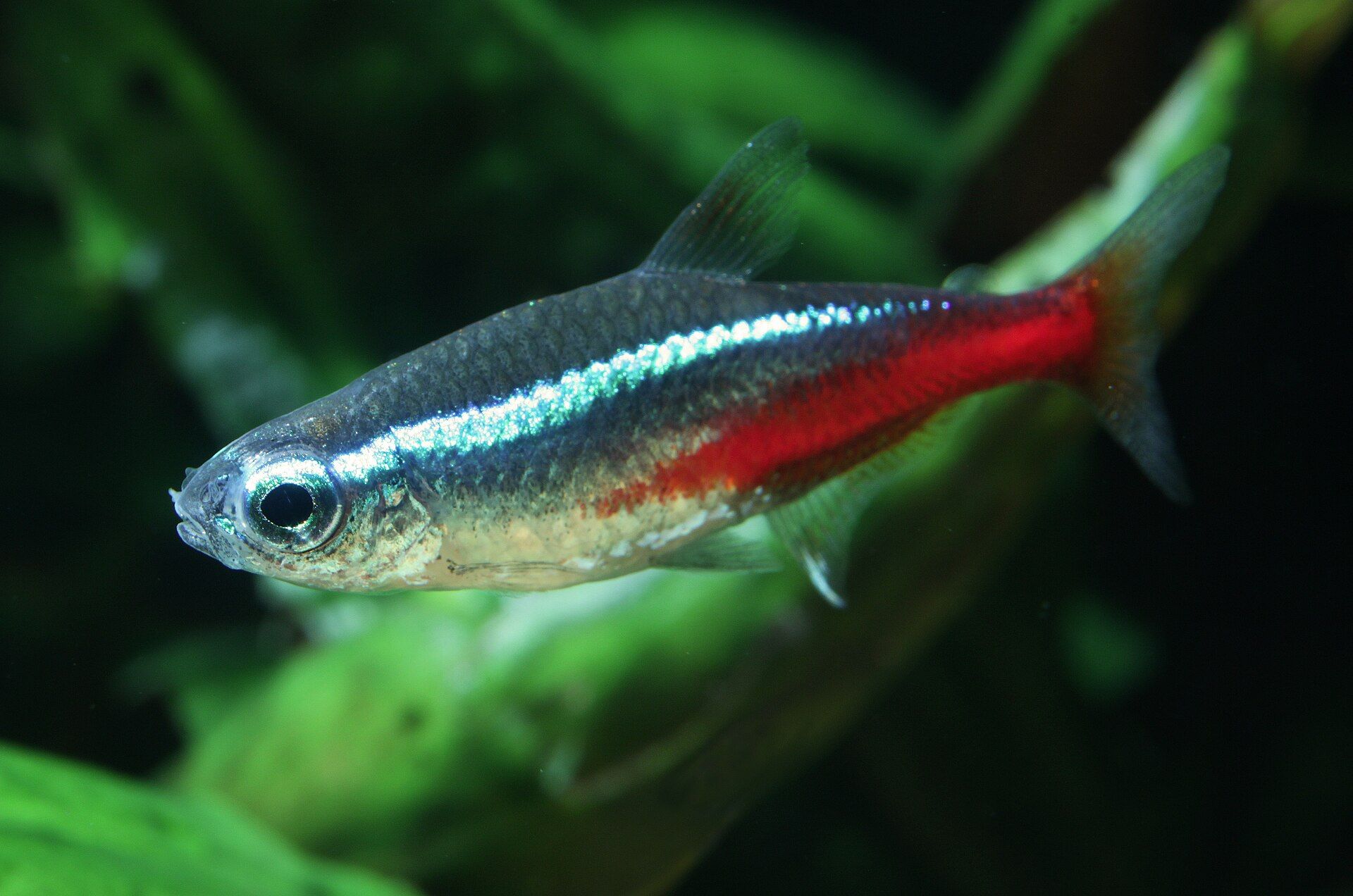
Fish always act starving, so the begging tells you nothing. What matters is how often you feed and how much is left after a few minutes. Here's what Aqueon and Aquarium Co-Op say, and where they disagree.
Quick answer
Feed most adult aquarium fish once or twice a day. Give only what they finish in about 2 to 3 minutes (Aqueon's rule), and take out leftovers after 5. Fry need several small meals a day. Axolotls and big predators eat less often. Uneaten food, cloudy water or a swollen belly mean cut back.
How often to feed fish in a tank
Once or twice a day is the answer for most adult fish. Aqueon says it’s sufficient 1. Aquarium Co-Op says most fish are fine with one feeding, and that you can split it into two smaller meals if you like watching them eat 2.
Two groups need more. Aqueon names small active fish like danios and newly hatched fry, which burn energy fast, especially in warmer water 1. Aquarium Co-Op says growing babies and slow grazers may need three to five tiny meals a day 2. Going the other way, Co-Op notes that large predators may only need food a few times a week 2.
Fish crowding the glass for food doesn’t mean they need more. Co-Op’s explanation is that they evolved to eat everything on offer, because the next meal wasn’t guaranteed. Its suggestion is to split the daily portion into two or three small feedings so you still get the fun of feeding them 2.
Feeding fry
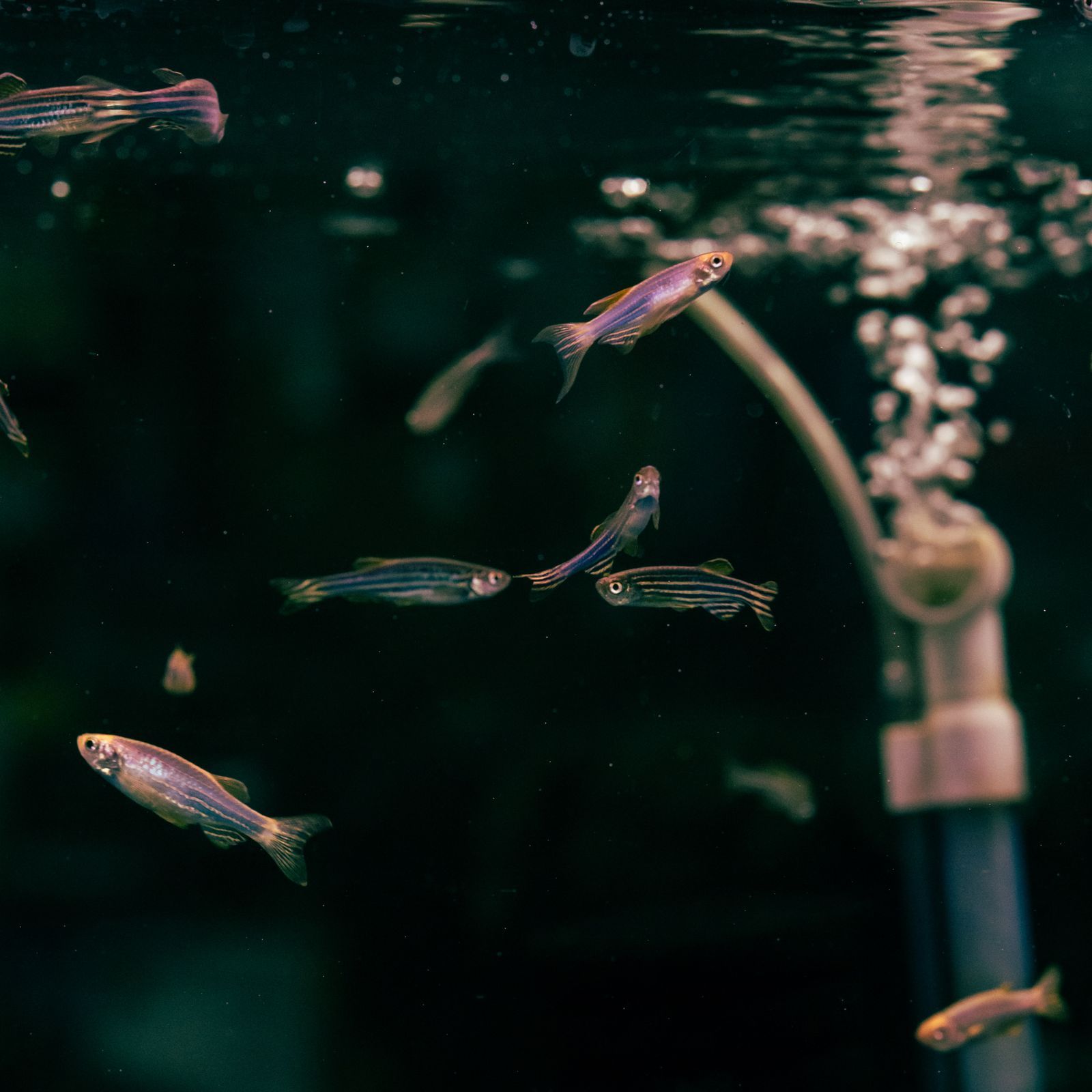
The numbers are thin. The one concrete figure we found is Co-Op’s three to five tiny meals a day for growing fry 2, repeated for guppy fry in its guppy guide 7. Aqueon says only that newborn fry should be fed frequently 1. We found no source giving an exact schedule by age, so treat “several small meals” as the rule and watch the tank. Fry food that sits uneaten fouls a small tank fast.
How much to feed fish per day
| Source | Portion rule |
|---|---|
| Aqueon | What your fish eat in 2 to 3 minutes. If it’s gone in under 2, give a bit more. Remove what’s left after 5 minutes 1 |
| Aquarium Co-Op (general guide) | Opinions run from “5 minutes” to “30 seconds”. Co-Op says to judge by belly shape instead, and to remove leftovers after 10 minutes 2 |
| Aquarium Co-Op (guppies) | As much as they eat in one minute 7 |
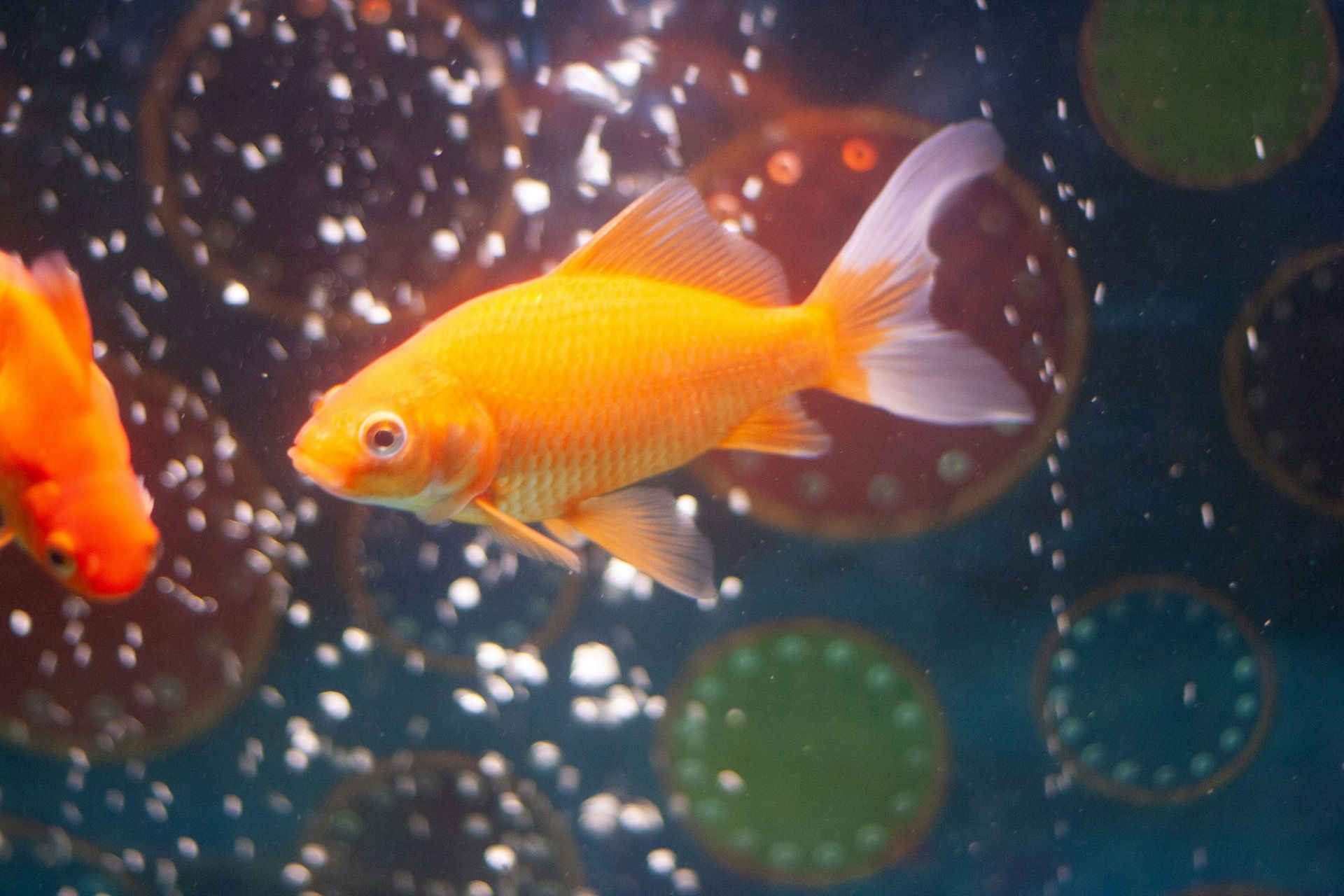
| Aqueon (goldfish) | What they eat in 2 to 3 minutes, once or twice a day 13 |
| Aqueon (tetras) | Under 2 minutes 8 |
Co-Op’s reason for the spread is that some fish wolf food down and some pick at it, even within one species. Its example is two bettas, one that gorged and one so picky it only ate food placed in front of its mouth 2.
We’d start with Aqueon’s rule, because it gives you something to check: a clock and a net. If you’re unsure, start with a pinch, see how fast it disappears, and adjust over a few days. A slightly rounded belly seen from above is the target, per Co-Op 2. A swollen belly is one of Co-Op’s overfeeding signs 2.
Where the minute rule breaks
It assumes fish that eat at the surface. Two cases fool it:
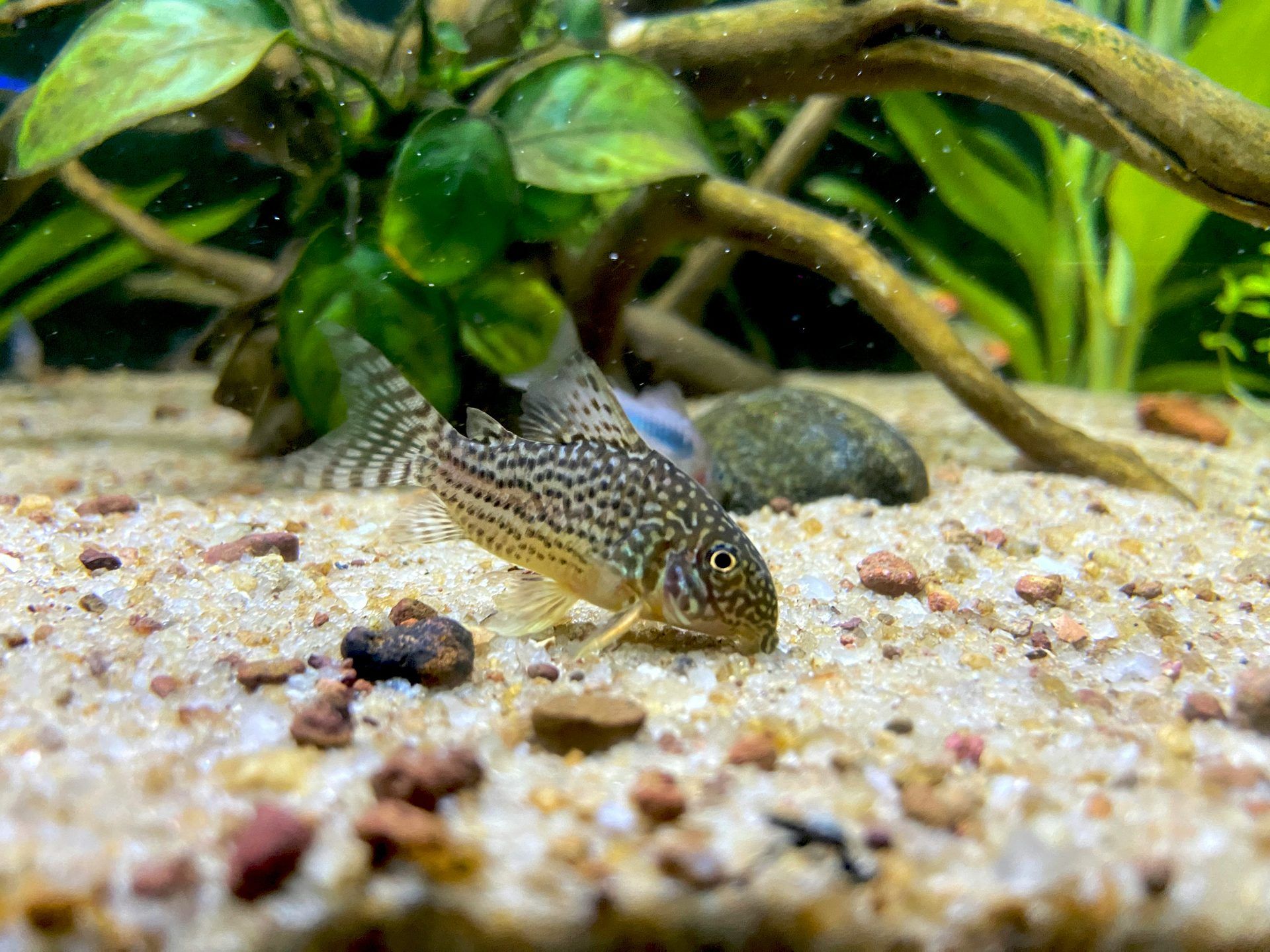
- Bottom feeders. Corydoras and other bottom feeders only get what sinks. Aqueon says flakes and some pellets linger at the surface for a minute or two before sinking, and that bottom feeders do best on sinking tablets, wafers and pellets 1.
- Shy or outcompeted fish. Aqueon says shy fish may wait for food to drift into their safe zone and may need target feeding 1. Co-Op warns that corys housed with aggressive eaters can lose the contest at mealtime and waste away 11.
Does the type of food change how often?
Not the frequency, but it changes what’s left over. Aqueon says to match the food size to the fish’s mouth, because uneaten food quickly pollutes the tank. For frozen food, it says to squirt it in a little at a time with a turkey baster or syringe so everyone gets some 1. Co-Op notes that gel foods break down slowly in water, which suits slow grazers 2.
Feeding chart by species
Frequencies below come from the same sources as our care guides. Where our sources gave no number, the table says so instead of guessing.
| Species | How often | How much | Source |
|---|---|---|---|
| Betta | Once a day. PetMD allows once or twice | A small amount. Pull what’s left | 4, 5 |
| Goldfish | Once or twice a day 13 | What they eat in 2 to 3 minutes. Co-Op says two small meals beat one big one | 6, 13 |
| Guppy | Once or twice a day. Fry: 3 to 5 small meals | What they eat in 1 minute | 7 |
| Neon tetra | Once or twice a day | Under 2 minutes | 8 |
| Axolotl | Juveniles daily. Adults every 2 to 3 days, or 2 to 3 times a week | Small portions. They are prone to obesity | 9, 10 |
| Corydoras | No schedule in the source. Co-Op says they must be fed on purpose, with sinking food | Enough that they get their share | 11 |
| Cherry shrimp | No schedule in the source. It lists shrimp food, gel food and blanched vegetables | A colony stops breeding when it outgrows its food | 12 |
| Angelfish | We found no per-species schedule. Use the general rule | Whatever they finish in 2 to 3 minutes | 1 |
The three gaps are real. Our sources describe what to feed corys, shrimp and angelfish but not how often, so for those we’d start with once a day and watch the sand for leftovers. That’s our reading, not a sourced figure.
Am I overfeeding my fish? Signs to check
Aqueon and Co-Op give almost the same list 1 2:
- Food on the bottom after 5 minutes (Aqueon) or 10 (Co-Op), and the fish ignore it. Left long enough it can grow a fuzzy fungus.
- Cloudy water, a bad smell, or foam on the surface. See cloudy aquarium water.
- A filter that clogs within days of cleaning (Aqueon).
- More algae, even with good filtration. Heavy feeding adds nitrate and phosphate. Our algae guide shows how to tell the types apart.
- Ammonia or nitrite above zero, or nitrate that keeps climbing. Aqueon also lists low pH 1. See high ammonia and safe nitrate levels.
- A swollen belly, lots of waste, or fish that stop caring about food. Co-Op also lists a snail or worm population boom, and says long-term overfeeding can lead to fatty liver, constipation and infections from poor water 2.
If you see these, Aqueon’s fix is to siphon out leftovers, lightly vacuum the substrate and cut each feeding by 50% 1. Co-Op adds two things: check that nobody else in the house is feeding the fish, and consider a weekly fasting day 2. The vet quoted by Chewy goes further: overfeeding is a bigger danger than underfeeding 3.
Underfeeding is the other direction. Co-Op lists thin bodies, sunken bellies and pale color, and warns they look just like internal parasites. If fish eat plenty and still can’t gain weight, parasites are worth considering 2.
Feeding in a new tank
Aqueon says it’s always best to underfeed, especially in new aquariums, because leftover food can cloud the water and push ammonia and nitrite up 1. In a tank that’s still cycling, that’s the one thing you control. We cover the whole routine in cycling a tank with fish in it, and if you’re not sure where your tank stands, how long a cycle takes helps. More fish means more food and more waste, which is why how many fish a 10 or 20 gallon tank can hold matters here too.
How much to feed fish in a 10 gallon tank
The gallons don’t set the portion, the fish do. No source gives a gram figure per tank size. Our approach is to feed the species you have by the minute rule, once or twice a day, and check what’s left. A small tank has little water to dilute leftovers, so mistakes show up faster in the water test. The same limit shows up in how many fish a 10 or 20 gallon tank can hold. Start there before adding more mouths.
Do fish need a day off from eating?
Some keepers do it. Aqueon says some hobbyists fast their fish one or two days a week to let them clear their digestive systems 1. Co-Op says some people skip a day or two to head off overfeeding problems 2. Neither gives a study for it. We treat it as a hobbyist practice, not a rule. Chewy’s guide says fasting is never recommended for juveniles or fish recovering from illness, and advises talking to a veterinarian before fasting fish 3. We’d skip it for fry and sick fish, and think of it for healthy adults that are always a bit round. For longer gaps, our guide on how long fish can go without food has the numbers.
When to feed
Aqueon says morning and evening feedings are best, with the light on at least 30 minutes before the first meal and at least 30 minutes after the last 1. Co-Op’s version is to wait 10 to 15 minutes after the light comes on so everyone is awake. For nocturnal fish such as kuhli loaches and plecos, it says to feed after the lights go off 2. Aqueon says sinking foods, shortly after lights out 1.
Quick checks before you add food
- Is there food left from the last feeding? Siphon it out first.
- Has the filter been cleaned in the last few days? Dirty media holds waste.
- Did a water change happen this week? If waste is building, a change helps more than less food alone.
What these numbers are based on
Aqueon and Co-Op both sell aquarium products, so none of this comes from a controlled study. We found no university or peer-reviewed source on feeding frequency for the fish above.
FAQ
How many times a day should I feed my fish? Once or twice for most adults 1 2. Fry and slow grazers may need 3 to 5 tiny meals 2.
How much should I feed my fish per day? What they finish in about 2 to 3 minutes per feeding, per Aqueon 1. Co-Op says sources range from 30 seconds to 5 minutes and suggests judging by a slightly rounded belly 2.
How do I know if my fish are hungry? Co-Op says fish act hungry all the time, because in the wild the next meal wasn’t guaranteed 2. Skinny bodies, sunken bellies and pale color are its signs of underfeeding 2.
How often should I feed fish flakes? The same as other foods: once or twice a day, only what they finish in a few minutes 1. Flakes and some pellets float for a minute or two before sinking, so they suit surface and mid-water feeders 1.
How do I know if I’m overfeeding my fish? Uneaten food after 5 to 10 minutes, cloudy water, foam, algae and detectable ammonia or nitrite are the usual signs. A swollen belly is another 1 2.
Should I feed my fish every day? Most adult fish do fine with daily feeding. Aqueon and Co-Op both say some keepers skip a day or two a week 1 2.
Can fish go a day without food? Yes. Co-Op says adult fish can often go a week 2. See how long fish can go without food for the longer answers.
How often should I feed baby fish? Co-Op’s figure is three to five tiny meals a day 2.
Is it OK to feed fish at night? For nocturnal species, yes: both sources say to feed them after the lights go off, and Aqueon specifies sinking food 1 2. Aqueon says other fish can be fed at any time of day, though morning and evening are best 1.
All the numbers, with sources
| What | Value | Type | Source |
|---|---|---|---|
| Aqueon: how often adult fish need feeding | Once or twice a day | Stated by source | [1] |
| Aqueon: how much per feeding | What they eat in 2 to 3 minutes | Stated by source | [1] |
| Aquarium Co-Op: how often most fish need feeding | Once a day, or two smaller meals | Stated by source | [2] |
| Aquarium Co-Op: meals per day for growing fry and slow grazers | 3 to 5 tiny meals | Stated by source | [2] |
| Aqueon: when to remove uneaten food | After 5 minutes | Stated by source | [1] |
| Aquarium Co-Op: when to remove uneaten food | After 10 minutes | Stated by source | [2] |
| Aqueon: how much to cut back when you see overfeeding signs | By 50% | Stated by source | [1] |
| Aquarium Co-Op: guppy portion | What they eat in 1 minute | Stated by source | [7] |
| Tree of Life Exotic Pet Medical Center: adult axolotl feeding | Every 2 to 3 days | Stated by source | [9] |
Sources
- Aqueon (aquarium equipment maker) (n.d.). How to Properly Feed Your Fish
- Aquarium Co-Op (fish and aquarium products retailer) (n.d.). How Often Do You Feed Fish (and How Much)?
- Chewy (reviewed by Ivan Alfonso, DVM; quotes Veronica Pardini, DVM, certified aquatic veterinarian) (2025). How Long Can Fish Go Without Food?
- PetMD (vet reviewed, Maria Zayas, DVM) (n.d.). Betta Fish Care Sheet
- Aquarium Co-Op (n.d.). Care Guide for Betta Fish: The Best Beginner Pet Fish
- Aquarium Co-Op (n.d.). Care Guide for Fancy Goldfish: Housing, Feeding, and More
- Aquarium Co-Op (fish and aquarium products retailer) (n.d.). Care Guide for Guppies: The Most Popular and Colorful Livebearer
- Aqueon (aquarium equipment maker) (n.d.). Tetras Care Guide (all tetras, not neon-specific)
- Tree of Life Exotic Pet Medical Center (n.d.). Axolotl (Ambystoma mexicanum) Care
- LafeberVet (Ryan O'Shea, CVT) (n.d.). Basic Information Sheet: Axolotl
- Aquarium Co-Op (n.d.). Care Guide for Cory Catfish: The Perfect Community Bottom Dweller
- Aquarium Co-Op (n.d.). Care Guide for Cherry Shrimp: Tank Setup, Food, and Breeding
- Aqueon (aquarium equipment maker) (n.d.). Goldfish Care Guide