Hair Algae in a Fish Tank: Why It Comes Back and How to Clear It
Last reviewed · By Manel Vadillo
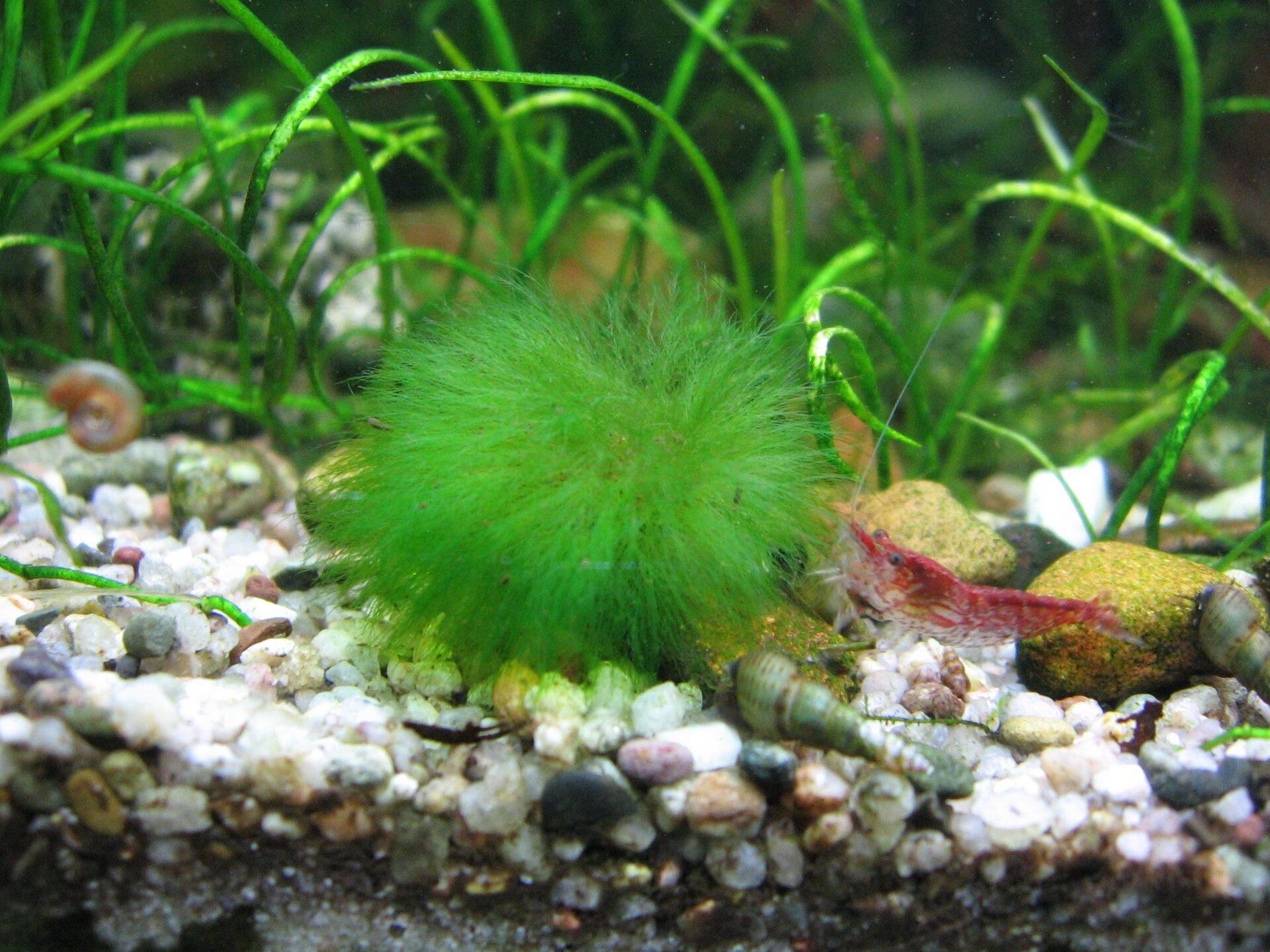
Long green strands wrapped around your plants, a fuzzy carpet over the rocks, and every time you pull it out it's back in a week. Pulling it out is easy. It grows back unless you take away what feeds it.
Quick answer
To get rid of hair algae in a freshwater tank, twirl out as much as you can by hand, then change water more often, keep the light to 10 hours a day or less, feed less and avoid running the tank warm. Tropica adds a large group of Amano shrimp for a while. Skip algaecides: they can harm fish and the algae comes back.
Is it really hair algae?
Hair algae, also called thread algae, is the green stuff that grows in strands. It wraps around stems, drapes over leaves and builds fuzzy mats on rocks and wood. Pull a clump and it comes out like wet hair, not like a film.
Aquarium Science says it’s usually, but not always, a filamentous green alga. Its author guesses at a few common ones by look: very fine pale green-brown strands, long green strands, short green strands. He also says those IDs “are just guesses”, since there are thousands of species 4. You don’t need the name. You need to rule out the look-alikes, because they’re treated differently:
| What you see | Probably | Where to go |
|---|---|---|
| Green strands or fuzz, soft, pulls off in ropes | Hair or thread algae | This page |
| Short dark tufts on leaf edges and wood, hard to pull off | Black beard algae | Fish tank algae guide |
| Slimy sheet over gravel and plants, often blue-green | Cyanobacteria (not an algae) | Fish tank algae guide |
| Brown dust that wipes off, new tank | Diatoms | Brown algae guide |
| The whole water column is green | Green water | Green water guide |
One warning about the rest of the internet: a lot of hair algae advice is written for saltwater reef tanks. Reef fixes like emerald crabs, turbo snails and refugium macroalgae don’t apply to a freshwater tank. Everything here is freshwater.
Why it keeps coming back
Hair algae comes back because pulling it out removes the algae, not the conditions it grew in. Our sources point at the same four things:
- Too much light. Tropica says no more than 10 hours a day, on a timer 2. Dr. Horton’s clinic says green algae tends to show up past 10 hours, and that room light and windows count too 7.
- Too much food, or too many fish. Tropica calls overfeeding or an overstocked tank the number one cause of algae problems 2. Aquarium Science adds that a sudden bloom in an established tank most often comes from excess phosphorus, from overfeeding, too few water changes, pH-lowering products or phosphate in tap water 8.
- Not enough water changes. Tropica calls them one of the most effective tools against algae, because they stop nutrients from piling up 2.
- Heat. Tropica says temperatures above about 79 °F (26 °C) almost always lead to algae problems, and that thread algae in particular likes the heat 2.
Aquarium Science’s author has a warning that explains why fixes work in one tank and not in the next. Each species of filamentous algae responds to different things, so controlling it is, in his words, “a guessing game” 4. In practice, that means you work on all four causes at once instead of betting on one.
How to get rid of hair algae, step by step
This is the order we’d do it in. The causes come from our sources. The tools, amounts and two-week plan are our own.
- Pull out what you can. Twist the strands around an old toothbrush, a bamboo skewer or a rough stick, like spaghetti on a fork. Trim leaves that are fully coated. Don’t use anything that has touched soap: Dr. Horton’s clinic warns that supermarket cleaning products can contain soap, which is deadly to fish 7.
- Change water right after. Loose bits float off when you pull. Siphon them out with the water change instead of letting them settle and regrow. Then keep changing water more often than you normally would, which is the core of Tropica’s treatment for thread algae 1. Our water change guide covers how much and how often.
- Cut the light. Put the light on a timer at 10 hours or less 2. Close the blinds if the tank gets sun. If you’re already at 10, go lower: our light hours guide suggests starting at 6 to 8 hours and adjusting from there.
- Feed less. Feed what your fish clear in a minute or two and pull out leftovers. Less food means less phosphorus going into the water 8.
- Check the thermometer. If the tank is running above about 79 °F, that’s worth fixing. See the section below before you turn the heater down.
- Wait two weeks, then judge. Keep pulling strands at every water change. If the new growth is shorter and slower, it’s working. If nothing changes, look again at the light: a sunny window or a very bright light can undo the rest.
Should you lower the temperature?
Tropica says to try 72 °F (22 °C) or less if you have algae problems, because thread algae likes warm water 2. That doesn’t suit every fish. Aquarium Science puts the ideal for plants and fish at about 76 to 79 °F, and notes that black beard algae prefers cooler water, so don’t overshoot 8.
A betta, for example, needs warmer water: our betta care guide gives 76 to 81 °F and aims for about 78 °F. Dropping a betta tank to 72 °F to fight algae trades one problem for a worse one.
Our reading of it: keep your fish inside their own range first. If they’re comfortable at the low end of that range, run the tank there. If your heater is set higher than your fish need, or the tank sits next to a sunny window or a warm lamp, fixing that is a free win. Our heater size guide helps if the heater itself is the problem.
Algae eaters for hair algae
Tropica’s pick for thread algae is a large group of Amano shrimp, up to 2 shrimp per 5 liters for a transitional period, with more frequent water changes 1. In gallons, that’s about 1.5 shrimp per gallon (our conversion):
| Tank | Up to (Tropica’s ratio, converted) |
|---|---|
| 10 gallons | About 15 Amano shrimp |
| 20 gallons | About 30 Amano shrimp |
That’s a lot of shrimp, and Tropica frames it as temporary and as an upper limit. Two cautions. Big fish eat small shrimp, and some algae treatments contain copper, which is toxic to shrimp. Our cherry shrimp guide explains where copper hides.
Why Amanos? Tropica tested five algae eaters on a film of green algae and diatoms grown on tiles. The Amano shrimp ate about twice as much as the zebra nerite snail and about six times as much as the cherry shrimp. Per gram of body weight, it still ate more than five times as much as the Siamese algae eater 3. Note what was tested, though: a film, not hair algae. It shows Amanos are hard workers, not that they’ll clear long strands.
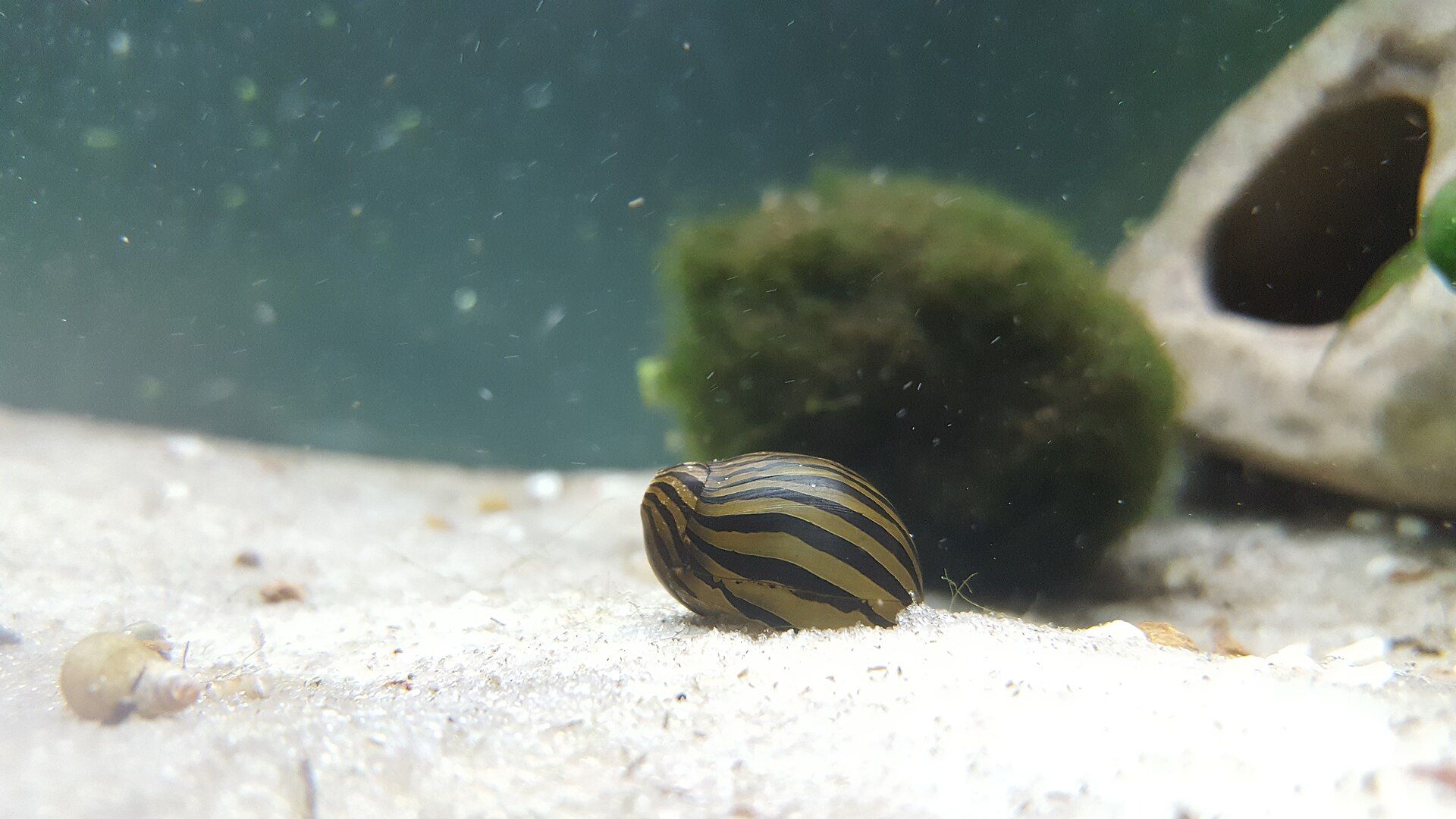
Don’t expect any eater to solve it alone. Tropica warns that some types of thread algae aren’t eaten by shrimp or by algae-eating fish 1. Aquarium Science goes further: there’s no way to predict which fish will eat which algae 5. Shrimp and fish help once you’ve cut light and food.
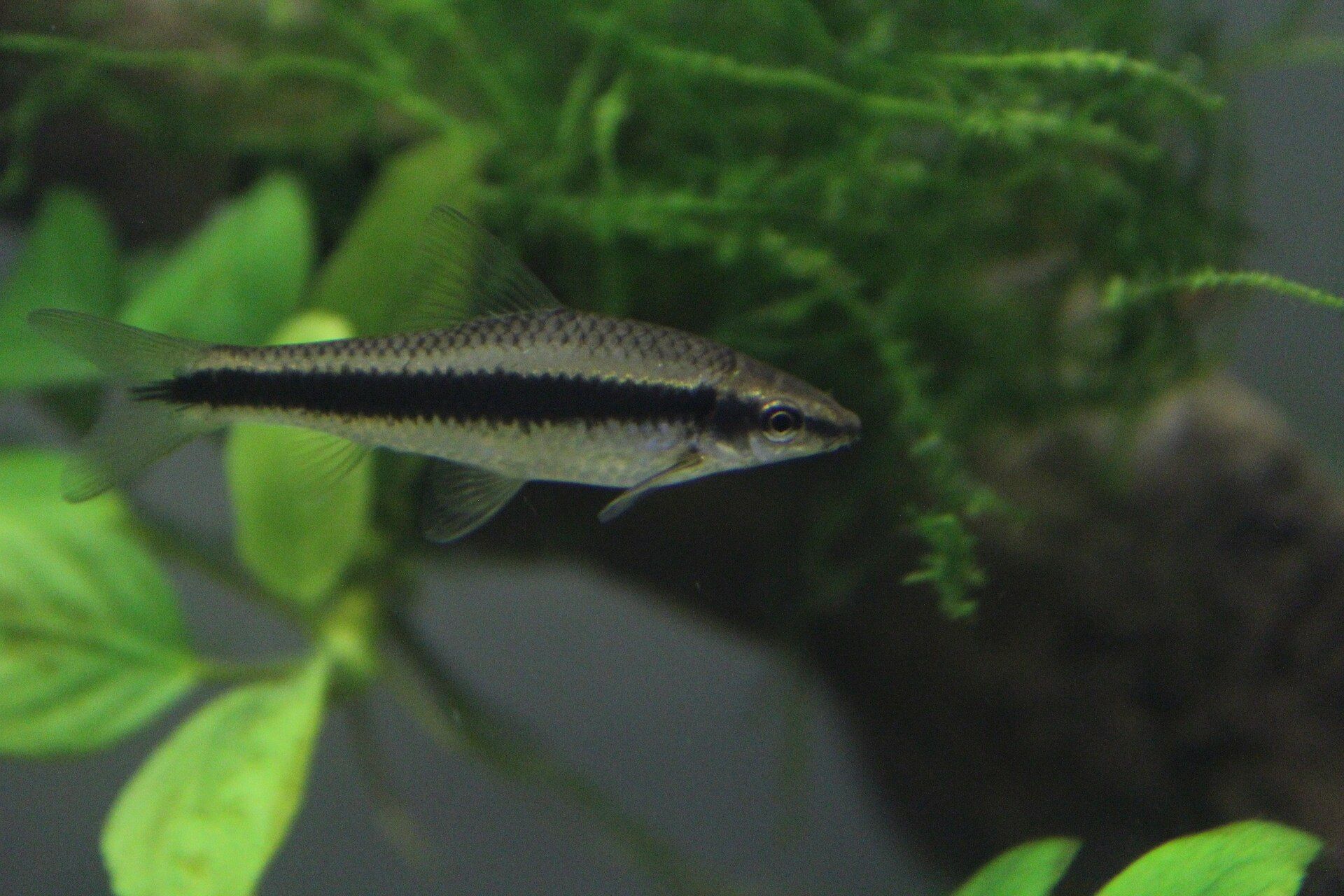
Every new animal also adds waste, and waste feeds algae. Check your stocking before you add a cleanup crew. Our fish tank algae guide compares the common algae eaters and which ones to avoid.
What about algaecides, peroxide and Excel?
Tropica advises against removing thread algae with chemicals 1. Aquarium Science explains why. Several common algae removers (API AlgaeFix, Tetra Algae Control, Top Fin Algae Remover, Fritz Algae Clean Out) share the same active ingredient, and its author collects reports of whole tanks lost even at the label dose. He admits those reports are anecdotal. Liquid carbon products like Seachem Excel contain glutaraldehyde, and hydrogen peroxide can burn fish gills. All of them are temporary: the algae comes back in a week or two if the cause isn’t fixed 6.
We don’t give a peroxide or Excel dose here. Our sources don’t give one for hair algae in a tank with fish, and we won’t make one up. If you want to treat a single plant, take it out of the tank first.
FAQ
Is hair algae bad for fish? Not directly. Dr. Horton’s clinic says algae isn’t harmful to an aquarium, mostly just unsightly 7. The problems are indirect: thick mats smother plants, and the wrong treatment can hurt fish more than the algae ever would 6.
Will hair algae go away on its own? We found no source saying it does while the light, food and heat stay the same. Fix those and keep pulling, and it should slow down.
What eats hair algae in a freshwater tank? Tropica recommends Amano shrimp in large numbers for a while 1. Other algae eaters may help, but no source can promise a given fish will eat your type 5.
Does a blackout kill hair algae? In our view, a blackout is a fix for green water, not for algae stuck to plants and decor. If you try one anyway, read the oxygen warning in our green water guide first.
How long does it take to get rid of hair algae? None of our sources give a timeline. Judge it after two weeks of steady water changes, shorter light and lighter feeding, and expect to keep pulling strands for a while after that.
All the numbers, with sources
| What | Value | Type | Source |
|---|---|---|---|
| Tropica: maximum light per day | 10 hours, on a timer | Stated by source | [2] |
| Tropica: temperature that almost always brings algae problems | Above about 79 °F (26 °C) | Stated by source | [2] |
| Tropica: temperature to try if thread algae is a problem | 72 °F (22 °C) or less | Stated by source | [2] |
| Tropica: Amano shrimp for thread algae, for a transitional period | Up to 2 shrimp per 1.3 gal (5 L) | Stated by source | [1] |
| Same ratio per gallon (our conversion) | About 1.5 shrimp per gallon: up to 15 in a 10-gallon, 30 in a 20-gallon | Our calculation | [1] |
| Tropica's grazing test: Amano shrimp vs. cherry shrimp | About 6 times as much algae eaten (green algae and diatom film, not hair algae) | Stated by source | [3] |
| Aquarium Science: how long algaecides keep algae away | A week or two, if the cause isn't fixed | Stated by source | [6] |
Sources
- Tropica Aquarium Plants (plant grower) (n.d.). Types of algae
- Tropica Aquarium Plants (plant grower) (n.d.). Preventing algae
- Tropica Aquarium Plants (plant grower) (n.d.). Test of algae eaters
- Aquarium Science (aquariumscience.org, David Bogert) (n.d.). 16.3. Thread Algae
- Aquarium Science (aquariumscience.org, David Bogert) (n.d.). 16.2. Controlling Algae
- Aquarium Science (aquariumscience.org, David Bogert) (n.d.). 16.2.6. Chemical Algae Control
- Chicago Exotics Animal Hospital (Susan Horton, DVM) (n.d.). Algae in your Freshwater Aquarium
- Aquarium Science (aquariumscience.org, David Bogert) (n.d.). 16.2.1. Controlling Algae in a Fish Only Aquarium