Green Water in a Fish Tank: Why It Happens and What Actually Clears It
Last reviewed · By Manel Vadillo
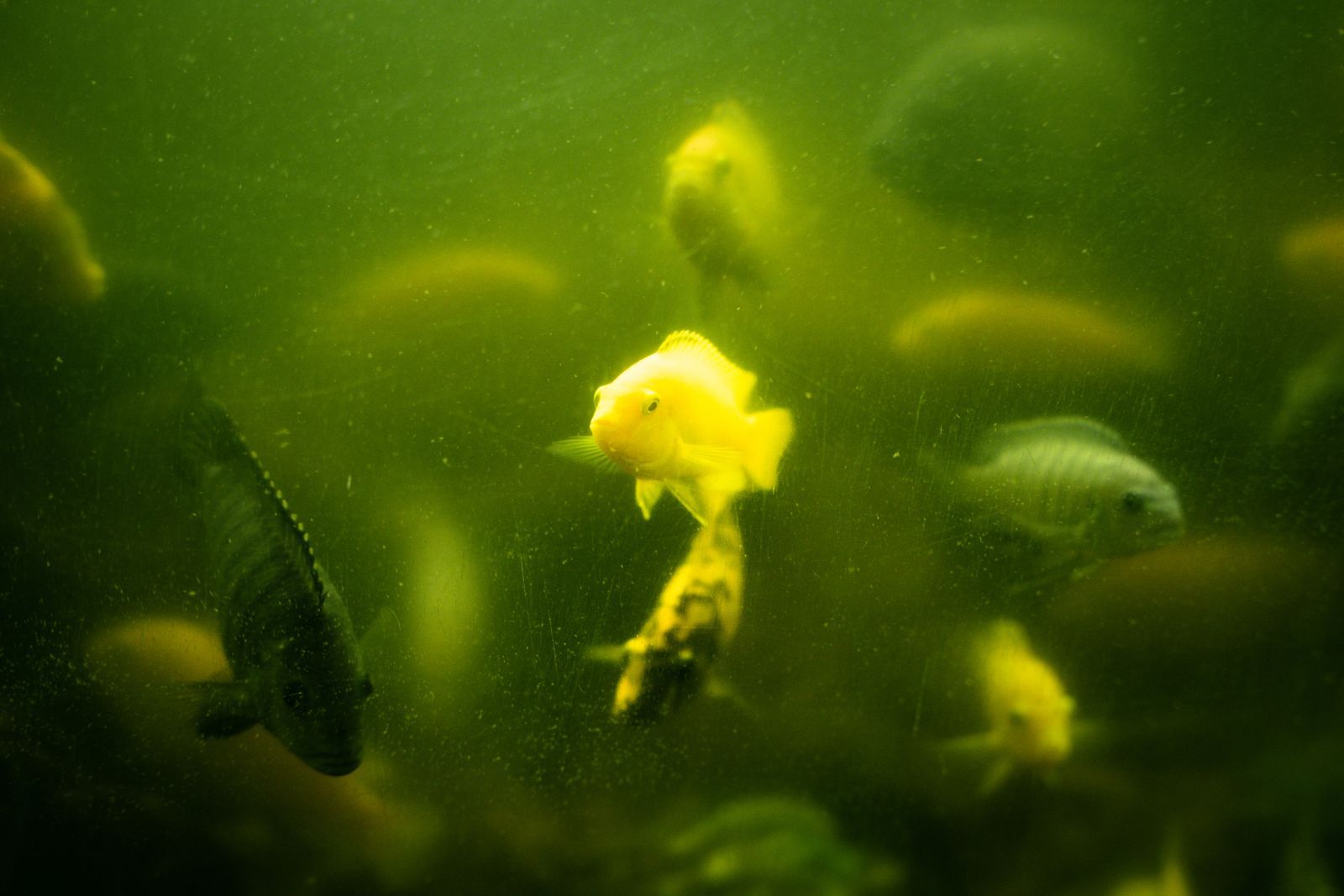
Green water means billions of one-celled algae floating in the tank. It looks alarming and is usually more of a nuisance than a danger. The hard part is that the usual fixes pull in opposite directions, and the right one depends on how old the tank is.
Quick answer
Green water is a bloom of free-floating algae, fed by light and nutrients. Cut the light, find the nutrient source, and pick one clearing method: a blackout with extra air, a UV sterilizer, or time. In a tank under about three months old, Aquarium Science says wait it out. In an older tank, look for the fuel.
What green water is
Tropica calls it plankton algae: a mass occurrence of small one-celled algae, normally caused by too high a nutrient concentration in the water. It often shows up in new aquariums or ones that were recently rescaped 1. Aqueon describes the same thing as a sudden population explosion of algae that float in the tank instead of growing on the glass 3. Aquarium Science adds that a sample under the microscope usually shows many kinds of algae, with bacteria and tiny animals in the mix 4.
Aqueon says these algae are typically not harmful to fish, but severe cases can block light from plants 3. Our cloudy water guide covers how a bloom swings oxygen and pH between day and night, and tells green from other colors.
Check that it’s really green water
Tropica separates three kinds of algae. Plankton algae is the water itself turning green. Filamentous algae forms long green threads that stick to plants and decor. Algal layers are thin coatings on glass and surfaces 1. Only the first is green water. If your glass is green but the water is clear, you have a different problem and different fixes. Our guide to fish tank algae by type covers those. Tropica’s advice for coatings is a varied crew of algae-eating fish and shrimp and a soft sponge on the glass 1.
One practical annoyance: an owner on FishLore said the green made it hard to test the water at all 5. Our reading: test the tap water separately in that case, and read the tank water kit as best you can; our nitrate guide covers how to read the numbers.
Why it blooms
Three causes keep coming up.
- Too much light. Aqueon names a sunny window, lights left on too long, and a light too strong for the tank 3. Aquarium Science says even a few hours of sun a day can produce a huge bloom 4.
- Too many nutrients. Aqueon points to nitrate and phosphate from fish food and waste, and says tap water can carry them too. Overfeeding and too many fish raise them 3. Aquarium Science’s thresholds are nitrate over 80 ppm and phosphate over 0.1 ppm, with plant fertilizer or a pH buffer as typical phosphate sources 4.
- Few or no plants. Aqueon says plants use the same nutrients as the algae, and floating plants also shade the water 3. Aquarium Science says plants absorb phosphate, nitrate and iron 4.
Heat adds to it. Tropica says temperatures above about 79 °F (26 °C) almost always give algae problems 2. A new tank has its own trigger: Aquarium Science notes that a cycling tank can turn to pea soup, especially if the light is left on 4.
The fixes disagree
Every method we found is below, with who says what. Two of the sources sell products that appear here (Aqueon sells UV sterilizers, and Tropica sells plants), so weigh their advice accordingly.
| Fix | What the sources say | The catch |
|---|---|---|
| Blackout | Aqueon: cover the tank for a few days, feed daily, try something else if nothing changes in 48 to 72 hours 3. A FishLore member suggested 3 days, then water changes 5. | Aquarium Science warns that with fish in a dark tank, bacteria break down the dying algae and use up the oxygen, and the dead algae release ammonia, so add strong aeration 4. |
| UV sterilizer | Aqueon calls it the most effective and effortless cure 3. Several FishLore members said it was what worked 5. | Tropica doesn’t recommend it as a standard aid, because UV also kills useful bacteria 1. Aquarium Science calls it a band-aid that leaves the cause in place 4. |
| Water changes | Tropica: frequent changes, which often clear it after repeated ones 1. Aqueon: start at 10% weekly or 25% every two weeks 3. | Aquarium Science says no changes in a tank under three months 4, but if fish are in and ammonia is climbing, change water. A FishLore member found big changes help only temporarily 5. |
| Less light | Tropica: 10 hours at most 2. Aqueon: 6 hours or less for an unplanted tank 3. A FishLore member cut to 6 hours and added plants 5. | Our reading: slow. Cutting light doesn’t clear the bloom you already have. |
| Fine filter floss | Tropica: a good filter with plenty of fine material can clear it 1. A FishLore member squeezed floss out daily 5. | Our reading: needs cleaning often, or it becomes a nutrient source. |
| Algae killers | Aqueon: a last resort, and they work in many cases 3. | Aquarium Science says some killed whole tanks at the labeled dose 4. |
What we’d do, by tank age
This is our reading of the table, not a published rule.
A tank under about three months old. The bloom is part of the tank settling in. Cut the light to 6 to 8 hours, or 6 or less for an unplanted tank as Aqueon says 3 (our light hours guide has the numbers), stop feeding more than the fish finish, and give it time. Aquarium Science says it usually clears in two to six weeks, often overnight, and that the pH should stay at 7.0 or higher 4. If you’re cycling without fish, turn the light off. You don’t need it 4. If fish are in, our fish-in cycling guide covers feeding and testing.
An older tank. Look for the fuel before you pick a fix. Test nitrate and phosphate, and test the tap too, as Aqueon advises 3. Count the light hours and check for sunlight. Then clear the bloom. Our reading: a blackout with an air stone, or a UV unit if you can afford one, is the fastest route here. Make the cause go away or it returns.
If you do a big water change, our reading is to match the temperature. Dechlorinate the new water in a bucket first when you’re replacing a lot at once, as one FishLore member advised 5. Our chlorine and chloramine guide has the dosing, and the water change guide covers routine changes.
What not to do
- Don’t black out a tank full of fish without aeration. Aquarium Science walks through the cascade: the algae die, bacteria use up the oxygen, ammonia is released and the fish suffocate 4.
- Don’t treat the algae and ignore the nutrients. Aqueon says chemicals don’t address the cause 3.
- Our reading: don’t add more light, fertilizer or food while the bloom runs.
What hobbyists report
On FishLore, an owner had fought green water in a 20 gallon long for about four months. It began when the filter broke during a week away. They had cut the light, cut feeding, boosted filtration and done 25 to 50% weekly changes with no effect. Members offered three routes. One suggested a deep water change and gravel vacuum, then testing. Another suggested a 3-day blackout followed by changes. A third said a UV sterilizer was a fairly quick fix. A member who had used UV said the tank reached a balance afterward and the unit was no longer needed. Another said cutting light to 6 hours and adding plants worked for them, and that big changes helped only briefly. The owner planned to start with a large water change and move to a blackout if that failed 5.
FAQ
Is green water harmful to fish? Aqueon says the algae are typically not harmful to fish 3. When a bloom dies off, the bacteria that break it down can use up the oxygen, which is why a careless blackout is risky 4.
How long does green water last? Aquarium Science says two to six weeks in a new tank if left alone 4. In an older tank it lasts until you remove the cause.
Will a water change clear it? Tropica says repeated water changes often clear it 1, while a FishLore member says large changes helped only temporarily 5.
Do I need a UV sterilizer? No source says it’s required. Aqueon, which sells them, calls it the most effective cure 3. Tropica doesn’t recommend it as a standard aid 1.
Will plants stop it? Aqueon says well-planted tanks almost never have algae problems, because plants use the same nutrients 3.
All the numbers, with sources
| What | Value | Type | Source |
|---|---|---|---|
| Tropica: light per day, ceiling for algae control | No more than 10 hours | Stated by source | [2] |
| Aqueon: light for an unplanted tank / a planted tank | 6 hours or less / 8 to 12 hours | Stated by source | [3] |
| Aqueon: if a blackout hasn't worked after | 48 to 72 hours, try another approach | Stated by source | [3] |
| Aqueon: water change to start with | 10% weekly or 25% every two weeks | Stated by source | [3] |
| Aquarium Science: new-tank bloom, usual time to clear if left alone | 2 to 6 weeks | Stated by source | [4] |
| Aquarium Science: nitrate that fuels a bloom in an older tank | Over 80 ppm (one 95% change suggested) | Stated by source | [4] |
| Aquarium Science: phosphate that fuels a bloom | Over 0.1 ppm | Stated by source | [4] |
| Tropica: temperature above which algae problems almost always follow | About 79 °F (26 °C) | Stated by source | [2] |
Sources
- Tropica Aquarium Plants (plant grower) (n.d.). Types of algae
- Tropica Aquarium Plants (plant grower) (n.d.). Preventing algae
- Aqueon (aquarium equipment maker that sells UV sterilizers) (n.d.). Green Water: Causes and Cures
- Aquarium Science (aquariumscience.org, one hobbyist author) (n.d.). 16.7. Aquarium Green Water
- FishLore Aquarium Forum (n.d.). I Need Help With Green Water! (forum thread, hobbyist experience)