Sand vs Gravel in a Freshwater Aquarium: Which Substrate for Which Tank
Last reviewed · By Manel Vadillo
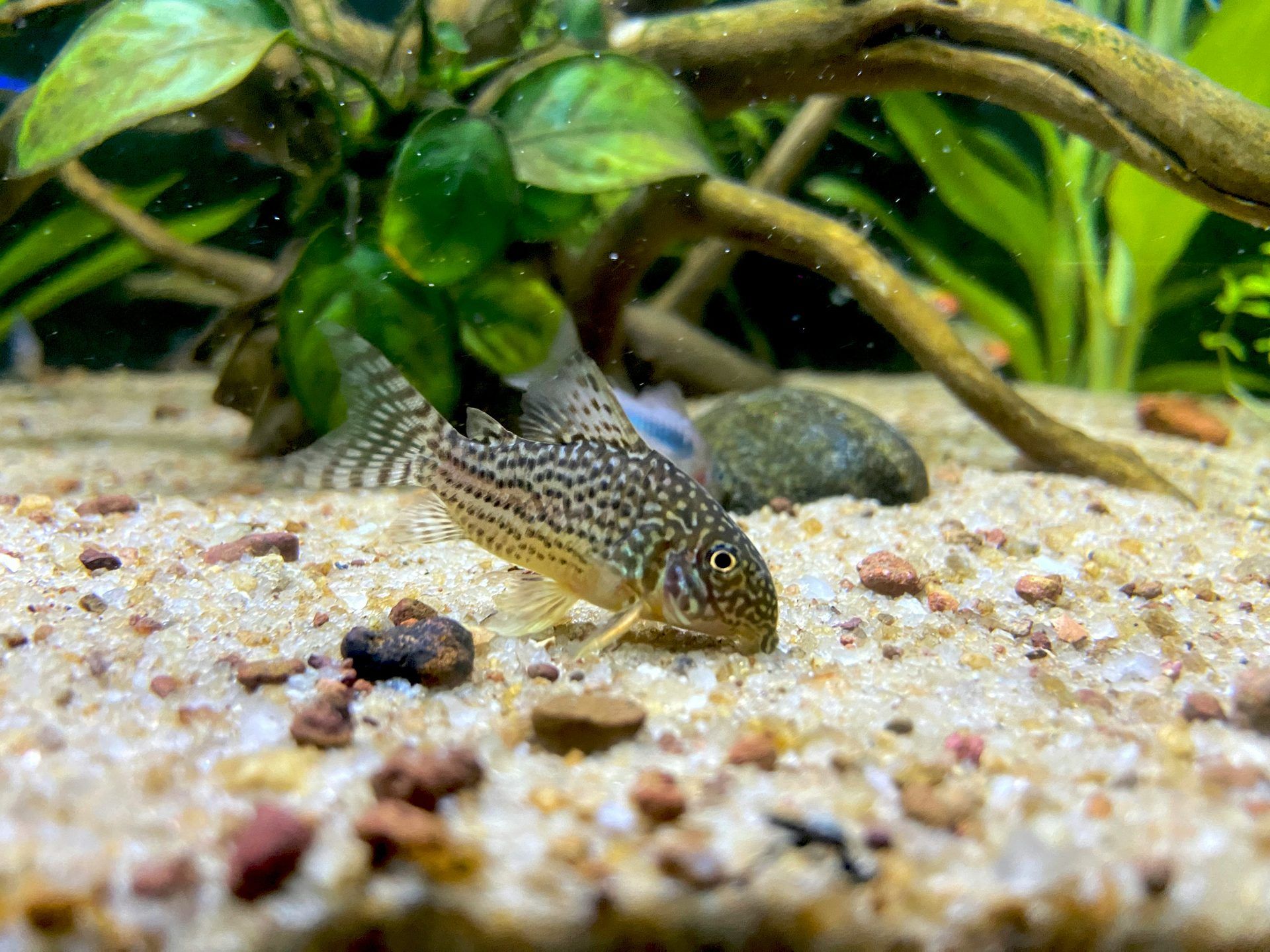
Neither sand nor gravel is wrong. The choice depends on what lives on the bottom and what you plan to grow in it. The common objection to sand is cleaning, and the hobbyists who use it don't agree on how hard that is.
Quick answer
Choose by animal and plant. Seriously Fish prefers fine sand for bottom feeders such as corydoras, with clean rounded gravel as a fallback. Aquarium Co-Op says avoid very fine sand for rooted plants and recommends coarse sand or ordinary gravel with root tabs. Merck's rule of thumb for gravel is 1 pound per gallon. Sand is harder to vacuum without losing some.
Pick by what lives there
| If you keep | Better choice | Why |
|---|---|---|
| Corydoras or other sifting bottom feeders | Fine sand, or rounded gravel kept very clean | Seriously Fish 4, Co-Op 3 |
| Mostly floating, stem and rhizome plants | Almost anything | Co-Op: these plants feed from the water 2 |
| Root feeders like swords and cryptocorynes | Coarse sand or ordinary gravel, with root tabs | Co-Op 2 |
| Fish that need hard water (guppies, for example) | An inert substrate | Co-Op warns active substrates lower pH and soften water 2 |
Bottom feeders
Seriously Fish says the best substrate for the bronze cory is fine sand, with rounded gravel acceptable if it’s kept scrupulously clean 4. For the pepper cory it says they enjoy rooting through sand, and can get barbel infections in poorly maintained gravel 4. Co-Op also prefers smooth sand or gravel for their barbels. It adds that the wild substrate it saw was sharp, so eroded barbels may point to water quality, not the gravel 3. Our corydoras guide has the species details.
Merck’s wording on size is general: some species sift fine gravel through their gills and others can get gravel stuck in their mouths or swallow it, so ask a vet or an experienced keeper what size suits your fish 1. In the FishLore thread, a moderator said constant substrate sifting by some cichlids can irritate their gills in sand, and that bottom dwellers can choke on large grain sizes 6.
Plants
Co-Op says some plants take nutrients from the water, such as rhizome plants, floaters and most stem plants, while swords, vallisneria, cryptocorynes and some carpeting plants feed mostly from the roots. Almost any substrate grows plants. It says to avoid extremes in size: very fine sand compacts and makes root growth hard, coarse sand works better, and big river stones leave too much space for roots to grip 2.
Regular gravel grows even Amazon swords as long as you add root tabs, according to Co-Op. Rainbow gravel from a pet store works fine for most stem, floating and rhizome plants if you dose a liquid fertilizer 2. Co-Op describes “active” soils as softening water and lowering pH, so they are poor for hard-water fish, and it says they break down over time and run out of nutrients after one to two years 2. It sells plant products, so weigh the product advice. Our pH guide shows why a drop matters.
Cleaning: the real trade-off
The sources that favor sand say debris sits on top and a siphon takes it off. A FishLore member said they found sand no harder than gravel, with a different technique. Others said it is harder to vacuum without sucking up the sand, shows debris more depending on color, and needs filter intakes placed with care 6. One member said to turn the filter off while cleaning. Another recommended pool filter sand because its uniform grain can be vacuumed like gravel 6.
There was also a dispute about stirring sand to release gas pockets. One member said regular stirring is needed, and another said they never do it and have never seen a problem. A third said the bubbles exist but their danger is overstated. One member said the gas can carry harmful compounds, and was corrected by another who said it comes from the last step of denitrification and contains no ammonia or nitrate 6. We couldn’t find a published source either way, so we won’t tell you it’s dangerous or harmless.
Gravel has its own drawbacks. Co-Op says food can get trapped between cracks where corys can’t reach it 3, and a FishLore member listed cyanobacteria that is hard to remove and wear on fins and barbels 6. Our water change guide covers vacuuming.
Does the substrate filter the water?
Merck describes under-gravel filters, in which the gravel itself acts as the filter medium 1. Aquarium Science, one hobbyist author, tested ammonia removal in tanks with different filters. It says that one inch of gravel did very little, and calls the idea that the substrate is an ammonia oxidizer a myth. In its view a gravel substrate is a very weak biofilter 5. That is one person’s test, but it fits our advice: don’t count on the bottom to keep the water clean.
How much to buy
Merck says gravel is usually placed at 1 pound per gallon of water, rinsed first to remove dust that can clog filters and damage pumps 1. By that rule a 20 gallon tank takes about 20 pounds and a 55 gallon about 55 (our arithmetic). Merck’s rule is for gravel. We found no source with a matching figure for sand, so check the bag.
What hobbyists report
On FishLore, someone upgrading to a 60 gallon asked what the downsides of sand were. Replies: stir it, siphon carefully, expect to lose some, keep the intake close, and watch which fish you keep with it. Several said they would never go back to gravel, and one said both had pros and cons and neither was a mistake. Another said sand is a poor choice with amphibians, and a second said their dwarf frogs spit it out 6.
FAQ
Is sand or gravel better for beginners? Neither is wrong. Co-Op says rainbow gravel from a pet store works fine for most stem, floating and rhizome plants, and almost any substrate can grow plants 2.
How much gravel do I need? Merck says about 1 pound per gallon 1.
Can corydoras live on gravel? Seriously Fish says rounded gravel is acceptable if it’s kept scrupulously clean 4.
Do plants grow in sand? Co-Op says yes, coarse sand better than very fine 2.
Does the substrate act as a filter? Aquarium Science says very little 5.
All the numbers, with sources
| What | Value | Type | Source |
|---|---|---|---|
| Merck: gravel quantity | 1 lb per gallon of water | Stated by source | [1] |
| Our arithmetic from Merck: gravel for 20 gal / 55 gal | about 20 lb / 55 lb | Our calculation | [1] |
Sources
- Merck Veterinary Manual (n.d.). Providing a Home for Fish (Pet Owner Version): Gravel and Decorative Objects
- Aquarium Co-Op (fish and aquarium products retailer) (n.d.). How to Pick the Best Substrate for a Freshwater Planted Aquarium
- Aquarium Co-Op (fish and aquarium products retailer) (n.d.). Care Guide for Cory Catfish: The Perfect Community Bottom Dweller
- Seriously Fish (2026). Osteogaster aenea (Bronze Cory) and Hoplisoma paleatum (Pepper Cory)
- Aquarium Science (aquariumscience.org, one hobbyist author) (n.d.). 8. Review of Aquarium Filters (substrate as a biofilter test)
- FishLore Aquarium Forum (n.d.). Pros And Cons On Sand Vs. Gravel?? (forum thread, hobbyist experience)