Aquarium Filter Size and Type: How Much Flow Does Your Tank Need?
Last reviewed · By Manel Vadillo
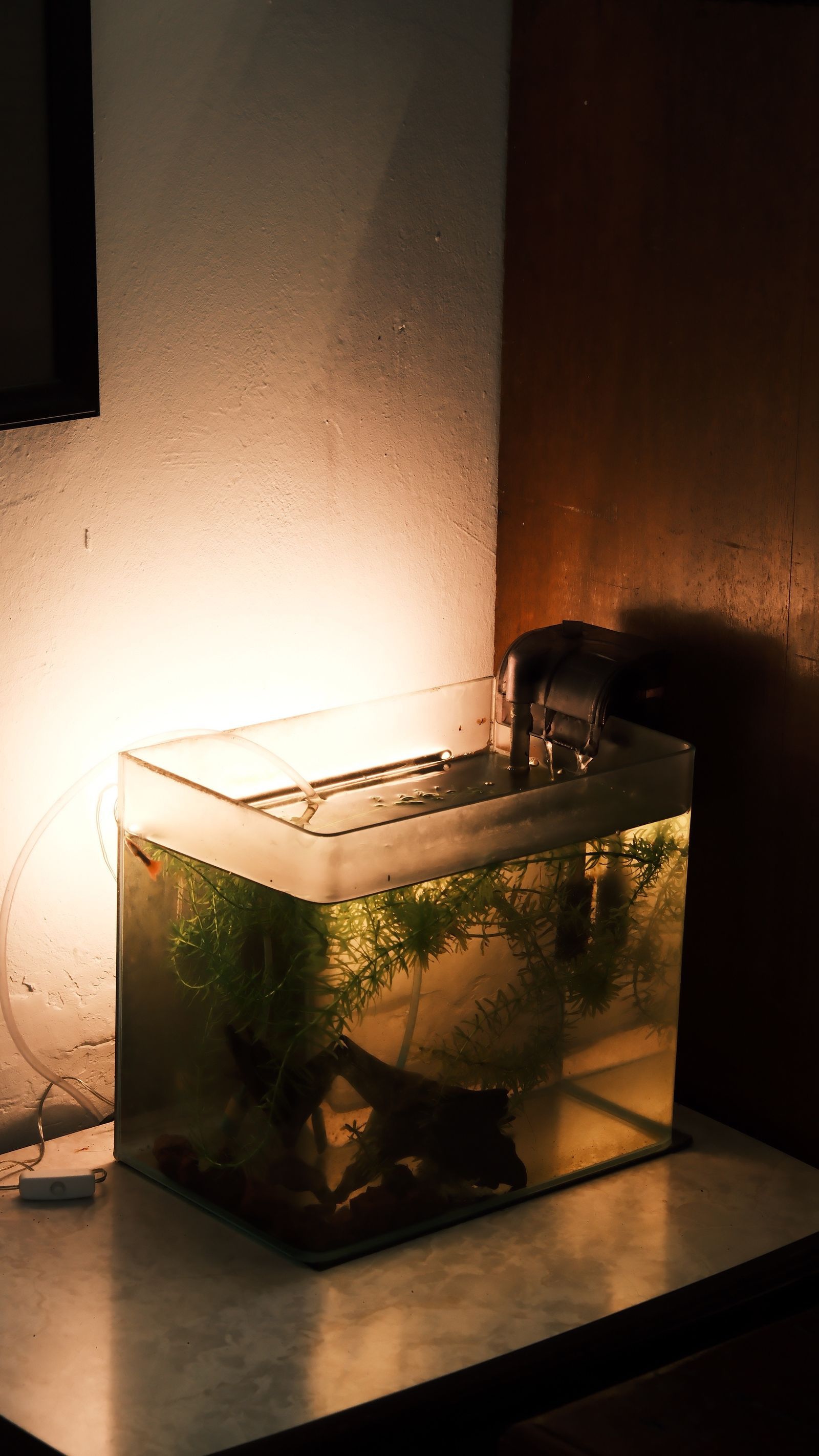
Boxes say 'for tanks up to 60 gallons'. The sources don't agree on how much flow a tank needs, or whether more is better. They do agree that the type of filter matters less than keeping it running.
Quick answer
Aqueon says the flow rate should be 4 to 6 times the tank volume per hour, and Seriously Fish uses 4 to 5 times. One FishLore member recommends rated flow 10 times the tank, because real flow is about half the rating. Aquarium Science says only actual flow matters. Match the filter to your stocking, not to the box.
What a filter does
Co-Op splits filtration into three jobs. Mechanical filtration strains debris out with sponges or pads. Biological filtration uses bacteria, or plants, to consume ammonia and other nitrogen compounds. Chemical filtration uses carbon or resins to remove medications, tannins and other impurities. Its summary: mechanical makes the water clearer, biological makes it safer, and chemical is best saved for removing impurities 4. Aqueon describes the same three stages 1.
Our guides on the nitrogen cycle and how to tell if a tank is cycled explain why the bacteria part is the one that matters.
How much flow: the rules disagree
| Source | Rule |
|---|---|
| Aqueon | 4 to 6 times tank volume per hour, and at least 4 times 1 |
| Seriously Fish | 4 to 5 times; for a 14 gal tank it suggests a filter rated about 215 to 270 L per hour (about 57 to 71 gal) 2 |
| FishLore member | A rated flow of 10 times tank volume 6 |
| Aquarium Science | Only actual flow rate in gallons per hour counts 3 |
By Aqueon’s rule, a 20 gallon tank wants 80 to 120 gallons per hour, a 10 gallon tank 40 to 60 and a 55 gallon tank 220 to 330 (our arithmetic). Aqueon is a filter maker, and Seriously Fish’s pages link to filters. Both want you to buy something, though neither figure is extravagant.
The FishLore thread shows why the numbers move. One member said rated flow is not real flow: once the media is loaded, actual flow is about half of the rating, which is why they recommend 10 times. The same member said a filter sold for tanks “up to” a size works best at about half that size. Another said factory tank-size ratings only give around 4 times turnover, and a third worked out that two popular canisters would turn a 300 liter tank over about three times an hour in practice 6. Aquarium Science agrees that actual flow matters, and says a canister with an actual flow of 600 gallons per hour can filter about twice as many fish as one with 300 3.
Other members disagreed on whether more flow is better. One said slower flow is better because bacteria get more time with the ammonia. Another said that once a tank is cycled, a 4 times or 8 times filter both read zero ammonia and nitrite 6. We found no independent test of that point. Our reading: pick a filter rated at least 4 times your tank’s volume, add more if the tank is heavily stocked, and don’t pay extra for flow the fish dislike. Aqueon notes that delicate-finned fish like bettas need a gentler flow than a danio, and that delicate plants want a gentler filter too 1.
Types compared
| Type | Pros (Aquarium Co-Op) | Cons (Aquarium Co-Op) |
|---|---|---|
| Sponge filter | Cheap, easy to clean, few parts; gentle on fry and shrimp; bacteria survive a power cut in oxygenated water 4 | Sits in the tank; hard to add chemical filtration 4 |
| Hang-on-back | Adjustable, all three kinds of filtration, easy to service 4 | The motor can burn out if it runs dry or takes in sand; waterfall noise 4 |
| Canister | Powerful, quiet, customizable 4 | Costly, hard to service, bacteria can suffer in a power cut 4 |
Co-Op sells sponge filters, which may color its enthusiasm. Merck lists the two most common types as under-gravel filters, where the gravel is the filter medium, and hanging filters, which pass water through a cartridge of floss and activated carbon 5. Merck says filters, pumps and lights shouldn’t be turned on until the tank is filled 5.
Aquarium Science takes a different line: it loves under-gravel filters, finds hang-on-backs with cartridges poor for biofiltration, and says sponge filters suit breeding tanks. It adds that big tanks over 75 gallons with lots of fish do best on sumps 3. It is one author, and it argues against what most manufacturers and retailers say. For hang-on-backs it credits Aquarium Co-Op’s founder with the advice to swap cartridges for foam blocks and add a foam pre-filter on the intake 3.
Cartridges and cleaning
Aquarium Science says there’s no reason to replace filter media on a schedule in general, and calls the makers’ monthly instructions a way to sell media. It then makes an exception: hang-on-back filters with cartridges should have the cartridges replaced every one to three months. The same review also calls monthly replacement a scam in another passage, so it is not consistent. It adds that the brown gunk in foam is trapped waste that is beneficial to remove, thoroughly and often, and that a filter that clogs in a week or two is too small 3. Aqueon, which sells cartridges, says a filter’s debris is removed when the media is rinsed or replaced 1. We found no independent test of cartridge schedules, so follow the maker’s instructions, with one caution: replacing all the media at once removes the bacteria that clear ammonia, so keep a sponge or some old media in the filter and never swap everything in one go. Rinse sponge and foam gently, as Co-Op suggests for hang-on-back media 4. Our water change guide covers the water side.
What hobbyists report
On FishLore, someone asked whether a bigger media capacity or a faster flow was better for a 300 liter tank. Members split. Several said to run two filters so one is always freshly cleaned. One said canisters get neglected and clog. One said a single hang-on-back handled hundreds of fish in a 40 gallon grow-out tank. A member who had visited a breeder was struck by the small sponge filters on tanks under 5 gallons and judged them inadequate for those tiny tanks, with too little air and flow. Another member said many breeders use sponges but keep few fish per tank, and that a community tank needs more filtration 6. That is opinion, but it shows the pattern: stocking level decides, not a formula.
FAQ
How many times per hour should a filter turn over my tank? Aqueon says 4 to 6 1. Seriously Fish says 4 to 5 2. A FishLore member says a rated 10 6.
Is a sponge filter enough? Co-Op says it’s a reliable, cheap choice for many tanks, and a good one for breeding and fry 4. A FishLore member who saw a breeder’s tiny tanks judged the sponge filters in them inadequate, and another said a community tank needs more filtration than breeders’ sponges give 6.
Do I have to replace filter cartridges monthly? Aqueon, which sells cartridges, describes rinsing or replacing the media 1. Aquarium Science says there’s no reason to replace filter media on a schedule in general, but says hang-on-back filters with cartridges should have the cartridges replaced every one to three months 3.
Can the gravel work as a filter? Merck describes under-gravel filters. Aquarium Science says an inch of gravel is a very weak biofilter on its own 5 3.
Can a filter be too strong? Aqueon says delicate fish and plants need gentle flow 1.
All the numbers, with sources
| What | Value | Type | Source |
|---|---|---|---|
| Aqueon (filter maker): flow rate, times tank volume per hour | 4 to 6 times (at least 4) | Stated by source | [1] |
| Seriously Fish: turnover used in its equipment advice | 4 to 5 times the volume per hour | Stated by source | [2] |
| FishLore member: rated flow suggested | 10 times the tank volume per hour | Stated by source | [6] |
| FishLore member: actual flow compared with the rated figure | About half once media is loaded | Stated by source | [6] |
| Our arithmetic from Aqueon: flow for a 20 gal tank | 80 to 120 gal per hour | Our calculation | [1] |
Sources
- Aqueon (aquarium equipment maker that sells filters) (n.d.). How to Choose the Best Filter for You and Your Tank
- Seriously Fish (its pages carry affiliate links to filters) (2026). Paracheirodon innesi and Pterophyllum scalare profiles (recommended equipment sections)
- Aquarium Science (aquariumscience.org, one hobbyist author) (n.d.). 8. Review of Aquarium Filters
- Aquarium Co-Op (fish and aquarium products retailer that sells sponge filters) (n.d.). Fish Tank Filters: Which One Should You Get?
- Merck Veterinary Manual (n.d.). Providing a Home for Fish (Pet Owner Version): Filtration
- FishLore Aquarium Forum (n.d.). Fliter flow rate or capacity, which is more important? (forum thread, hobbyist experience)